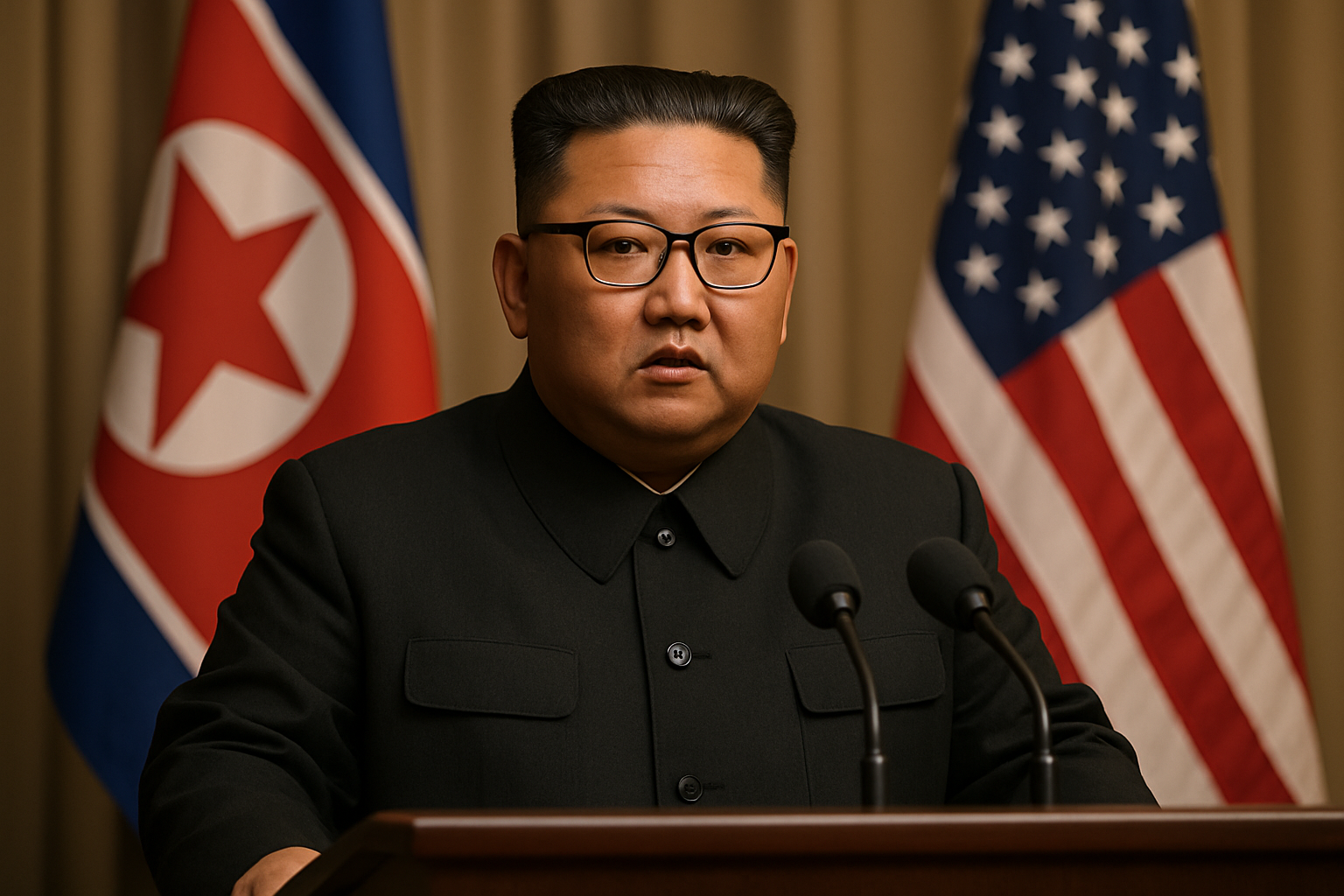
North Korean leader Kim Jong Un has signaled conditional openness to improved relations with the United States while simultaneously hardening his country's position against South Korea, marking a significant shift in Pyongyang's diplomatic strategy amid ongoing succession planning within the Kim dynasty.
Speaking at the conclusion of the Workers' Party Congress, Kim declared that the prospects of North Korea-US relations depend "entirely on the attitude of the United States." The North Korean leader stated Pyongyang was prepared for both "peaceful coexistence or eternal confrontation," but emphasized that the choice lay with Washington.
Nuclear Recognition as Diplomatic Precondition
Kim's diplomatic overture comes with a crucial caveat: the United States must respect North Korea's status as a nuclear-armed state. "If the US withdraws its policy of confrontation with North Korea by respecting our country's current status... there is no reason why we cannot get along well with the US," Kim stated, according to multiple international reports.
This represents a fundamental challenge to longstanding US policy of seeking North Korean denuclearization. Kim's demand for nuclear status recognition echoes previous negotiating positions that have stalled diplomatic progress between the two nations for over a decade.
South Korea Designated as "Most Hostile" Enemy
While extending conditional dialogue to Washington, Kim has taken an increasingly hardline stance toward Seoul. North Korea has formally redefined South Korea as a "hostile state" in its constitution, representing a dramatic departure from previous characterizations of inter-Korean relations.
According to French media reports, Kim has effectively closed off possibilities for reconciliation with South Korea while multiplying signals of openness toward Washington. This dual approach reflects Pyongyang's assessment that engaging directly with the United States offers better prospects than working through South Korean intermediaries.
"Pyongyang was prepared for both peaceful coexistence or eternal confrontation but the choice lay with Washington."
— Kim Jong Un, North Korean Leader
Sister's Rising Political Profile
The diplomatic positioning comes amid significant changes within North Korea's leadership structure. Kim Jong Un has promoted his sister, Kim Yo Jong, to what international observers describe as "the equivalent of a cabinet position" during the recent Workers' Party Congress.
This elevation occurs alongside confirmed succession planning involving Kim's daughter, Kim Ju Ae, who South Korean intelligence has definitively identified as Kim Jong Un's designated heir. The systematic preparation of both female family members represents unprecedented gender dynamics within the traditionally male-dominated North Korean power structure.
Strategic Timing and International Context
Kim's diplomatic signals emerge during a complex period of international relations. The statements coincide with speculation about potential engagement with the Trump administration, which has previously expressed willingness to meet with North Korean leadership.
The timing also reflects North Korea's broader strategic calculations amid changing global dynamics. With the recent expiration of the New START treaty between the US and Russia eliminating nuclear arms control constraints, Kim may be positioning North Korea as a factor in evolving great power competition.
Military Demonstrations Alongside Diplomacy
Despite diplomatic overtures, North Korea continues military demonstrations of strength. Recent reports indicate Kim held a military parade featuring 14,000 troops, though notably excluding nuclear weapons displays that have characterized previous such events.
This approach reflects North Korea's traditional strategy of combining military pressure with diplomatic engagement—showing strength while creating space for potential dialogue. The absence of nuclear missile displays in recent parades suggests calculated messaging designed to avoid excessive provocation while maintaining deterrent credibility.
Economic Achievements as Domestic Legitimacy
Kim has also highlighted domestic achievements during the Workers' Party Congress, including the completion of a massive 50,000-unit housing project in Pyongyang's Hwasong Area. These tangible benefits for key constituencies demonstrate the regime's dual approach of maintaining military capabilities while providing concrete improvements to citizens' lives.
The housing project completion serves multiple purposes: showcasing state capacity for large-scale development, providing material benefits to support regime legitimacy, and demonstrating resource allocation beyond military spending despite international sanctions.
Constitutional and Legal Changes
The formal constitutional redefinition of South Korea as a "hostile state" represents more than rhetorical positioning. This legal framework change provides justification for North Korea's military posturing and serves to institutionalize the hardened stance toward Seoul within the country's governing documents.
These constitutional modifications align with Kim's broader strategy of pursuing direct engagement with major powers while bypassing regional intermediaries that might complicate North Korean objectives or dilute its negotiating position.
Succession Planning Implications
The diplomatic repositioning occurs against the backdrop of historic succession planning within the Kim dynasty. With Kim Ju Ae's formal designation as heir representing the first potential female leadership in the regime's 78-year history, current diplomatic strategies may be designed to establish international frameworks that could benefit future leadership transitions.
The systematic elevation of Kim Yo Jong to senior positions and Kim Ju Ae's increasing public profile in policy matters suggest the current leadership is preparing institutional foundations for potential gender-based leadership transitions that would require both domestic and international legitimacy.
International Response and Assessment
The conditional diplomatic opening has drawn varied international responses. While some observers view it as an opportunity for reduced tensions, others note that Kim's preconditions—particularly nuclear status recognition—remain fundamental obstacles to substantive progress.
Regional allies including South Korea and Japan face the challenge of engaging with North Korean diplomatic signals while maintaining security cooperation frameworks designed to address the nuclear threat. The emphasis on direct US engagement rather than multilateral approaches may complicate traditional alliance coordination mechanisms.
Strategic Implications
Kim Jong Un's dual approach of conditional engagement with Washington while hardening positions toward Seoul reflects sophisticated strategic calculations about changing global dynamics. The positioning suggests North Korea's assessment that direct great power engagement offers better prospects than regional diplomatic frameworks.
This strategy coincides with broader international transitions, including nuclear arms control treaty expirations, evolving US-China competition, and changing regional security architectures. North Korea appears to be positioning itself as a relevant factor in these broader strategic competitions rather than merely a regional security concern.
The coming months will test whether Kim's conditional diplomatic opening can translate into substantive engagement or whether fundamental disagreements over nuclear status will continue to prevent diplomatic breakthroughs. The success or failure of this approach may influence both regional security dynamics and internal North Korean succession planning as the Kim dynasty prepares for potential historic leadership transitions.