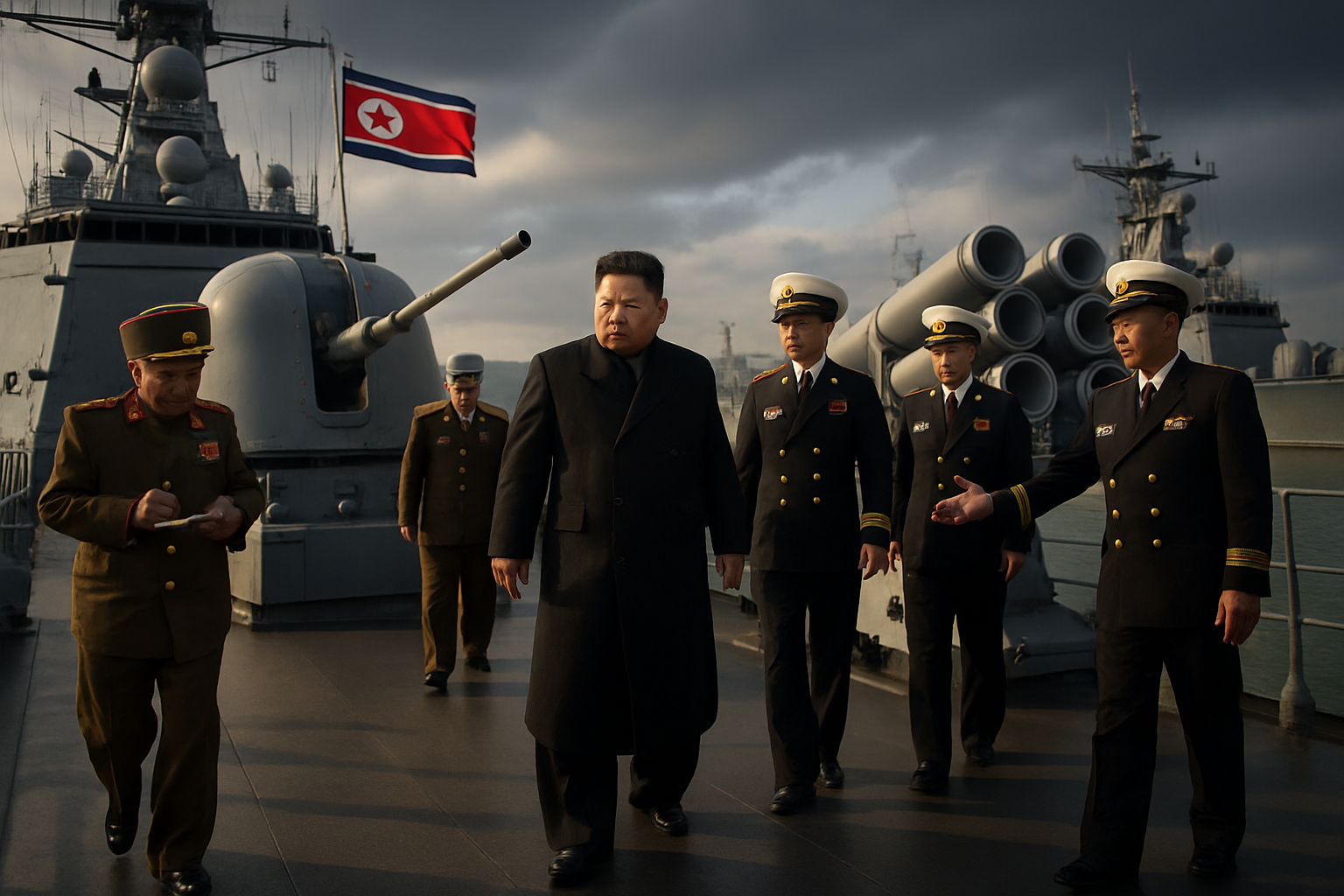
North Korean leader Kim Jong Un spent two days inspecting his navy's newest 5,000-ton destroyer and overseeing strategic cruise missile tests, marking a significant escalation in Pyongyang's maritime nuclear capabilities as the regime continues ambitious military modernization efforts.
The extensive naval inspection, conducted over March 4-5, 2026, demonstrates North Korea's strategic pivot toward expanding its nuclear deterrent beyond land-based systems into maritime platforms. State media confirmed that Kim personally supervised cruise missile launches from the newly commissioned destroyer, representing the final evaluation phase before the vessel's official entry into service.
Strategic Cruise Missile Integration
According to reports from South Korean intelligence sources, Kim Jong Un observed strategic cruise missile tests from what appears to be the recently unveiled destroyer on North Korea's west coast. The tests were conducted as part of comprehensive sea trials, with the Korean Central News Agency (KCNA) describing the exercises as demonstrating "advanced naval capabilities integration."
The cruise missile tests represent a significant technological advancement for North Korea's naval forces, which have traditionally focused on coastal defense rather than power projection. The integration of strategic cruise missiles into naval platforms provides Pyongyang with enhanced tactical options and complicates regional defensive planning for South Korea, Japan, and the United States.
"This represents a fundamental shift in North Korea's naval doctrine from coastal defense to power projection capabilities."
— Defense Intelligence Analysis, March 2026
Military Modernization Context
The naval inspection occurs during a period of unprecedented military advancement for North Korea. In February 2026, the regime unveiled massive 600mm nuclear-capable multiple rocket launcher systems described by state media as "unique in the world" and "suitable for special attack missions." These developments indicate a systematic approach to expanding both tactical and strategic nuclear capabilities.
Intelligence assessments suggest North Korea has maintained consistent military development despite international sanctions, with military activity increasing by 23% in 2025 according to regional defense evaluations. The regime appears to be pursuing a dual-track strategy of advancing weapons capabilities while maintaining domestic legitimacy through infrastructure projects like the completed 50,000-unit Hwasong housing development in Pyongyang.
Succession Planning Implications
The timing of these naval exercises carries particular significance given ongoing succession preparations within the Kim dynasty. South Korean intelligence confirmed in February 2026 that Kim Jong Un has formally designated his teenage daughter Kim Ju Ae as his successor, representing an unprecedented female leadership transition in the regime's 78-year history.
Kim Ju Ae's systematic elevation since November 2022 has included attendance at weapons demonstrations, military parades, and state functions. Most notably, she participated in rifle training exercises at military facilities in February 2026, providing concrete evidence of systematic preparation for leadership responsibilities within North Korea's traditionally masculine power structure.
The naval inspection serves multiple strategic purposes during this critical transition period: demonstrating regime strength, providing military credentials during succession planning, and showcasing capabilities that could influence future diplomatic negotiations.
Regional Security Implications
North Korea's naval nuclear expansion creates new challenges for regional security architecture. The development of sea-based cruise missile capabilities extends the regime's strike range and provides additional platforms for potential nuclear delivery, fundamentally altering Korean Peninsula strategic dynamics.
For South Korea, Japan, and the United States, these naval developments require reassessment of defensive strategies and alliance cooperation mechanisms. The expansion of North Korea's maritime nuclear capabilities coincides with broader regional tensions, including ongoing territorial disputes and evolving great power competition in the Indo-Pacific.
International Context and Response
The naval modernization program occurs during a period of global nuclear governance crisis. The expiration of the New START treaty between the United States and Russia in February 2026 marked the first time in over 50 years without superpower nuclear constraints, creating a more permissive environment for regional nuclear powers to advance their capabilities.
International monitoring efforts face challenges in tracking North Korea's naval nuclear program due to the regime's secretive nature and sophisticated survival strategies. The successful integration of cruise missiles into naval platforms demonstrates continued technological advancement despite comprehensive international sanctions.
China's response to these developments will be particularly significant, given Beijing's role as North Korea's primary economic partner and security guarantor. The naval expansion could influence China's own regional maritime strategy and its approach to managing North Korean behavior.
Future Implications
Kim Jong Un's naval inspection and cruise missile tests signal North Korea's commitment to maintaining and expanding its nuclear deterrent through diversified delivery systems. The successful integration of strategic cruise missiles into naval platforms provides the regime with enhanced flexibility in potential conflict scenarios and strengthens its negotiating position in future diplomatic engagement.
The timing during succession planning suggests these military demonstrations serve both external deterrent purposes and internal legitimacy building. As Kim Ju Ae prepares for potential leadership responsibilities, military capability showcases help establish credibility within North Korea's defense-oriented political system.
For the international community, North Korea's naval nuclear expansion requires innovative diplomatic approaches that address both immediate security concerns and long-term proliferation risks. The regime's demonstrated ability to advance military capabilities despite sanctions pressure indicates the need for more comprehensive engagement strategies that recognize North Korea's strategic priorities while managing regional stability.
The successful naval exercises represent another milestone in North Korea's systematic military modernization, with implications extending far beyond the immediate region. As the regime continues developing asymmetric capabilities, the international community faces renewed challenges in balancing deterrence, diplomacy, and conflict prevention in an increasingly complex global security environment.