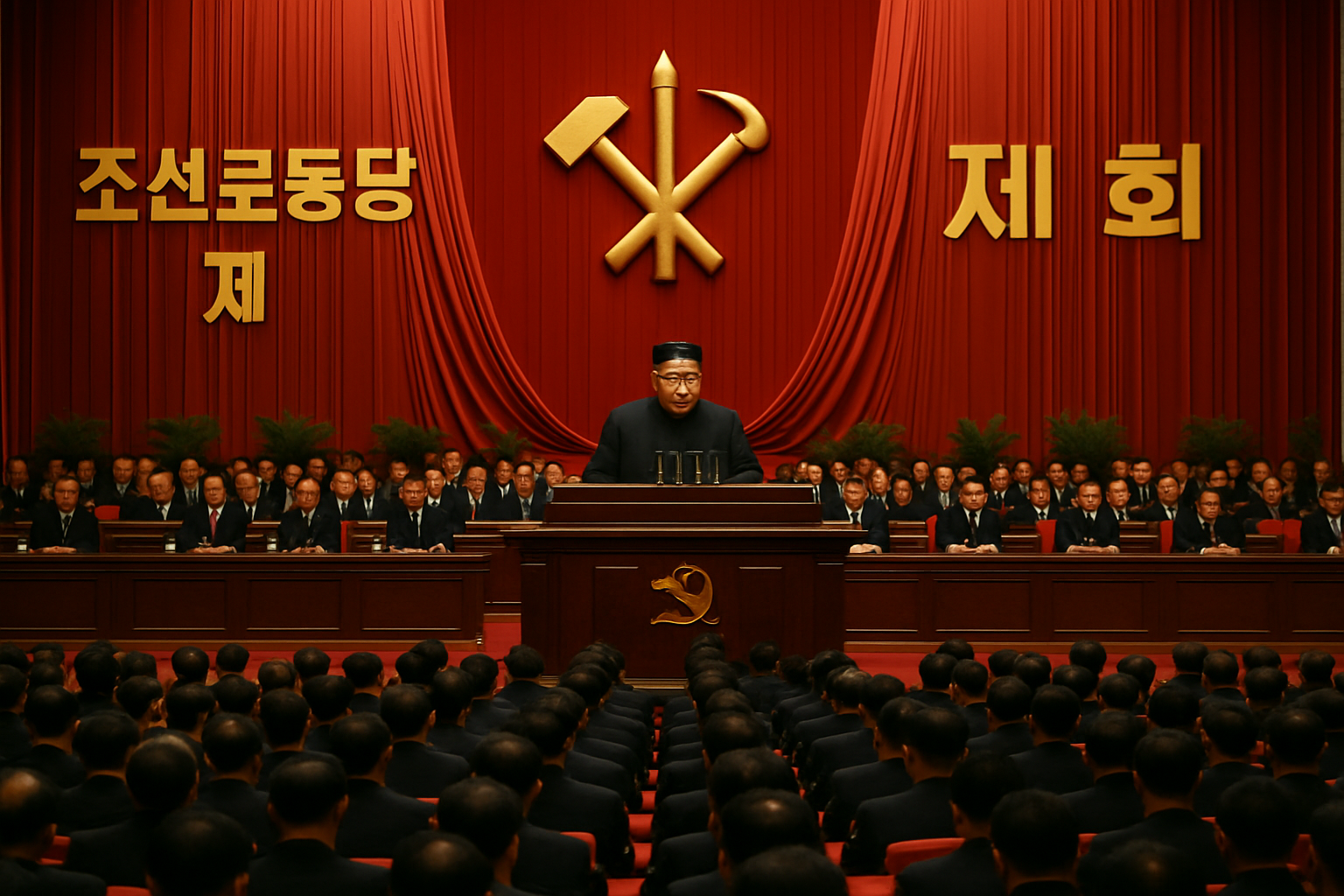
North Korea opened its Ninth Workers' Party Congress on February 19, 2026, marking the regime's most significant political gathering since January 2021 and setting the stage for major policy announcements amid unprecedented succession planning developments.
The rare five-year congress, held in Pyongyang with approximately 5,000 party members in attendance, represents the longest interval between party gatherings in recent North Korean history. State media confirmed the opening of what analysts describe as the regime's top political event, traditionally used to signal policy shifts and leadership changes.
Economic Achievements and Domestic Focus
In his opening address, Kim Jong Un struck an optimistic tone about the country's future while highlighting recent domestic achievements. The North Korean leader emphasized the completion of the massive 50,000-unit Hwasong Area housing project in Pyongyang, which state media has portrayed as providing modern amenities and improved living standards for residents in the capital.
This domestic focus comes as the regime seeks to demonstrate tangible benefits to key constituencies despite ongoing international sanctions. The housing project represents one of the most visible achievements of Kim's domestic agenda, showcasing contemporary residential towers with modern infrastructure concentrated in Pyongyang.
"The congress occurs against the backdrop of the most significant succession developments in the Kim dynasty's 78-year history."
— South Korean Intelligence Analysis
Historic Succession Planning Confirmed
The congress takes place amid confirmed reports from South Korean intelligence that Kim Jong Un has formally designated his daughter Kim Ju Ae as his successor. This unprecedented decision would establish the first female leadership in the dynasty's history and marks the fourth generation of Kim family rule.
Since her public debut in November 2022, Kim Ju Ae has undergone systematic elevation, including participation in weapons demonstrations, military parades, and a diplomatic visit to Beijing in September 2025. South Korean National Intelligence Service (NIS) reports indicate she now provides "input on policy matters" rather than merely making ceremonial appearances.
The congress is expected to provide Kim Ju Ae with her first official title or recognition, cementing her successor status through formal political elevation within the party hierarchy. This represents a significant cultural adaptation within North Korea's traditionally masculine Juche ideology system.
Military Developments and Regional Tensions
The congress opening followed the February 19 unveiling of massive 600mm nuclear-capable multiple rocket launcher systems, described by state media as "unique in the world" and "suitable for special attack missions." This strategic timing demonstrates the regime's continued emphasis on military capabilities alongside domestic achievements.
These developments occur as regional tensions remain elevated, with North Korean military aircraft activity having increased 23% in 2025 according to Taiwanese defense officials. The combination of advanced weapons capabilities, succession planning, and major political gatherings creates what analysts describe as a volatile period requiring careful international diplomatic responses.
Policy Direction and International Implications
The Workers' Party Congress is expected to define North Korea's domestic and foreign policy direction for the next five years. Key areas of focus include economic development strategies amid international sanctions, nuclear program directions, and foreign policy approaches toward major powers including China, Russia, and the United States.
Historical context shows that the Eighth Congress in 2021 acknowledged economic plan failures while Kim Jong Un assumed the General Secretary title. This year's gathering occurs during what experts describe as the regime's most significant internal transition since its founding.
The congress also addresses what Kim Jong Un described as "deep-rooted" corruption and incompetence within the party structure, indicating potential organizational changes alongside policy announcements. State media coverage through the Rodong Sinmun newspaper has emphasized the party's commitment to addressing internal governance issues.
Regional Security Context
International observers are closely monitoring the congress proceedings for signals about North Korea's approach to regional relations and diplomatic engagement. The combination of succession planning and continued weapons development creates new challenges for neighboring countries and international partners.
The congress occurs amid broader regional security concerns, including ongoing tensions in the Taiwan Strait and evolving relationships between major powers. North Korea's policy announcements at this gathering will likely influence regional diplomatic dynamics and security cooperation frameworks.
Cultural and Political Transformation
The systematic preparation of Kim Ju Ae as successor represents the most significant adaptation of North Korean political culture since the regime's founding. The success of unprecedented female leadership within the rigid political system will be closely watched as a potential model for authoritarian regime adaptation.
Expert analysis suggests this transition requires early announcement and sustained legitimacy building within the political elite and military hierarchy. The cultural framework integration necessary for this transition represents a fundamental test of the regime's adaptability while maintaining stability and dynastic continuity principles.
Economic Challenges and Opportunities
Despite showcasing domestic achievements like the Hwasong Area housing project, North Korea continues to face significant economic challenges including international sanctions, trade restrictions, and infrastructure limitations. The congress is expected to address economic development strategies for the next five years.
The regime's ability to balance military spending with domestic development remains a critical challenge. Resource allocation toward weapons systems despite economic constraints demonstrates the priority placed on military capabilities during the leadership transition period.
Looking Ahead
The Ninth Workers' Party Congress represents a critical juncture for North Korea's domestic and international trajectory. The formal recognition of Kim Ju Ae as successor, combined with continued nuclear advancement and economic policy adjustments, will shape the regime's approach to regional relations and internal governance for years to come.
Success in managing this unprecedented female succession within the rigid political system will be closely monitored by regional allies and international observers. The congress outcomes will provide crucial insights into North Korea's future direction and the Kim dynasty's approach to maintaining power through generational transition.
As the gathering continues, the international community faces renewed challenges in addressing North Korea's evolving political landscape while managing regional security concerns and diplomatic opportunities in an increasingly complex global environment.