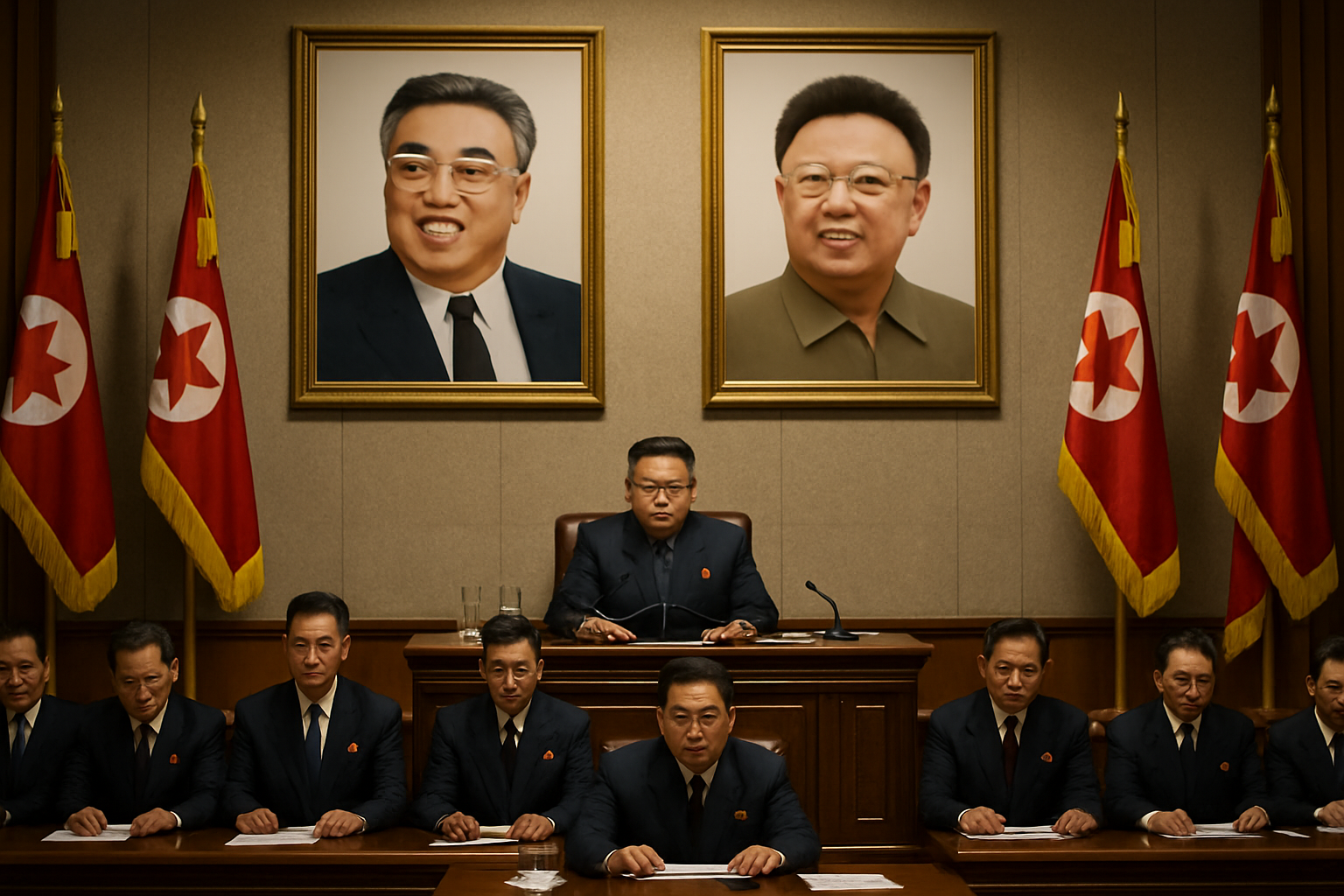
North Korean leader Kim Jong Un appears to be taking concrete steps to consolidate his daughter's position as his likely successor, with intelligence sources indicating that Kim Ju Ae is already providing input on policy matters as the regime prepares for its next dynastic transition.
South Korean lawmakers disclosed on Thursday, citing a briefing from the National Intelligence Agency (NIS), that North Korea has entered a new phase of succession planning with Kim Jong Un's daughter positioned as the presumptive heir to the world's most secretive nuclear state.
Intelligence Assessment Reveals Active Succession Planning
The South Korean National Intelligence Agency assessment represents the most definitive intelligence evaluation to date regarding North Korea's succession plans. According to lawmakers who attended the classified briefing, there are clear signs that Kim Jong Un is methodically preparing his daughter for eventual leadership of the Democratic People's Republic of Korea.
"North Korea appears to have entered the stage of designating leader's daughter Ju-ae as successor," South Korean lawmakers reported, citing the NIS briefing. The intelligence agency indicated it will be closely monitoring whether Kim Ju Ae attends the upcoming Workers' Party meeting and how she is presented, including whether she takes on any official titles or roles.
The assessment marks a significant development in understanding the internal dynamics of the Kim family regime, which has maintained power through three generations since the founding of North Korea in 1948.
Kim Ju Ae's Growing Public Profile
Kim Ju Ae, believed to be approximately 11 years old, made her first public appearance in November 2022 at a missile launch event. Since then, her appearances alongside her father have become increasingly frequent and ceremonial in nature, suggesting a deliberate effort to introduce her to the North Korean public and international community.
The young Kim has been photographed at various state functions, military parades, and weapons tests, often positioned prominently next to her father. State media coverage has notably begun referring to her with increasingly respectful titles, a significant indicator in the highly symbolic world of North Korean politics.
Intelligence sources suggest that beyond her public appearances, Kim Ju Ae is receiving input into policy discussions, indicating her preparation extends beyond mere ceremonial functions. This represents an acceleration of the succession timeline that many analysts had expected would unfold over several more years.
Historical Context of Kim Dynasty Succession
The potential succession of Kim Ju Ae would represent the fourth generation of Kim family rule in North Korea. The dynasty began with Kim Il Sung, who founded the state and ruled from 1948 until his death in 1994. His son, Kim Jong Il, then assumed power and led the country until his death in 2011, when current leader Kim Jong Un took control.
Each transition has been carefully orchestrated over several years, with the designated successor gradually taking on more responsibilities and public visibility. Kim Jong Un's own rise to power was notably accelerated following his father's deteriorating health, ultimately assuming leadership at the age of approximately 28.
The current succession planning appears to follow a similar pattern but with the added complexity of Kim Ju Ae's young age and gender. North Korea has never been led by a woman, though the country's political system theoretically allows for female leadership.
Strategic Implications for Regional Security
The succession planning occurs during a critical period for North Korean security and diplomacy. The regime faces ongoing international sanctions related to its nuclear weapons program while maintaining its development of ballistic missile capabilities.
Regional analysts note that succession planning could influence North Korea's approach to international negotiations and its relationships with key allies, particularly China and Russia. Historical precedent suggests that leadership transitions in North Korea often involve periods of internal consolidation that can affect the country's external policies.
The timing of this intelligence disclosure also coincides with preparations for a major Workers' Party congress, North Korea's highest decision-making body, which convenes to address domestic and foreign policy directions for the coming years.
International Response and Monitoring
South Korean intelligence agencies are intensifying their monitoring of North Korean leadership dynamics, particularly focusing on upcoming party meetings and state functions. The NIS assessment suggests that Kim Ju Ae's level of participation and the titles or roles she may receive will provide crucial indicators of the succession timeline.
International observers are particularly interested in how China, North Korea's primary economic and diplomatic supporter, views the potential succession. Beijing's relationship with the Kim regime has historically adapted to leadership changes while maintaining strategic stability.
The United States and its regional allies continue to monitor North Korean political developments as part of their broader security assessments for the Korean Peninsula. Any leadership transition in North Korea carries implications for nuclear negotiations and regional stability.
Challenges and Uncertainties
Despite the intelligence assessments, significant uncertainties remain about the succession timeline and process. Kim Jong Un is only in his early 40s and in apparent good health, suggesting that any transition may still be years away.
The young age of Kim Ju Ae presents unique challenges for succession planning. Unlike previous transitions that involved adult heirs with established political and military experience, Kim Ju Ae would require extensive preparation and likely a regency period if succession occurred in the near term.
North Korea's political elite and military leadership would also need to accept female leadership, representing a significant cultural and political shift for the traditionally male-dominated hierarchy.
Looking Ahead
The intelligence revelations about Kim Jong Un's succession planning mark a new chapter in North Korean political development. As the regime continues to balance internal stability with external pressures, the process of preparing Kim Ju Ae for potential leadership will be closely watched by intelligence agencies and analysts worldwide.
The upcoming Workers' Party meeting will provide crucial insights into how quickly the succession planning is proceeding and what role Kim Ju Ae may formally assume in the North Korean power structure. These developments will have lasting implications for regional security, international diplomacy, and the future direction of one of the world's most isolated nations.