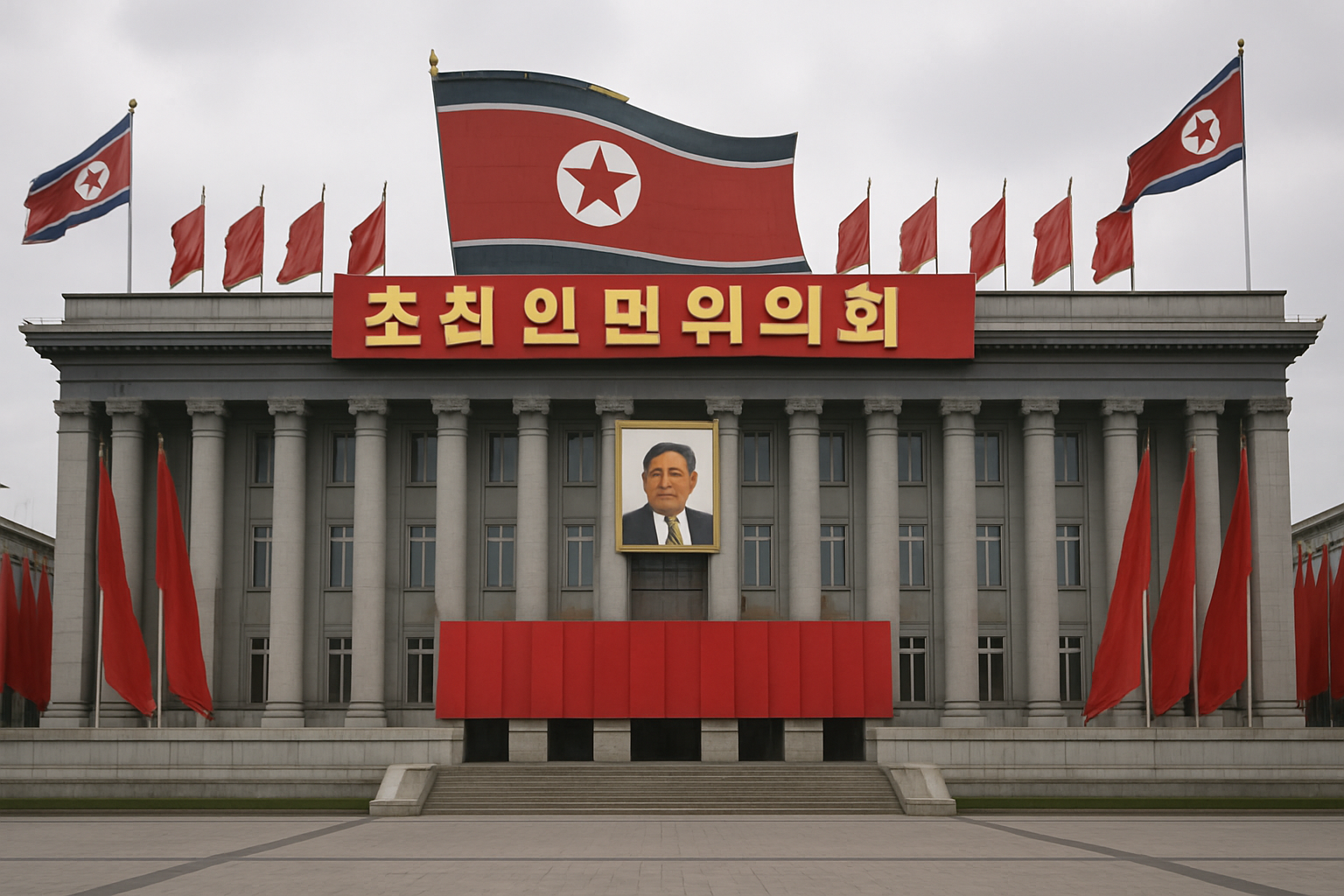
North Korean leader Kim Jong Un was unanimously reappointed as president of state affairs by the Supreme People's Assembly on Monday, consolidating his authority during an unprecedented period of succession planning that could see his teenage daughter become the first female leader in the dynasty's 78-year history.
State media KCNA reported that the decision was made during the first session of North Korea's rubber-stamp legislature, which convened in Pyongyang over the weekend. The assembly, formally known as the Supreme People's Assembly, serves as the highest legislative body that typically endorses decisions already made by the ruling Workers' Party.
Constitutional Amendments and Leadership Changes
The meeting focused on amendments and supplements to the socialist constitution, as well as the election of the chairman of the State Affairs Commission and other state leadership bodies, according to Reuters reporting. The assembly typically meets following a ruling Workers' Party Congress to transform party decisions into formal law.
The reappointment comes at a critical juncture for North Korea, as the regime has been systematically preparing Kim Jong Un's daughter, Kim Ju Ae, as his successor. South Korean intelligence confirmed in February 2026 that North Korea has "entered the stage of designating the leader's daughter Ju-ae as successor" - marking the first time such definitive confirmation has been provided.
"This represents the most significant political development in North Korea since Kim Jong Un assumed power in 2011. The systematic preparation of a female successor is unprecedented in the Kim dynasty's history."
— South Korean Intelligence Assessment, February 2026
Historic Female Succession Planning
The reappointment occurs against the backdrop of the most significant succession developments in the Kim dynasty's history. Kim Ju Ae, believed to be in her early teens, has moved beyond ceremonial appearances to providing "input on policy matters," representing substantial political involvement preparation for leadership.
Since her public debut in November 2022, Kim Ju Ae has been systematically elevated through attendance at weapons demonstrations, military parades, state functions, and her first international diplomatic visit to Beijing in September 2025. Most recently, she has been photographed receiving military training, including rifle practice at shooting ranges - concrete evidence of comprehensive leadership preparation.
This would represent the fourth generation of Kim dynasty leadership: Kim Il Sung (1948-1994), Kim Jong Il (1994-2011), Kim Jong Un (2011-present), and potentially Kim Ju Ae. The transition would mark the first female leadership in the regime's history, requiring significant cultural adaptation within the traditionally masculine Juche ideology system.
Military Capabilities and Diplomatic Positioning
The assembly session also reviewed the country's economic five-year plan announced at the ninth party congress held in February 2026. During that congress, North Korea unveiled massive 600mm nuclear-capable multiple rocket launcher systems described as "unique in the world" and "suitable for special attack missions," demonstrating continued military advancement despite international sanctions.
The regime has maintained a dual development strategy, advancing military capabilities while showcasing domestic achievements. The completion of the 50,000-unit Hwasong Area housing project in Pyongyang provides modern amenities for capital residents, demonstrating the regime's ability to allocate resources toward both weapons systems and urban infrastructure despite economic constraints.
In February 2026, Kim Jong Un issued a conditional diplomatic opening to the United States, stating that if Washington respects North Korea's nuclear status, "there is no reason why we cannot get along well with the US." However, he simultaneously constitutionally redesignated South Korea as a "hostile state," reflecting a strategy of pursuing direct engagement with Washington while bypassing Seoul.
Regional Security Implications
The reappointment and succession planning occur during a period of heightened regional tensions and global nuclear governance crisis. The New START treaty between the United States and Russia expired in February 2026, marking the first time in over 50 years without superpower nuclear constraints.
China has enhanced its leverage over North Korean policy through the restoration of passenger rail service between Beijing and Pyongyang in March 2026 - the first such connection in six years. This transportation link provides critical economic access and establishes infrastructure for future diplomatic initiatives.
Regional allies South Korea, Japan, and the United States face renewed challenges in addressing North Korea's weapons advancement through diplomatic channels. The combination of advanced military capabilities, unprecedented succession planning, and major political transitions creates a complex security environment requiring innovative diplomatic responses.
Cultural and Political Transformation
The systematic preparation of Kim Ju Ae represents the most significant adaptation of North Korean political culture since the regime's founding. Success depends on sustained legitimacy building among the political elite and military hierarchy while maintaining regime stability and dynastic continuity principles.
International observers note that this careful, methodical approach to succession contrasts with previous dynastic transitions that typically occurred during crisis periods. The current systematic elevation suggests long-term planning to ensure smooth succession rather than reactive crisis management.
The success of this unprecedented gender transition within North Korea's rigid political system is being closely watched globally as a potential model for authoritarian regime adaptation. The implications extend beyond the Korean Peninsula, potentially influencing international approaches to engaging with nuclear-armed states undergoing internal transformation.
Looking Forward
As Kim Jong Un begins his reaffirmed term as president of state affairs, the international community faces the challenge of developing effective engagement strategies that address security concerns while managing regional stability. The combination of nuclear advancement, succession planning, and political transitions represents a critical juncture that will shape North Korea's domestic and international trajectory for years to come.
The formal recognition of Kim Ju Ae as successor, combined with continued nuclear advancement and economic policy adjustments, will determine the regime's approach to regional relations and internal governance. This template for 21st-century authoritarian succession within nuclear-armed states carries implications that extend far beyond Northeast Asia, potentially influencing global approaches to conflict prevention and diplomatic engagement in an increasingly multipolar world.