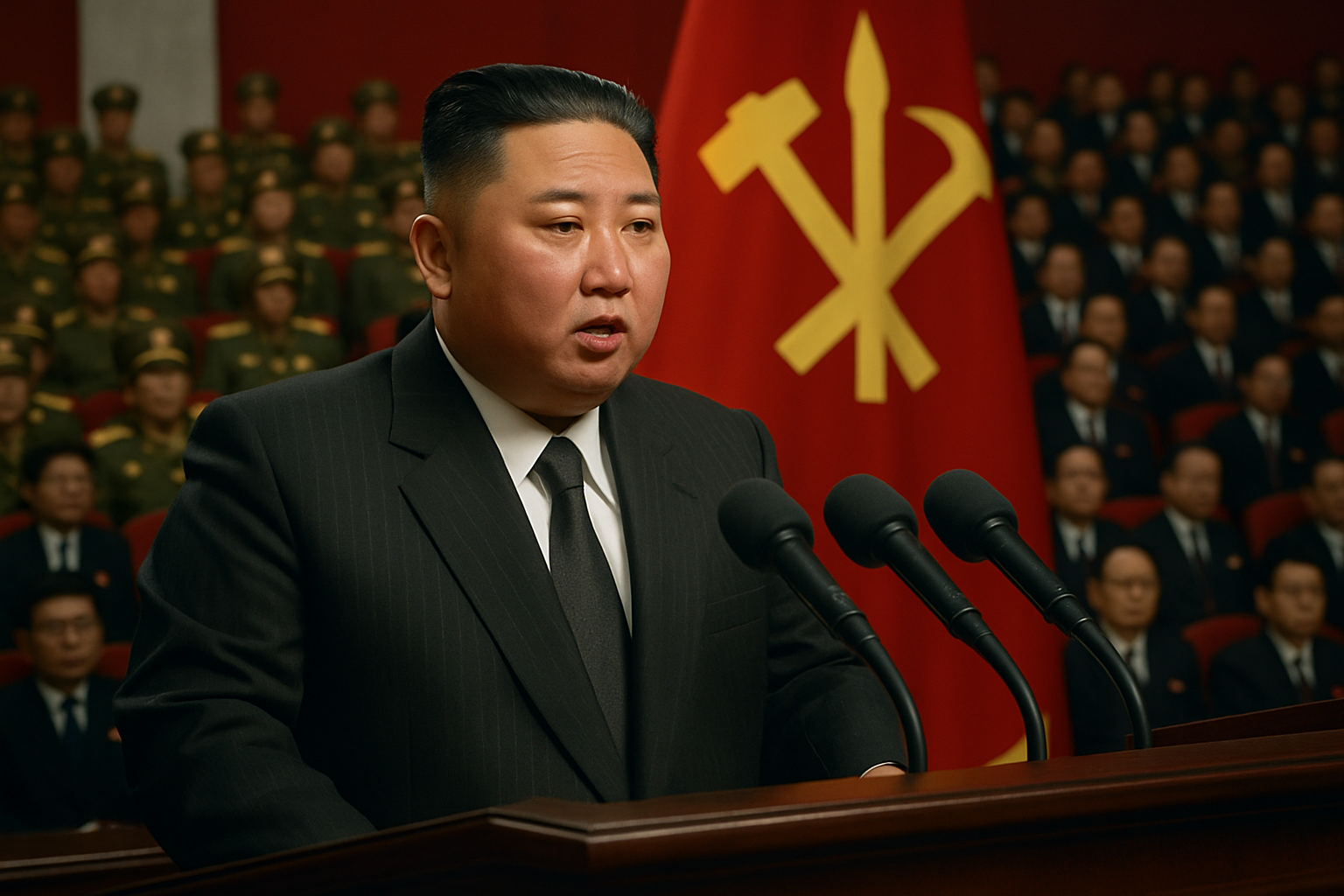
Kim Jong Un was unanimously re-elected as general secretary of North Korea's ruling Workers' Party during the fourth day of the Ninth Party Congress, solidifying his grip on power while the regime touted significant nuclear advances and continued planning for an unprecedented female succession.
The Korean Central News Agency (KCNA) reported that the decision was made Sunday "in accordance with the unshakeable will and unanimous desire of all delegates" attending the first major political gathering since January 2021. The five-year gap between congresses represents the longest interval in recent North Korean history, underscoring the significance of this political moment.
Nuclear Capabilities and Military Modernization
State media emphasized that the country's nuclear-based "war deterrence" had been "radically improved" under Kim's leadership, reinforcing national defense capabilities despite ongoing international sanctions. The congress highlighted achievements in military modernization, with delegates praising Kim for strengthening nuclear forces that continue to serve as the regime's central tool for survival and international leverage.
The reelection comes just days after North Korea unveiled massive 600mm nuclear-capable multiple rocket launcher systems described as "unique in the world" and "suitable for special attack missions." This strategic timing demonstrates the regime's continued emphasis on military capabilities alongside domestic achievements during a critical leadership transition period.
Unprecedented Female Succession Planning
The congress occurs amid confirmed succession planning that represents the most significant development in the Kim dynasty's 78-year history. South Korean intelligence has definitively confirmed that Kim Jong Un formally designated his daughter Kim Ju Ae as his successor, marking an unprecedented transition to female leadership within the traditionally masculine Juche ideology system.
Kim Ju Ae, approximately 13 years old, has been systematically elevated since her November 2022 public debut, including weapons demonstrations attendance, military parades, state functions, and a September 2025 Beijing diplomatic visit. Intelligence reports indicate she now provides "input on policy matters" beyond ceremonial appearances, marking a transition to genuine political involvement preparation.
"To elect the head of the Workers' Party of Korea is an important affair decisive of the Party's leadership ability and the future destiny of the country and the people."
— Korean Central News Agency
Domestic Achievements and Economic Challenges
The congress showcased the regime's dual approach of maintaining military capabilities while providing tangible domestic benefits. Kim Jong Un celebrated the completion of a massive five-year, 50,000-unit housing construction project in Pyongyang's Hwasong Area, featuring contemporary residential towers with modern infrastructure and consumer amenities.
However, the regime continues to face significant economic challenges, including international sanctions, trade restrictions, and infrastructure limitations. Despite these constraints, the resource allocation toward both weapons systems and urban infrastructure demonstrates a calculated survival strategy during the transition period.
International Context and Regional Security
The reelection occurs during a critical period for global nuclear governance. The New START treaty between the United States and Russia expired February 5, 2026, marking the first time in over 50 years without bilateral nuclear constraints between superpowers. UN Secretary-General António Guterres has warned that nuclear risks are at their "highest in decades."
Regional security implications extend across the Korean Peninsula and Northeast Asian stability. International observers are closely monitoring for diplomatic engagement signals and nuclear policy evolution, as the combination of advanced weapons capabilities, succession planning, and major political gathering creates challenges for neighboring countries and international partners.
Cultural and Political Transformation
The preparation for unprecedented female leadership within North Korea's rigid political system represents the most significant cultural adaptation since the regime's founding. Success depends on political elite and military acceptance of female leadership within the male-dominated hierarchy while maintaining regime stability and dynastic continuity principles.
Expert analysis suggests this choice is "unique for patriarchal society" and potentially requires early announcement to build legitimacy. The strategy appears designed to "build up the myth around her" well in advance of transition needs, demonstrating deliberate legitimacy establishment through systematic preparation.
Five-Year Policy Direction
With approximately 5,000 party delegates in attendance, the congress serves as the highest decision-making body for the Workers' Party of Korea and a platform for major policy announcements and leadership appointments. The gathering is expected to define domestic and foreign policy directions for the next five years, addressing economic development strategies amid sanctions, nuclear program directions, and internal party organizational changes.
Kim Jong Un promised to tackle "deep-rooted" corruption and incompetence within the party structure while boosting "economic construction and people's standard of living," indicating potential organizational changes alongside policy announcements.
Global Implications
The congress outcomes provide crucial insights into North Korea's future direction and the Kim dynasty's generational transition approach. The success of managing unprecedented female succession within this rigid political system is being closely watched globally as a potential model for authoritarian regime adaptation.
This represents a critical juncture for North Korea's domestic and international trajectory. The formal Kim Jong Un reaffirmation, combined with nuclear advancement and succession planning, shapes the regime's approach to regional relations and internal governance for the coming years, serving as a template for authoritarian adaptation, conflict prevention, and diplomatic engagement in a multipolar system.