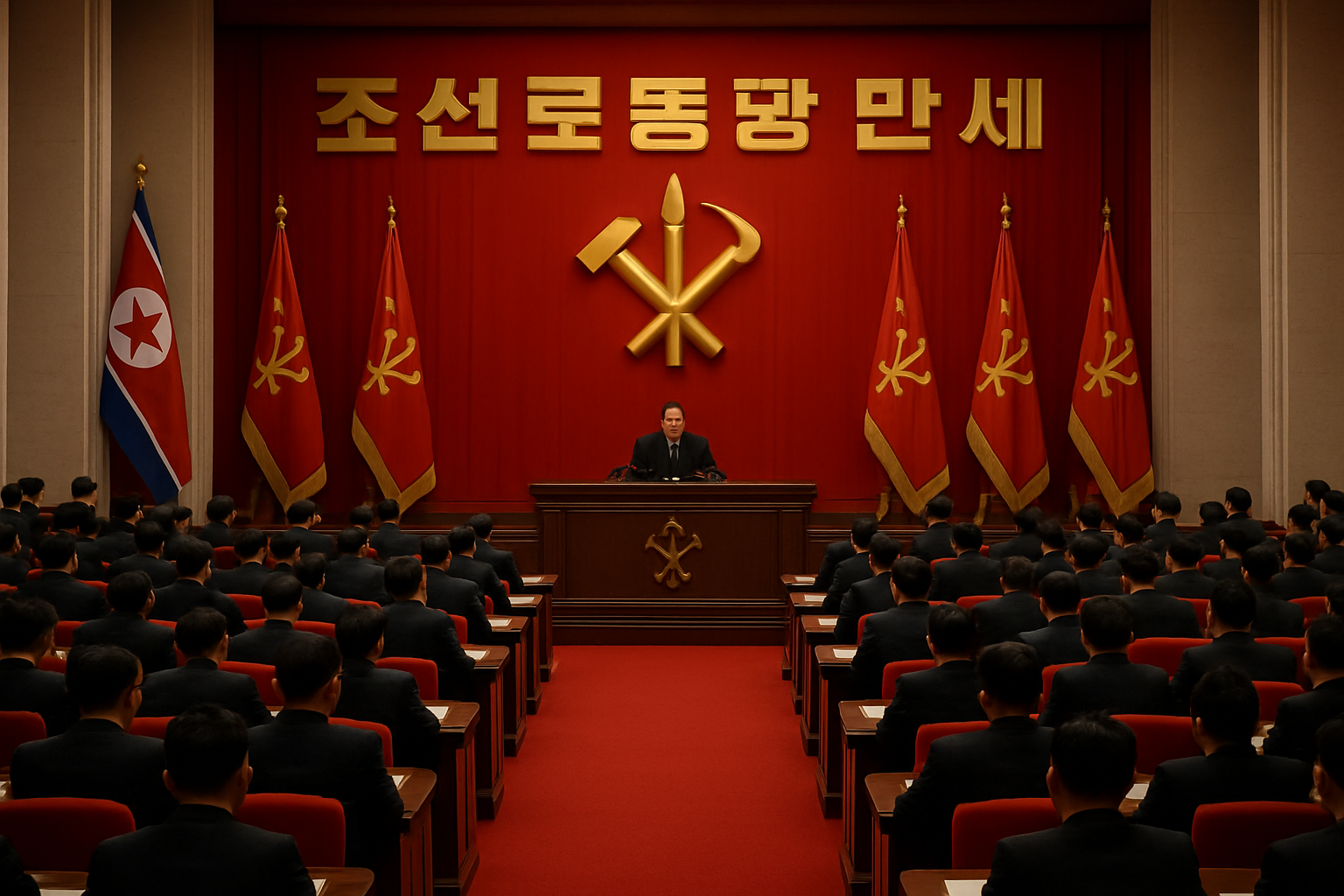
North Korean leader Kim Jong Un has been unanimously re-elected as general secretary of the Workers' Party of Korea during the fourth day of the Ninth Party Congress, marking another milestone in his 15-year leadership of the country's sole governing party.
The Korean Central News Agency (KCNA) reported on Monday that Kim's reelection was decided "in accordance with unshakeable will and unanimous desire of all delegates." The congress, which represents the first major political gathering since January 2021, has drawn approximately 5,000 party delegates to Pyongyang for the once-in-five-years summit.
Nuclear Capabilities at the Forefront
State media emphasized that under Kim's leadership, "the war deterrence of the country with the nuclear forces as its pivot has been radically improved." This declaration comes as North Korea continues to advance its nuclear weapons program despite extensive international sanctions and diplomatic pressure from the global community.
The timing of Kim's reelection coincides with recent displays of military might, including the February 19 unveiling of massive 600mm nuclear-capable multiple rocket launcher systems described by KCNA as "unique in the world" and "suitable for special attack missions." These weapons represent a significant advancement in North Korea's tactical nuclear capabilities for potential regional conflicts.
"The reaffirmation of his authority amounts to a declaration that Kim Jong Un has ended the regime's 'crisis‑management mode' and entered a phase of confident, stable long‑term rule."
— Lim Eul-chul, North Korea Expert at Kyungnam University
International Reactions and Diplomatic Context
Chinese President Xi Jinping quickly congratulated Kim Jong Un on his reelection, with Beijing's foreign ministry noting that Xi praised the Workers' Party for uniting the Korean people and achieving "new accomplishments." This diplomatic gesture underscores the continued strategic importance of China-North Korea relations amid broader geopolitical tensions.
The congress occurs during a critical period for global nuclear governance, as the New START treaty between the United States and Russia expired on February 5, 2026, marking the first time in over 50 years without bilateral nuclear constraints between the superpowers. UN Secretary-General António Guterres has warned that nuclear risks are at their "highest in decades."
Domestic Achievements and Economic Strategy
Alongside military modernization, the congress highlighted significant domestic accomplishments under Kim's leadership, particularly the completion of the massive 50,000-unit Hwasong Area housing project in Pyongyang. This development provides modern amenities and improved living standards for capital residents, demonstrating the regime's dual approach of maintaining defensive capabilities while delivering tangible benefits to key constituencies.
Kim has promised to tackle "deep-rooted" corruption and incompetence within the party structure while boosting "economic construction and people's standard of living." The congress is expected to define domestic and foreign policy directions for the next five years, addressing economic development strategies amid continuing international sanctions.
Succession Planning and Historical Significance
This reelection occurs amid confirmed reports of unprecedented succession planning within the Kim dynasty. South Korean intelligence has definitively confirmed that Kim Jong Un has formally designated his daughter, Kim Ju Ae, as his successor, representing what would be the fourth generation of Kim family leadership and the first female leader in the dynasty's 78-year history.
Kim Ju Ae's systematic elevation since her November 2022 public debut has included participation in weapons demonstrations, military parades, and state functions, with intelligence reports indicating she now provides "input on policy matters" beyond ceremonial appearances. This succession planning represents the most significant adaptation of North Korean political culture since the regime's founding.
Regional Security Implications
The congress proceedings are being closely monitored by regional powers and international observers for policy direction indicators that could affect Korean Peninsula security dynamics. The combination of advanced weapons capabilities, succession planning, and major political gatherings creates a volatile period that requires effective international diplomatic responses.
Despite long-standing international sanctions, North Korea has continued to build its nuclear capabilities, regularly testing banned intercontinental ballistic missiles and developing sophisticated delivery systems. The regime's ability to maintain and advance these programs while implementing major domestic projects like the Hwasong housing development demonstrates significant resource allocation capabilities.
Cultural and Political Transformation
The potential succession of Kim Ju Ae would require unprecedented cultural adaptation within the traditionally masculine Juche ideology system. Success would depend on political elite and military acceptance of female leadership within the male-dominated hierarchy, representing one of the most significant political culture changes in North Korean history.
Expert analysis suggests this choice is "unique for patriarchal society" and may require sustained legitimacy building well in advance of any transition needs. The systematic preparation includes international exposure through diplomatic visits and comprehensive leadership training across military and political spheres.
Looking Ahead
Kim Jong Un's reelection and the broader developments emerging from the Ninth Party Congress represent a critical juncture for North Korea's domestic and international trajectory. The formal reaffirmation of his leadership, combined with nuclear advancement and succession planning, will shape the regime's approach to regional relations and internal governance for years to come.
The success of managing an unprecedented female succession within this rigid political system is being closely watched as a potential model for authoritarian regime adaptation. The international community faces renewed challenges in addressing the evolving political landscape while managing regional security concerns and exploring diplomatic opportunities in an increasingly complex global environment.