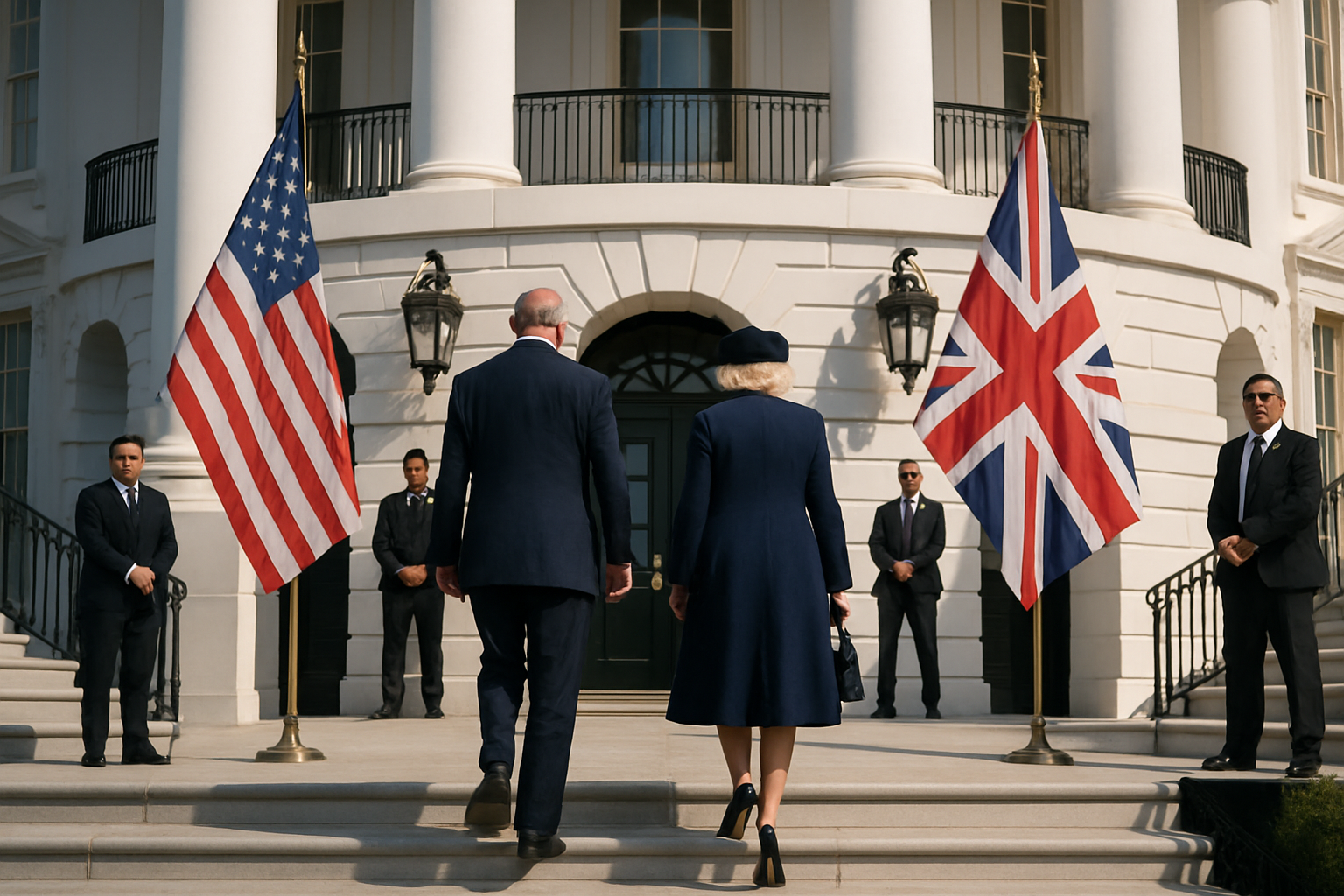
King Charles III and Queen Camilla have begun their historic four-day state visit to the United States, marking the first visit by a British monarch since Queen Elizabeth II in 2007 and celebrating the 250th anniversary of American independence, despite heightened security concerns following Saturday's shooting at the White House Correspondents' Association dinner.
The visit proceeds amid the most strained US-UK relations since the Iraq War, with President Trump publicly criticizing Prime Minister Keir Starmer's government for refusing to support "Operation Epic Fury" against Iran, declaring the relationship "obviously not what it was." The diplomatic tensions, combined with recent security incidents, have created an unprecedented backdrop for what was planned as a ceremonial celebration of the "special relationship."
Security Measures Enhanced After Correspondents' Dinner Incident
Enhanced security protocols are in place following Saturday night's dramatic shooting at the White House Correspondents' Association dinner, where 31-year-old California elementary school teacher Cole Thomas Allen breached security at the Washington Hilton armed with a shotgun, handgun, and knives. The gunman fired multiple shots before being subdued by Secret Service agents, wounding one agent who was protected by body armor and is expected to make a full recovery.
Acting Attorney General Todd Blanche expressed complete confidence that the royal couple will be safe during their visit, noting the comprehensive cooperation between British royal security and the US Secret Service. This marks the third major security incident targeting President Trump since his return to the presidency, following a February 2026 armed intruder incident at Mar-a-Lago and previous assassination attempts.
"The state visit will go ahead despite concerns raised after a gunman targeted an event attended by the president."
— BBC News Report
Constitutional Monarchy Under Pressure
The visit takes place during an unprecedented crisis for the British Royal Family, with Prince Andrew's historic arrest in February 2026 marking the first time a senior British royal has been detained since King Charles I in 1647. Andrew was arrested on misconduct in public office charges related to allegations he shared classified Afghanistan intelligence with Jeffrey Epstein, including sensitive data about Helmand province's gold, uranium, and oil reserves.
King Charles III took the unprecedented step of publicly supporting the investigation against his own brother, declaring "law must take its course" with "full support and cooperation" for authorities. This represents a seismic shift in royal protocol, prioritizing institutional integrity over family loyalty and demonstrating that the monarchy operates within rather than above the law.
The UK government is actively considering legislation to remove Prince Andrew from the royal line of succession, which would require an Act of Parliament plus consultations across the 14 Commonwealth realms where King Charles III serves as head of state.
Diplomatic Tensions Amid Global Crisis
The state visit occurs during the most serious breakdown in the US-UK "special relationship" since the Suez Crisis of 1956. President Trump has openly criticized the Starmer government for declining to support American military operations against Iran, with the UK citing "Iraq lessons" and stating it "does not believe in regime change from the skies."
European allies have collectively rejected Trump's demands for naval coalition support in the Strait of Hormuz, with German Defense Minister Boris Pistorius leading the resistance by asking, "What does Trump expect a handful of European frigates to do that the powerful US Navy cannot?" This has prompted Trump's furious response: "We no longer need NATO assistance—IN FACT, WE NEVER NEEDED IT!"
The crisis has exposed fundamental disagreements over international intervention, with European nations demonstrating strategic autonomy by defending their own territories—such as the unprecedented naval coalition response to Iran's attack on RAF Akrotiri Cyprus—while rejecting participation in what they view as "optional wars."
Historic Ceremonial Program Despite Challenges
Despite the diplomatic and security challenges, the full ceremonial program will proceed as planned. The visit includes high-profile formal events such as a state dinner at the White House and a historic address by King Charles III to the US Congress—marking the first time a British monarch has addressed Congress during an active policy disagreement between the two nations.
The itinerary also features events in New York City and Virginia, where the King and Queen Camilla will focus on causes they champion, including climate change initiatives and cultural exchanges. The visit concludes with a stop in Bermuda, maintaining the traditional Commonwealth element of royal tours.
Palace officials emphasize that the visit proceeds "on advice of the British government" and celebrates "historic connections and the modern bilateral relationship," despite current political tensions.
Template for 21st-Century Monarchy
The visit represents a critical test of whether constitutional monarchy can maintain institutional relationships despite temporary political disagreements. King Charles's role in preserving democratic relationships regardless of policy tensions serves as a symbolic anchor for US-UK relations during this unprecedented period of disagreement.
Constitutional experts view this as template-setting for 21st-century alliance management during partisan divisions. The stakes extend beyond bilateral relations to fundamental questions about alliance obligations, sovereignty principles, and democratic accountability in an era of growing international tensions.
"This visit represents a defining moment for the monarchy's role in international diplomacy and transatlantic relations during a period of unprecedented political turbulence."
— Senior Palace Official
Global Context of Multiple Crises
The state visit unfolds against a backdrop of multiple simultaneous global crises that the UN Secretary-General has described as "the most dangerous since the Cold War." The Iran conflict has caused oil prices to surge past $100 per barrel, led to the closure of the Strait of Hormuz affecting 40% of global oil transit, and resulted in over 18,000 flight cancellations worldwide.
The expiration of the New START nuclear treaty in February 2026 has left the world without US-Russia nuclear constraints for the first time in over 50 years, adding to concerns about global governance and institutional stability during this period of heightened tensions.
Historical Significance and Future Implications
This marks only the fourth state visit by a British monarch to the United States in history, following Queen Elizabeth II's visits in 1976, 1991, and 2007. The 2026 visit comes during a year marking 250 years since American independence, adding symbolic weight to the diplomatic mission.
Success will be measured not by policy alignment but by the preservation of institutional relationships during fundamental disagreements. The visit could provide a template for how democratic alliances can maintain unity through careful diplomacy while respecting sovereignty and democratic decision-making processes.
Failure, however, could signal broader challenges to the post-World War II international order, where traditional alliance frameworks struggle to adapt to contemporary geopolitical realities requiring new models of cooperation that preserve democratic solidarity while respecting territorial sovereignty principles.
As the royal couple begins their carefully choreographed diplomatic mission, the world watches to see whether institutional diplomacy can triumph over political discord, setting crucial precedents for international relations in an increasingly complex and divided global landscape.