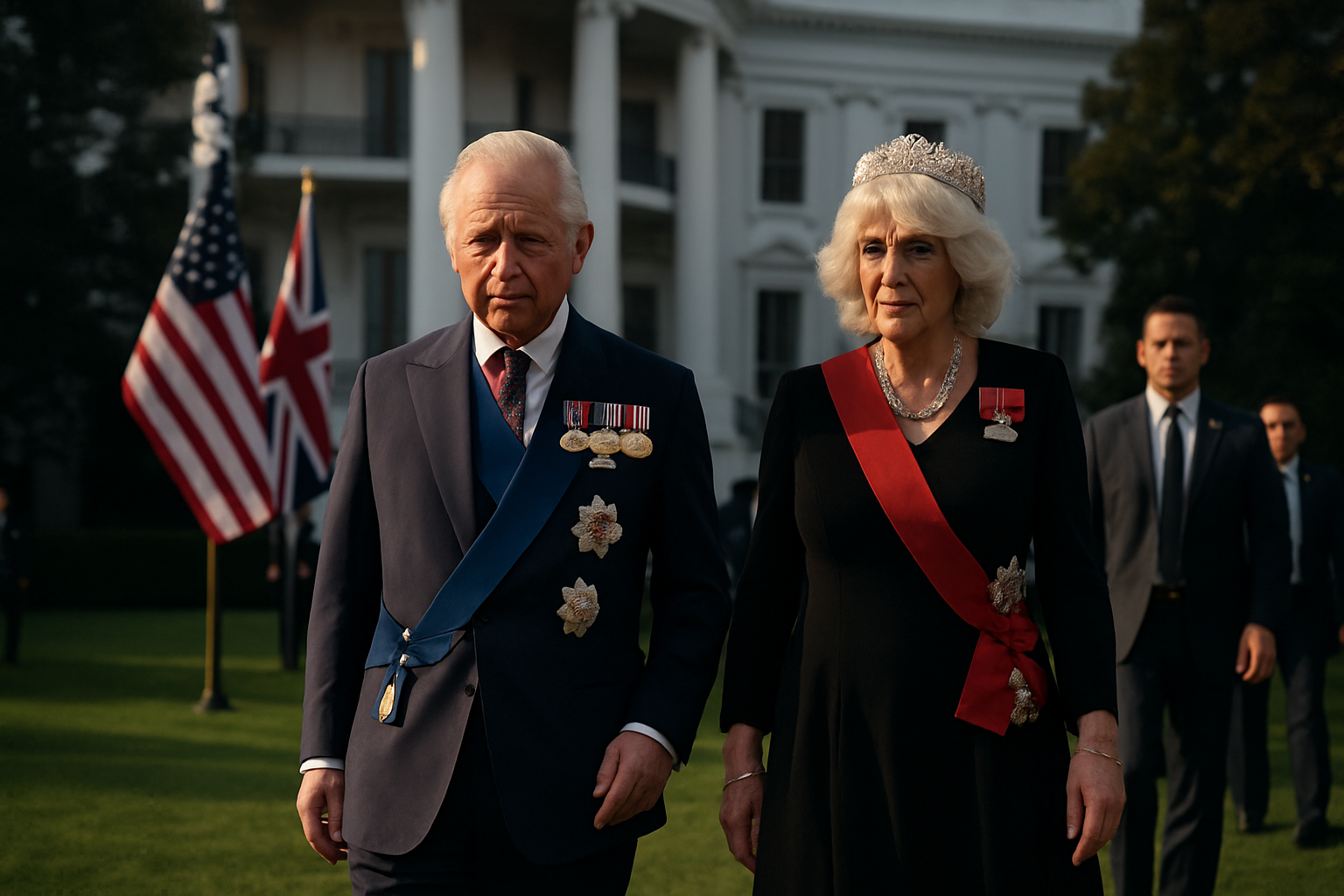
King Charles III will proceed with his historic state visit to the United States in late April, Buckingham Palace confirmed Tuesday, despite mounting calls from British politicians to cancel the trip amid President Trump's ongoing military operations against Iran and unprecedented strains in the US-UK "special relationship."
The announcement comes at one of the most challenging periods for transatlantic relations in decades, with President Trump openly criticizing Prime Minister Keir Starmer's reluctance to support Operation Epic Fury, the largest US-Israeli military campaign against Iran since 2003. Trump's repeated statements that the US-UK relationship is "obviously not what it was" have created the diplomatic backdrop for what critics are calling a potential "humiliation" for the British monarchy.
The Visit Details and Diplomatic Stakes
The state visit, scheduled for April 27-28, will mark King Charles III's first visit to the United States as monarch and the first by any British sovereign since Queen Elizabeth II's 2007 trip. The program is expected to include a state dinner at the White House and an address by the King to Congress, celebrating the historic ties between the two nations as America approaches its 250th anniversary of independence.
According to multiple sources, the visit will also include a stop in Bermuda, marking the King's first visit to the British Overseas Territory. The itinerary was designed to "celebrate the historic connections and the modern bilateral relationship between the United Kingdom and the United States," Buckingham Palace stated, emphasizing that the trip is being made "on the advice of the British government."
However, the timing could not be more problematic. The visit occurs during the third week of what has become the most dangerous international crisis since the Cold War, with Iran's closure of the Strait of Hormuz affecting 40% of global oil transit, oil prices surging past $100 per barrel, and over 18,000 flights cancelled worldwide due to Middle Eastern airspace closures.
Growing Opposition and Diplomatic Tensions
The controversy surrounding the visit has intensified as British MPs privately express concerns about potential embarrassment to the monarchy. Several politicians have described the upcoming visit as a "humiliation" while Trump's war with Iran continues to escalate, with some calling for the ceremonial event to be postponed or cancelled entirely.
"King Charles will go ahead with a state visit to the US in April, Buckingham Palace has confirmed, despite some politicians saying the trip will be a 'humiliation' while Donald Trump's war with Iran is ongoing."
— The Guardian
The diplomatic crisis deepened following Trump's explosive criticism of the UK's refusal to support Iran operations. In a March interview with The Sun, Trump declared: "He [Starmer] didn't help at all. I never thought I'd see this from Britain." The President's frustration stems from Starmer's categorical refusal to allow US forces to use British bases for Iran strikes, with the Prime Minister citing "Iraq lessons" and stating the UK "cannot repeat the same mistakes made in Iraq."
Emily Thornberry became the latest Labour politician to call for postponement of the King's visit, citing the ongoing Iran war as inappropriate timing for such a high-profile diplomatic engagement. This adds to growing pressure within Parliament to reconsider the visit's timing.
The "Special Relationship" Under Strain
The current tensions represent the most serious breakdown in US-UK relations since the 2003 Iraq War disagreements. Trump's public criticism that Britain is "not Winston Churchill's Britain" reflects deeper frustration with European allies who have collectively rejected his demands for naval coalition support in securing the Strait of Hormuz.
The crisis has been compounded by the UK government's broader approach to the Iran situation. Defence Secretary John Healey declined to explicitly back US-Israeli strikes and stated that the US "must set out the legal basis" for Iran operations, reflecting European concerns about the precedent of unilateral military action against a sovereign state.
Global Context and Strategic Implications
The King's visit occurs against the backdrop of the most comprehensive breakdown of international diplomatic frameworks in decades. The Iran crisis emerged from the collapse of Geneva nuclear talks despite achieving "broad agreement on guiding principles" - the most progress since the 2018 JCPOA collapse. The fundamental disagreement over scope proved insurmountable, with Iran insisting on nuclear-only discussions while the US demanded comprehensive agreements including ballistic missiles, regional proxies, and human rights.
The global implications are severe. The closure of the Strait of Hormuz has triggered the largest strategic petroleum reserve release in IEA's 50-year history, with 400 million barrels released from 32 countries. Natural gas prices have surged 24% in Europe and 78% in the US, while Qatar's LNG production halt affects approximately 20% of global exports.
Adding to the complexity, the crisis occurs during a nuclear governance vacuum. The New START treaty expired on February 5, 2026, marking the first time in over 50 years without US-Russia nuclear constraints. UN Secretary-General António Guterres has declared nuclear risks are at their "highest in decades."
European Strategic Response
The Iran crisis has paradoxically demonstrated European strategic autonomy in action. While European allies refused Trump's Gulf coalition requests, they mounted an unprecedented response when Iran struck RAF Akrotiri in Cyprus - the first attack on European territory since World War II. The naval coalition response included HMS Dragon, Spanish frigates, and vessels from Italy, France, the Netherlands, and Greece, with the EU activating its ESTIA crisis mechanism for the first time in bloc history.
This selective cooperation model - defending European territory while rejecting participation in what German Defense Minister Boris Pistorius called "optional wars" - represents a fundamental shift in transatlantic relations and alliance structures.
Royal Protocol and Constitutional Considerations
King Charles III's decision to proceed with the visit, despite the deteriorating diplomatic climate, reflects careful constitutional balance. The monarch's role requires maintaining relationships with democratic allies regardless of temporary political tensions, while the Palace has emphasized that the visit proceeds "on the advice of the British government."
The visit also carries symbolic weight in celebrating the 250th anniversary of American independence, marking the transformation from colonial separation to the modern "special relationship." However, current tensions raise questions about whether this relationship retains its historical significance in the 21st-century multipolar world.
Congressional and Public Response
The visit comes as Congressional opposition to Iran operations reaches unprecedented levels, with only 25% of Americans supporting the military strikes - described as "almost unprecedented" unpopularity for a military operation in its early stages. Operation Epic Fury has already cost $11.3 billion in its first week, with Pentagon operations projected through September, far beyond the initial 4-6 week timeline.
Senator Richard Blumenthal expressed being "more concerned than ever" about potential ground troop deployment, while bipartisan lawmakers demand answers about strategy, costs, and exit plans. This domestic opposition creates an additional layer of complexity for the royal visit's reception.
Looking Forward
The success or failure of King Charles III's state visit will likely be measured not in traditional diplomatic achievements but in its ability to maintain institutional relationships during a period of unprecedented policy disagreement. The visit represents a test case for whether constitutional monarchy can navigate partisan political tensions while preserving long-term democratic alliance structures.
As the Iran crisis continues to unfold with global implications for energy security, nuclear governance, and international law enforcement, the royal visit serves as a symbolic anchor for US-UK relations. Whether it provides stability during turbulent times or becomes overshadowed by ongoing military operations will depend largely on developments in the Middle East over the coming weeks.
The stakes extend beyond bilateral relations to fundamental questions about alliance obligations, sovereignty principles, and democratic accountability in the 21st century. King Charles III's first state visit as monarch occurs at a moment when these principles face their greatest test since the Cold War's end, making his diplomatic mission as historically significant as it is personally challenging.