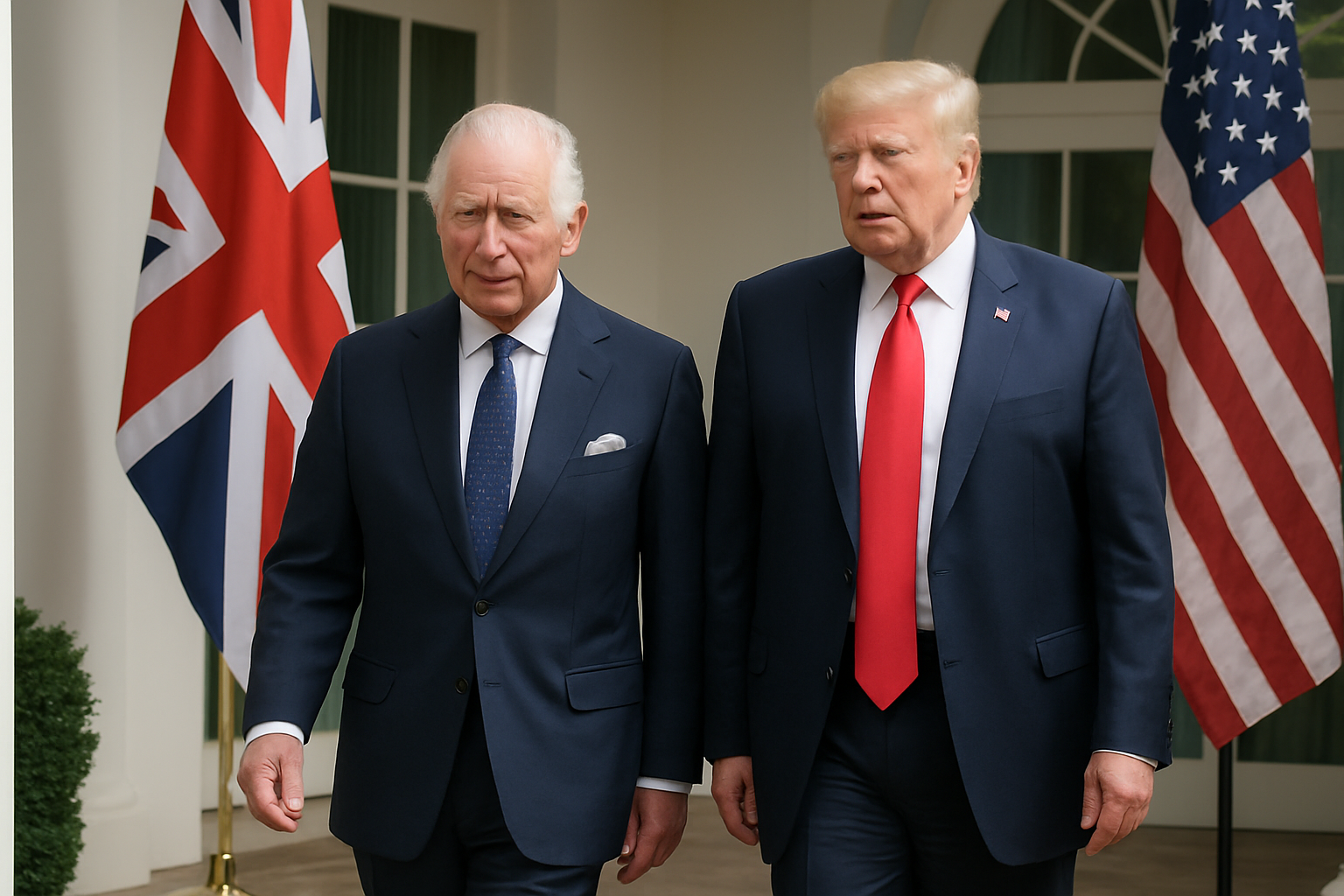
King Charles III will proceed with his planned state visit to the United States this April, becoming the first British monarch to visit America since Queen Elizabeth II in 2007, despite mounting calls for postponement amid deteriorating UK-US relations and ongoing controversies surrounding the royal family.
Buckingham Palace confirmed Tuesday that King Charles and Queen Camilla will make the historic journey to Washington at the invitation of the American government and on the advice of the British government, marking the 250th anniversary of American independence. The visit is scheduled for April 27-28, 2026, with events planned at the White House including a state dinner and a Congressional address.
A Visit Under Pressure
The announcement comes as the so-called "special relationship" between Britain and America faces its most serious test since the Iraq War. President Trump has openly criticized Prime Minister Keir Starmer's government for refusing to support Operation Epic Fury, the ongoing military campaign against Iran, declaring the relationship is "obviously not what it was."
Trump's frustration with the UK stems from Starmer's refusal to provide military base access for strikes against Iran, with the Prime Minister citing lessons learned from the Iraq War and stating Britain cannot "repeat the same mistakes." This disagreement has led to what diplomatic sources describe as the most significant breakdown in US-UK relations since the Suez Crisis of 1956.
Multiple Labour politicians, including Shadow Foreign Secretary Emily Thornberry, have called for the visit to be postponed, describing the timing as inappropriate given the global crisis. Critics argue that proceeding with the visit during Trump's controversial military campaign could lead to potential "humiliation" for the monarchy.
Royal Family Under Scrutiny
The visit takes place against the backdrop of unprecedented challenges facing the royal family. Prince Andrew's historic arrest in February 2026 on misconduct charges related to Jeffrey Epstein connections has created a constitutional crisis not seen since King Charles I was arrested in 1647. The government is actively considering legislation to remove Andrew from the line of succession.
"The law must take its course with our full and wholehearted support and cooperation."
— King Charles III, on Prince Andrew investigation
King Charles has taken the unprecedented step of publicly supporting the police investigation into his brother, prioritizing institutional integrity over family loyalty. This decision demonstrates the monarchy's commitment to operating within, rather than above, the law – a principle that will be closely watched during his meetings with President Trump.
Historical Significance
The last state visit by a British monarch to the United States was Queen Elizabeth II's trip in 2007, making this Charles's first visit to America as sovereign. The timing is symbolically significant, coinciding with the 250th anniversary of American independence and representing a crucial test of whether the constitutional monarchy can maintain diplomatic relationships despite serious policy disagreements.
The visit will include traditional elements of a state visit: a White House arrival ceremony, private meetings between the King and President Trump, a Congressional address, and a state dinner. Palace officials emphasize that the visit celebrates "historic connections and our modern bilateral relationship," though the current political tensions will undoubtedly overshadow ceremonial aspects.
Global Crisis Context
The April visit occurs during what many describe as the most dangerous international crisis since the Cold War. The ongoing Iran conflict has led to the cancellation of over 18,000 flights worldwide, oil prices exceeding $100 per barrel, and the closure of the Strait of Hormuz affecting 40% of global oil transit. European allies have collectively rejected Trump's demands for naval coalition support, leading the President to declare that America "no longer needs NATO assistance."
This broader context of international isolation for the Trump administration adds additional complexity to the King's visit, as Britain seeks to balance its traditional alliance with America while maintaining its independent foreign policy stance on military interventions.
Constitutional Monarchy at a Crossroads
The visit represents a critical test for constitutional monarchy in the 21st century. Unlike previous royal visits that focused primarily on ceremonial aspects and cultural exchange, this state visit will occur during a period of active policy disagreement and criminal investigations affecting the royal family.
Constitutional experts note that the King's role is to maintain long-term institutional relationships regardless of temporary political tensions. This principle will be severely tested as Charles must navigate meetings with a President who has publicly criticized the British government while his own family faces unprecedented legal scrutiny.
Public and Political Reactions
British public opinion remains divided on the visit. While 72% of Britons support the ongoing Prince Andrew investigation as proof that no one is above the law, there are concerns about the monarchy's association with Trump's controversial policies. The timing has prompted questions about whether the visit serves British interests or potentially undermines the UK's position on international law.
Parliamentary sources indicate that while the government officially supports the visit, there are private concerns among MPs about the optics of hosting the King during Trump's military campaign in Iran. Some Conservative MPs have suggested the visit could be seen as implicit endorsement of American foreign policy at a time when Britain has explicitly distanced itself from military action.
Looking Ahead
The success or failure of King Charles's Washington visit will be measured not by traditional diplomatic metrics, but by whether it demonstrates that institutional relationships can survive serious policy disagreements. The stakes extend beyond bilateral relations to fundamental questions about alliance obligations, sovereignty principles, and democratic accountability in international relations.
As the visit approaches, both governments face the challenge of maintaining the appearance of unity while addressing substantive disagreements on major international issues. The outcome will likely influence how constitutional monarchies navigate similar challenges in an era of increasingly polarized international politics.
The April 27-28 visit may ultimately be remembered as either a diplomatic triumph that preserved important institutional relationships during turbulent times, or as a controversial decision that highlighted the fundamental tensions between ceremonial diplomacy and principled foreign policy in the modern world.