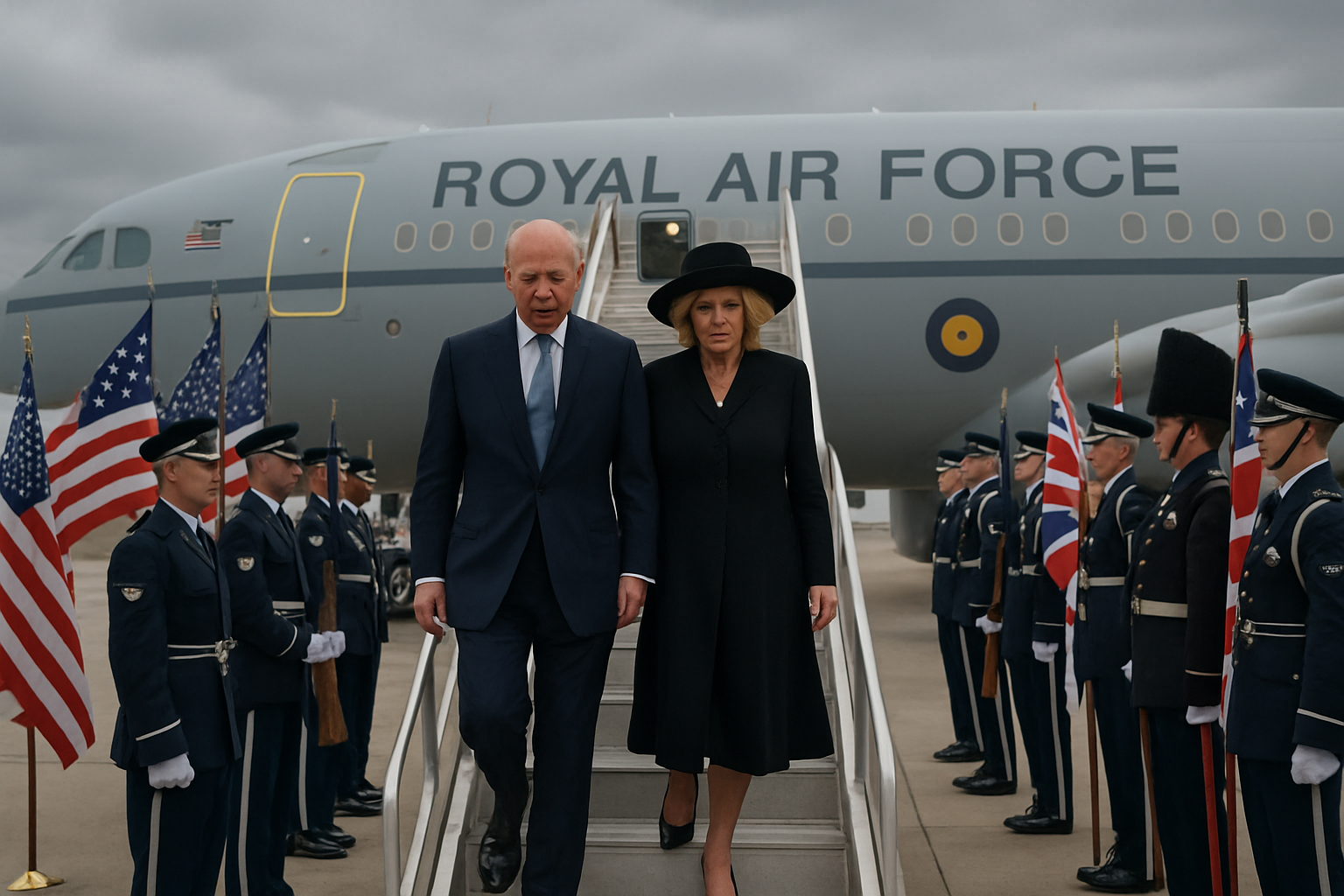
King Charles III and Queen Camilla pressed ahead with their historic four-day state visit to the United States on Monday, marking the first British monarch's visit since 2007 despite a dramatic shooting at the White House Correspondents' Dinner just two days earlier and deepening transatlantic tensions over the Iran war.
The royal couple's arrival at Andrews Air Force Base comes during the most challenging period for US-UK relations since the Iraq War, with President Trump having publicly criticized Prime Minister Keir Starmer's government for refusing to support "Operation Epic Fury" against Iran. The visit, timed to honor the 250th anniversary of American independence, represents a crucial test of whether constitutional monarchy can preserve diplomatic relationships despite fundamental policy disagreements.
Security Concerns Following Washington Shooting
The state visit proceeds under heightened security after Cole Thomas Allen, a 31-year-old California elementary school teacher, opened fire during the White House Correspondents' Association dinner on Saturday night. Allen breached security at the Washington Hilton armed with a shotgun, handgun, and knives, firing multiple shots before Secret Service agents subdued him. One agent was wounded but protected by body armor and is expected to make a full recovery.
The incident marked the third major security threat targeting Trump since his return to the presidency, following a February 2026 armed intruder at Mar-a-Lago and previous assassination attempts. Acting Attorney General Todd Blanche stated he was "completely convinced" the royal couple would be safe, with British royal security working closely with US Secret Service to ensure comprehensive protection.
"The law enforcement response prevented what could have been a catastrophic attack on our democratic institutions."
— Senior Security Official
Diplomatic Tensions Over Iran Policy
The visit unfolds against the backdrop of unprecedented strain in the "special relationship" between Britain and America. Trump has openly criticized Starmer's government for declining to support US military operations against Iran, declaring the relationship "obviously not what it was." The UK government, citing "Iraq lessons," has refused to provide base access or military support for what officials describe as American "regime change from the skies."
German analysis notes that relations between the two nations are "in a deep crisis," with the royal visit representing an attempt to maintain institutional relationships despite temporary political tensions. The crisis has extended beyond military cooperation to territorial disputes, with leaked Pentagon documents suggesting potential US policy shifts on the Falkland Islands as retaliation for British non-cooperation.
European Strategic Autonomy
The diplomatic tensions reflect a broader pattern of European strategic autonomy, with allies across the continent rejecting American demands for military coalition support in the Strait of Hormuz while simultaneously defending their own territories. When Iranian forces attacked Cyprus - the first assault on European soil since World War II - European nations mounted an unprecedented naval coalition including British, Spanish, Italian, French, Dutch, and Greek vessels.
Royal Family Crisis Context
The state visit occurs during perhaps the most challenging period in modern royal history, with King Charles III facing unprecedented family crises alongside diplomatic pressures. Prince Andrew remains under investigation following his historic arrest in February 2026 - the first senior British royal arrested since King Charles I in 1647 - on charges related to sharing classified intelligence with Jeffrey Epstein.
The King's response to the Andrew crisis has been constitutionally significant, with His Majesty declaring that "law must take its course" and providing "full support and cooperation" to authorities. This unprecedented stance prioritizes institutional integrity over family loyalty, demonstrating that the monarchy operates within rather than above the law.
Parliamentary sources indicate that legislation to remove Andrew from the line of succession is under active consideration, requiring both an Act of Parliament and consultations across the 14 Commonwealth realms where Charles serves as head of state.
Constitutional Monarchy Under Test
The visit represents a critical examination of 21st-century constitutional monarchy's role in international diplomacy. Unlike elected officials who can be replaced, the monarch serves as a continuing institutional relationship regardless of temporary political disagreements. Palace officials emphasize that the visit proceeds "on advice of the British government" while celebrating "historic connections and the modern bilateral relationship."
This approach follows established precedent from Queen Elizabeth II's reign, during which she maintained relationships with American presidents across the political spectrum, from Eisenhower to Biden, regardless of policy disagreements between their governments and British administrations.
"The monarchy serves as an institutional anchor for the special relationship, preserving continuity even during periods of political turbulence."
— Constitutional Expert
Congressional Address and Ceremonial Duties
Despite the challenging circumstances, the visit maintains its full ceremonial program, including a planned Congressional address and state dinner at the White House. These events represent significant diplomatic opportunities to reaffirm shared democratic values and historical connections between the two nations, even as their governments disagree on immediate policy questions.
The Congressional address will be particularly significant, as King Charles becomes the first British monarch to address both houses of Congress during a period of active policy disagreement between the two governments. This historic precedent may establish important protocols for how constitutional monarchies navigate partisan diplomatic tensions while maintaining institutional relationships.
Bermuda Component
The visit includes a stop in Bermuda, emphasizing the broader Commonwealth relationships that extend beyond the immediate bilateral UK-US dynamic. This component highlights how constitutional monarchy operates across multiple territories and relationships, providing diplomatic flexibility that purely bilateral arrangements might lack.
Historical and Global Significance
Historians note this visit's potential template-setting significance for 21st-century alliance management during periods of partisan division. Success could provide a diplomatic model for maintaining institutional relationships while navigating policy disagreements. Failure might signal broader challenges to the post-World War II international order.
The visit occurs during what UN Secretary-General António Guterres has described as "the most dangerous crisis since the Cold War," with the Iran conflict affecting global energy security, nuclear governance, and international law enforcement. European allies have demonstrated unprecedented unity in rejecting American military requests while defending their own territories, marking a fundamental shift in transatlantic relations.
The broader context includes the expiration of the New START treaty in February 2026 - the first time in over 50 years without US-Russia nuclear constraints - and Iran's continued uranium enrichment at 60% purity with over 400kg of weapons-grade material.
Looking Forward
The success or failure of King Charles III's visit will likely influence diplomatic precedents for decades to come. The ability of constitutional monarchy to preserve democratic relationships during unprecedented policy disagreements represents a crucial test of institutional resilience in an era of global political turbulence.
As the visit proceeds, observers worldwide are watching whether traditional diplomatic frameworks can adapt to contemporary geopolitical realities or whether new cooperation models will be required to preserve democratic solidarity and territorial sovereignty principles. The stakes extend far beyond bilateral relations to fundamental questions about alliance obligations, sovereignty principles, and democratic accountability in the multipolar era.
The royal couple's determination to proceed despite security threats and political tensions demonstrates the enduring importance both nations place on their institutional relationship, even as their governments navigate one of the most challenging periods in the alliance's modern history.