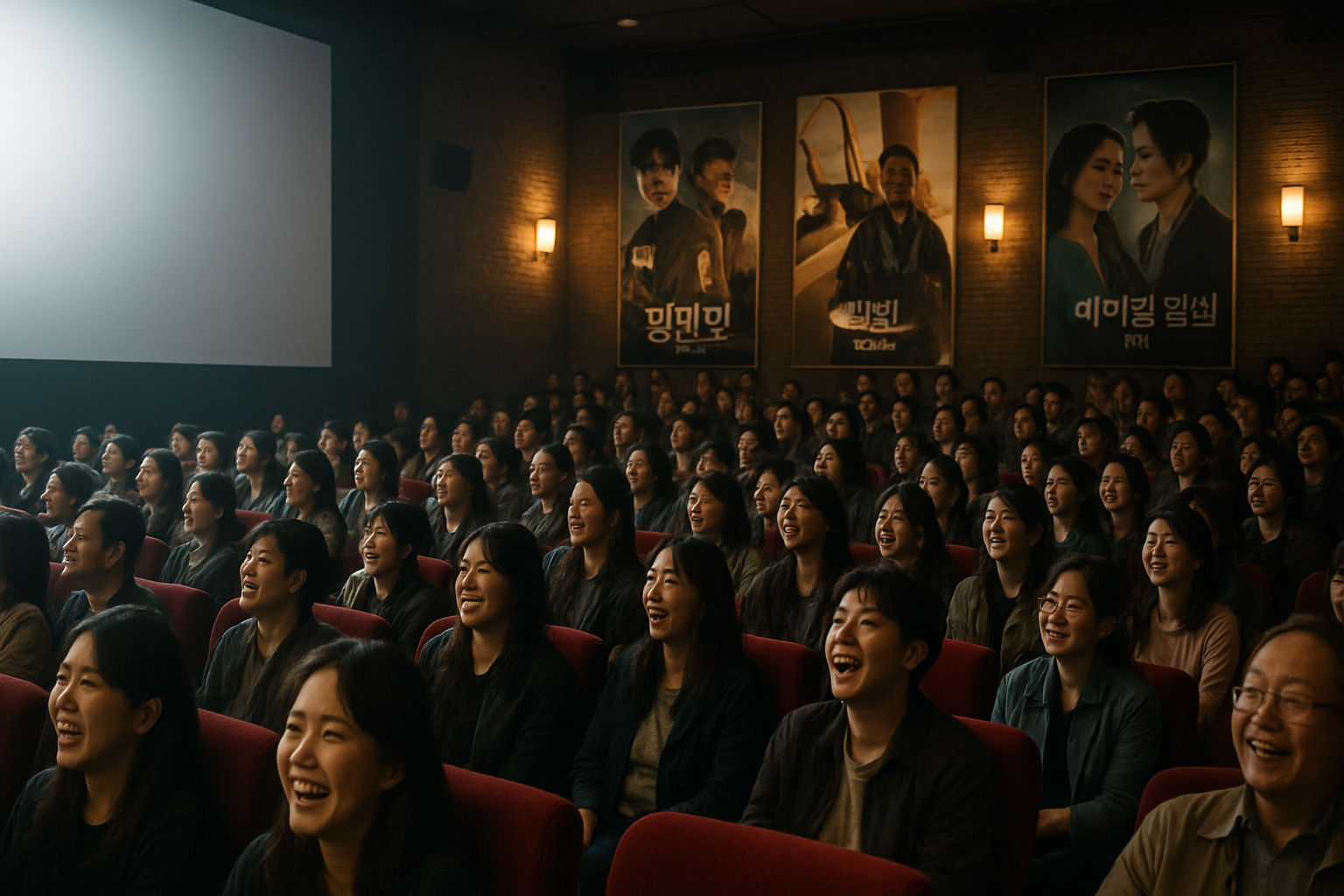
'The King's Warden' has achieved a milestone that seemed impossible just months ago, becoming the first South Korean film in two years to cross the coveted 10 million admissions threshold, offering a rare ray of hope for an industry that has been struggling against declining theater attendance and fierce competition from streaming platforms.
The achievement marks a significant moment for Korean cinema, which has faced unprecedented challenges since the COVID-19 pandemic fundamentally altered viewing habits. The film's success comes as the industry grapples with changing consumer preferences and the dominance of international streaming content.
Breaking the Two-Year Drought
According to multiple reports from Yonhap News Agency, 'The King's Warden' officially crossed the 10 million admissions mark on March 6, 2026, making it the first Korean film since 2024 to achieve this benchmark. The milestone has been celebrated as a breakthrough moment for domestic cinema, which has struggled to attract audiences back to theaters in significant numbers.
The film's success represents more than just box office numbers—it signals the potential revival of Korean cinema's theatrical dominance. Industry analysts have described drawing 10 million admissions as "a rarity in recent Korean cinema," highlighting just how challenging the market environment has become for domestic productions.
"This achievement proves that Korean audiences are still hungry for quality domestic content when it resonates with their experiences and emotions."
— Industry Analyst, Korean Film Council
The Perfect Storm of Success
Several factors contributed to 'The King's Warden's' remarkable performance. The film successfully captured Korean viewers through a combination of compelling storytelling, strong performances, and themes that resonated with contemporary audiences. Unlike many recent productions that failed to connect with domestic viewers, this film managed to tap into something uniquely Korean while maintaining broad appeal.
The success comes amid a broader cultural renaissance documented throughout February and March 2026, with Korean entertainment experiencing renewed international attention. However, 'The King's Warden' stands out as a purely domestic success story, proving that local content can still compete effectively against global streaming offerings and international blockbusters.
Industry Context and Challenges
The Korean film industry has faced significant headwinds in recent years. The pandemic accelerated the shift toward streaming consumption, while international platforms invested heavily in Korean content, often luring top talent away from traditional theatrical releases. Additionally, changing audience preferences and the rise of shorter-form content have made it increasingly difficult for films to achieve the cultural penetration necessary for massive box office success.
The 10 million admissions milestone has historically been considered a benchmark of mainstream success in South Korea, roughly equivalent to attracting one in five South Koreans to theaters. Achieving this number requires not just initial interest but sustained word-of-mouth and repeat viewings—indicators of genuine cultural impact.
Broader Cultural Renaissance
The film's success occurs within the context of a documented "February 2026 Cultural Renaissance" that has seen unprecedented international cultural activity and renewed focus on authentic storytelling. This broader movement toward culturally significant content appears to be benefiting productions that emphasize local identity while maintaining universal themes.
Korean entertainment has been experiencing a complex moment, with K-pop facing some resistance in Southeast Asian markets while films like 'The King's Warden' demonstrate the continued appetite for quality Korean cinema. The success suggests that audiences can differentiate between various forms of Korean cultural exports, embracing content that feels authentic and meaningful while potentially rejecting what they perceive as overly commercialized offerings.
Economic and Cultural Impact
Beyond the immediate box office success, 'The King's Warden's' achievement has broader implications for the Korean entertainment ecosystem. The film's success provides validation for domestic producers, distributors, and exhibitors who have been questioning the viability of theatrical releases in an increasingly digital landscape.
The milestone also comes at a crucial time for South Korea's cultural diplomacy efforts. As the country navigates complex regional relationships and seeks to maintain its soft power influence, successful domestic productions that resonate internationally become valuable cultural assets.
Looking Forward
Industry experts are watching carefully to see whether 'The King's Warden's' success can be replicated or if it represents a one-off phenomenon. The film's achievement raises questions about what elements Korean audiences are seeking in domestic cinema and how the industry can build on this success.
The success story also highlights the importance of understanding local audiences while maintaining broader appeal. As Korean entertainment continues to evolve in response to global trends and technological changes, 'The King's Warden' provides a template for how domestic productions can still achieve significant cultural and commercial impact.
For an industry that has been questioning its future direction, the film's 10 million admissions milestone offers proof that Korean cinema retains the power to capture the national imagination when it combines compelling storytelling with authentic cultural expression. The challenge now lies in sustaining this momentum and translating success into a broader revival of Korean theatrical cinema.