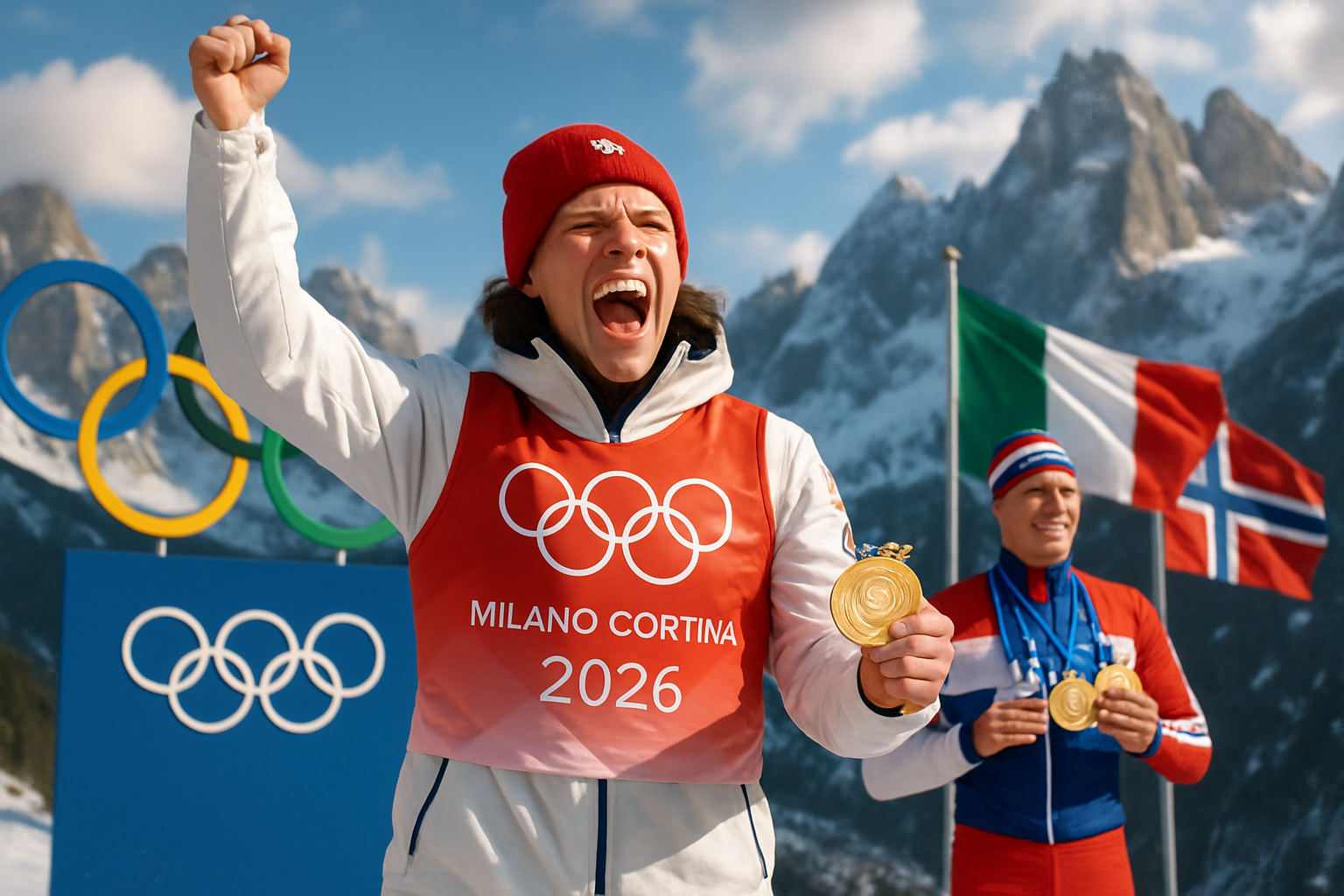
Canada's Mikaël Kingsbury delivered a masterful performance to capture gold in men's dual moguls while Norway's Johannes Høsflot Klæbo wrote Olympic history by becoming the most decorated Winter Olympian of all time with his ninth career gold medal at the Milano-Cortina 2026 Winter Games.
The dramatic day of competition at the geographically dispersed Olympics showcased the pinnacle of winter sports excellence, with both athletes achieving career-defining victories that will be remembered for generations.
Kingsbury's Redemption in Dual Moguls
Mikaël Kingsbury's victory in the men's dual moguls marked a triumphant return to Olympic gold for the Canadian freestyle skiing legend. Competing at Livigno Snow Park, Kingsbury defeated Japan's Ikuma Horishima, who claimed silver, and Australia's Matt Graham, who earned bronze in what proved to be the third medal for Australia's impressive moguls squad at Milano-Cortina 2026.
The 31-year-old Kingsbury, who had previously won Olympic gold in moguls and collected multiple World Cup titles, showed his technical mastery and competitive spirit in the dual format. His victory represented Canada's first gold medal of the Milano-Cortina Games, ending the nation's drought and providing a emotional moment for the team.
"This means everything to me. To finally get that first gold for Canada here in Milano-Cortina, it's what we've been working toward all season."
— Mikaël Kingsbury, Canadian Moguls Champion
Horishima's silver medal marked his second podium finish of the Games, having previously claimed bronze in the individual moguls event. The Japanese athlete's consistent performances throughout the Olympics demonstrated the growing global competitiveness in freestyle skiing.
Klæbo's Historic Ninth Gold Medal
While Kingsbury celebrated his dual moguls triumph, Norwegian cross-country skiing legend Johannes Høsflot Klæbo was busy rewriting Olympic history. The 27-year-old secured his ninth career Olympic gold medal as part of Norway's dominant performance in the men's 4x7.5-kilometer relay, surpassing the previous record of eight gold medals shared by several Winter Olympic legends.
Klæbo's achievement places him alone atop the Winter Olympic record books, surpassing his Norwegian predecessors Ole Einar Bjørndalen in biathlon and fellow cross-country skiers Bjørn Dæhlie and Marit Bjørgen. The historic moment came as Norway controlled the relay from start to finish, with Klæbo anchoring the team to victory with his characteristic powerful finishing kick.
The emotional significance wasn't lost on Klæbo's teammates, with Emil Iversen breaking down in tears during the victory ceremony, acknowledging the role his teammate had played in Norwegian cross-country dominance over the years.
"Johannes has been the backbone of our success for so many years. To see him achieve this historic milestone, it's incredibly emotional for all of us."
— Emil Iversen, Norwegian Cross-Country Skier
Sweden's Martin Ponsiluoma Adds to Medal Haul
The day's medal celebrations weren't limited to Canada and Norway. Sweden's Martin Ponsiluoma captured gold in the men's biathlon pursuit, ending Sweden's medal drought in the sport and adding another victory to what has become a breakthrough Games for Swedish winter sports.
Ponsiluoma's victory in the 12.5-kilometer pursuit race demonstrated exceptional shooting accuracy and tactical awareness. The 30-year-old Swedish biathlete overcame challenging conditions and fierce competition to claim his first Olympic gold medal, a moment he described as surreal.
The Swedish success extended beyond individual achievement, representing a resurgence in the nation's winter sports programs and providing inspiration for the next generation of Swedish athletes.
Revolutionary Olympics Setting
These historic achievements unfolded against the backdrop of the most geographically dispersed Winter Olympics in history, with venues spanning over 400 kilometers across northern Italy from Milan to Cortina d'Ampezzo. The revolutionary dual-city hosting model has proven successful in maintaining the highest competitive standards while demonstrating innovative approaches to sustainable Olympic hosting.
The Games have featured groundbreaking technological integration, including Alibaba's Qwen AI system for broadcasting and spectator services, and OMEGA's AI-powered figure skating analysis. Cultural innovations have included bilingual place names in Alto Adige/South Tyrol and the popular Gen Z mascots Milo and Tina.
Global Competition Reaches New Heights
The medal ceremonies highlighted the increasing globalization of winter sports, with breakthrough performances from nations across six continents. Australia's strong showing in moguls, including Matt Graham's bronze, exemplified how traditional winter sport boundaries continue to expand.
The competition has been marked by exceptional depth across all disciplines, with athletes from non-traditional winter sports nations consistently reaching finals and podium positions. This democratization of winter sports represents one of the most significant developments of the Milano-Cortina Games.
Looking Ahead
As the Milano-Cortina 2026 Winter Olympics continue through February 22, both Kingsbury and Klæbo's achievements will stand as defining moments of these Games. Kingsbury's dual moguls gold provides momentum for Canadian winter sports, while Klæbo's historic ninth gold medal cements his legacy as the greatest Winter Olympian of all time.
The success of the dual-city hosting model, combined with the exceptional athletic performances, has established new paradigms for future Olympic Games. The combination of traditional winter sports excellence with 21st-century sustainability and technological innovation has created a template for climate-adapted Olympic hosting while maintaining the highest competitive standards.
With competition continuing across the seven venues spanning the Italian Alps, these historic victories by Kingsbury and Klæbo have set the standard for athletic excellence at what may be remembered as one of the most innovative and successful Winter Olympics in history.