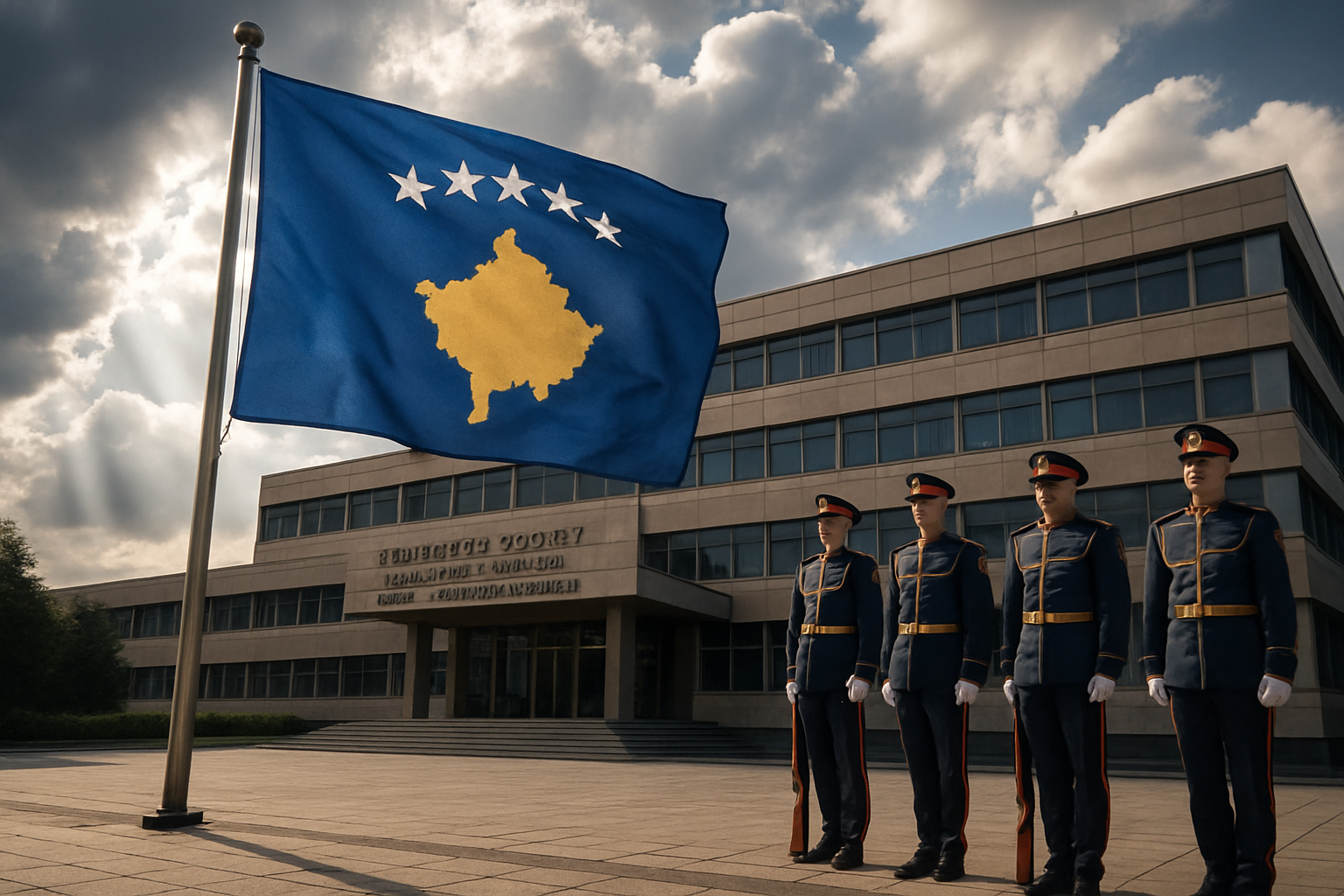
Kosovo marked the 18th anniversary of its independence declaration on February 17, 2026, with solemn parliamentary ceremonies and powerful statements defending the Kosovo Liberation Army's historical legacy, as the young nation confronts ongoing international legal challenges to its founding narrative.
The commemoration took place amid unprecedented tensions surrounding the ongoing war crimes trials at The Hague, where international prosecutors have demanded 45-year prison sentences for four former KLA leaders, including former President Hashim Thaçi. The anniversary ceremonies became a platform for Kosovo's current leadership to defend the liberation struggle and reject what they characterize as attempts to equate victims with aggressors.
Leaders Unite in Defense of Liberation Legacy
Prime Minister Albin Kurti, addressing Parliament during the solemn session, placed February 17 among the most important dates in Albanian and Kosovo history. "On February 17, we reached another high level in our representation in the Balkans and Europe," Kurti declared, emphasizing the day's significance as one of remembrance for those who sacrificed for freedom.
Kurti's speech directly addressed the controversial Hague proceedings, stating: "We remember today the peaceful resistance of the 1990s, we remember the KLA. We bow with honor before the martyrs. While we commemorate the date of the republic's declaration, we are concerned that KLA leaders are being unjustly accused because they dared to take up arms against a genocidal regime."
"The accusations against them do not stand. They do not take into account the historical and political context of our liberation war. Crimes against humanity against the Albanian population were committed by Milošević's Serbia. The threat of their repetition is Vučić's Serbia."
— Albin Kurti, Prime Minister of Kosovo
Presidential Solidarity and International Context
President Vjosa Osmani reinforced the government's position, declaring that "heroes of the KLA fought for freedom" and emphasizing the fundamental distinction between liberation forces and aggressors. "You cannot equate the victim with the aggressor," Osmani stated, while thanking the United States and European nations for their continued support of Kosovo.
Albanian President Bajram Begaj's presence at the parliamentary ceremony underscored regional Albanian solidarity. Begaj emphasized that Kosovo's history "cannot be understood or written without the names of Thaçi, Veseli, Krasniqi, Selimi, and their fellow fighters," directly challenging the international tribunal's approach to the former KLA leaders.
Begaj proclaimed Kosovo as "an irreversible reality, a sovereign state" and highlighted the nation's journey from suffering to dignity. His speech represented broader Albanian support for Kosovo's position on the war crimes proceedings, characterizing them as "unjust battles with fabricated accusations."
Symbolic Resistance and Public Demonstrations
The anniversary was marked by symbolic acts of resistance to the Hague proceedings. Activists placed 5,000 KLA emblems on the iconic "NEWBORN" monument in Pristina, which had been surrounded by iron bars the previous day as a symbolic representation of the imprisonment sought by international prosecutors.
The ceremonial presence of Rifat Jashari, brother of legendary KLA commander Adem Jashari, provided powerful historical continuity. Parliamentary deputies approached Jashari for photographs and greetings, demonstrating the enduring reverence for the liberation struggle's heroes.
Historical Context and Current Challenges
The 2026 anniversary takes place during a critical period for Kosovo's international standing. The Kosovo Specialist Chambers in The Hague, established through Kosovo law but operating under international oversight, has become increasingly controversial among Kosovars who view it as disproportionately targeting KLA leaders while failing to address Serbian war crimes adequately.
The prosecution's demand for 180 total years of imprisonment for Thaçi, Kadri Veseli, Rexhep Selimi, and Jakup Krasniqi has galvanized political opinion across the Albanian political spectrum. The charges include systematic persecution, imprisonment, torture, and murder of Serbian, Albanian, and Roma civilians during the 1998-1999 Kosovo War.
Kosovo's current government, led by Kurti's Vetëvendosje (Self-Determination) Movement, has positioned itself as the defender of historical truth regarding the liberation struggle. With a strong parliamentary mandate secured in the December 2025 elections, the government has political stability to maintain its confrontational stance toward the international tribunal.
Regional Implications and European Integration
The independence anniversary occurred as Kosovo continues pursuing European Union integration despite ongoing challenges. The EU has expressed support for Kosovo's democratic institutions while maintaining pressure for judicial reforms and rule of law improvements. High Representative Kaja Kallas recently welcomed Kosovo's government formation as creating conditions for accelerated reforms and dialogue processes.
However, the tension between defending the KLA legacy and meeting EU standards for international cooperation presents ongoing diplomatic challenges. Kosovo's leaders must balance nationalist sentiment with European integration requirements while managing relationships with international partners who established the contested tribunal.
The anniversary also highlighted regional dynamics, with Albanian support contrasting sharply with Serbian rejection of Kosovo's independence. Current Serbian President Aleksandar Vučić, referenced by Kurti as a continuing threat to regional peace, maintains Serbia's non-recognition policy while facing domestic protests over governance issues.
Looking Forward: Sovereignty and Justice
As Kosovo enters its 19th year of independence, the nation faces fundamental questions about reconciling its founding narrative with international legal processes. The unanimous rejection of Hague proceedings by Kosovo's political establishment reflects deep concerns about historical revisionism and the potential criminalization of liberation struggles.
President Osmani's warning that attempts to "tarnish the KLA war and compare it with Serbian genocide undermines justice and peace in the region" encapsulates the broader stakes. Kosovo's leaders argue that equating liberation forces with genocidal aggressors threatens not only historical truth but regional stability and reconciliation prospects.
The 18th independence anniversary thus marked not just a celebration of sovereignty achieved, but a defiant assertion of the right to define national historical narrative. As international legal proceedings continue and verdicts approach, Kosovo's political unity around defending the KLA legacy suggests the young nation will maintain its confrontational stance toward external attempts to reframe its founding struggle.
The ceremonies concluded with renewed commitments to sovereignty, democracy, and European integration—but on Kosovo's terms, preserving what leaders characterize as the authentic history of liberation against genocide. Whether this position proves compatible with international legal processes and European integration requirements remains among the defining challenges of Kosovo's continued state-building journey.