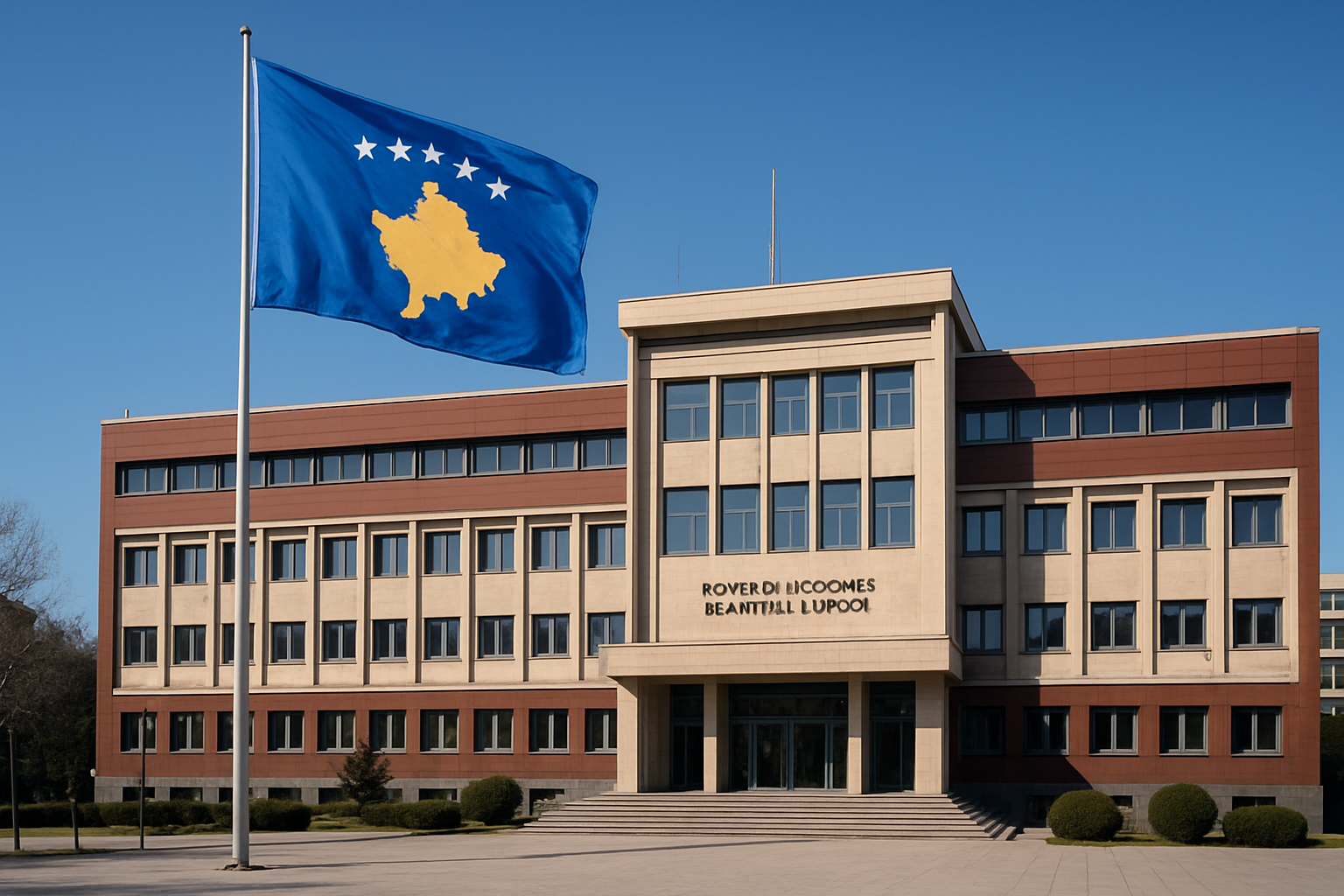
Kosovo's parliament has successfully constituted its 10th Legislature and formed a new government under Prime Minister Albin Kurti, who secured his third mandate with 66 votes in favor, marking a pivotal moment for the young nation's democratic consolidation and European integration aspirations.
The government formation, completed during an extraordinary late-night parliamentary session, represents the culmination of democratic processes following Kosovo's December 2025 elections, where Kurti's Vetëvendosje (Self-Determination) Movement secured 51 percent of the vote, translating to 57 parliamentary seats and enabling a clear governing majority.
Strong Parliamentary Support and Leadership Appointments
The vote of confidence saw 66 deputies supporting the new administration against 49 opposing votes, with no abstentions recorded in the 120-seat assembly. This decisive margin provides Kurti with a stable foundation for implementing his government's ambitious agenda focused on justice reform, anti-corruption initiatives, and European integration.
Alongside Kurti's confirmation as Prime Minister, the parliament elected Albulena Haxhiu as Speaker of the Assembly, while Glauk Konjufca was appointed as Deputy Prime Minister and Foreign Minister. These appointments signal continuity in Kosovo's foreign policy direction and commitment to strengthening international partnerships.
"This mandate represents significant confidence in Kurti's leadership and demonstrates democratic consolidation in the Balkans nearly 15 years post-independence."
— Political Analysis from Memory Archives
International Recognition and Support
The government formation has received widespread international endorsement, beginning with neighboring Albania. Foreign Minister Elisa Spiropali congratulated the new leadership, offering "unwavering support from official Tirana for the new leadership in Pristina." Her statement emphasized the weight of the new governing mandate in service to citizens and democracy.
Albanian President Bajram Begaj similarly extended congratulations to Prime Minister Kurti, expressing confidence that "dedication and cooperation for the benefit of the state and citizens will guide all of Kosovo's political class in facing the challenges ahead." He assured continued "brotherly support for Kosovo" in its democratic journey.
European Union High Representative Kaja Kallas welcomed the development as "encouraging news" following more than a year of political deadlock. In her social media statement, Kallas emphasized the importance of accelerating reforms to unlock EU support worth hundreds of millions of euros and advance Kosovo's European integration path.
"After more than a year of political blockade, the formation of Kosovo's new government is encouraging news. Congratulations Albin Kurti! What matters now is to move quickly with reforms. This is the fastest way to unlock EU support worth hundreds of millions of euros."
— Kaja Kallas, EU High Representative
EU Integration Momentum
Kallas highlighted this moment as crucial for advancing EU-Kosovo relations and the Belgrade-Pristina dialogue, expressing readiness to organize high-level meetings between the parties. This represents a significant diplomatic opening that could accelerate Kosovo's European integration timeline, which has faced obstacles due to previous political instability.
The timing is particularly significant as Kosovo seeks to strengthen its position within European structures while managing complex regional relationships. The new government's clear mandate provides the political stability necessary for sustained engagement in dialogue processes and reform implementation.
Historical Context and Democratic Significance
This marks Kurti's third term as Prime Minister, a milestone that underscores both his political durability and the electorate's continued confidence in his Vetëvendosje party's governance approach. The peaceful transition demonstrates Kosovo's institutional maturity and democratic resilience, contrasting with broader regional concerns about democratic backsliding.
The government formation concludes a period of political uncertainty that began in February 2025, when the previous administration faced a crisis of confidence. The successful resolution through democratic processes rather than institutional breakdown reinforces Kosovo's status as a functioning democracy in the Western Balkans region.
Policy Priorities and Challenges Ahead
Based on previous mandates and campaign commitments, the new government is expected to prioritize several key areas. Justice reform will enter what officials describe as a "decisive phase," with anti-corruption efforts conducted "without fear, without favors." This approach addresses longstanding European integration requirements and citizen demands for accountability.
Economic development remains central to the government's agenda, building on achievements over the past five years despite periods of limited institutional competencies. The administration will need to balance economic growth initiatives with the social reforms demanded by Kosovo's predominantly young population.
The government also faces the ongoing challenge of managing relationships with international partners while maintaining Kosovo's sovereignty principles. This includes navigating complex regional dynamics, particularly regarding recognition issues and dialogue processes with neighboring countries.
Regional and International Implications
Kosovo's successful government formation has implications extending beyond its borders. The country's democratic stability serves as a positive example in a region where several nations face governance challenges and authoritarian pressures.
The strong international support, particularly from EU institutions, signals Kosovo's growing integration into European frameworks. This development could influence broader Western Balkans dynamics, potentially encouraging other countries in the region to pursue more comprehensive European integration efforts.
The emphasis on dialogue processes mentioned by EU officials suggests renewed momentum for resolving outstanding regional issues through diplomatic channels, which could contribute to broader Balkan stability and security.
Looking Forward
As Prime Minister Kurti begins his third mandate, his administration faces the challenge of translating electoral success into effective governance that delivers tangible improvements for Kosovo's citizens. The strong parliamentary support provides a foundation for ambitious reform programs, but success will depend on implementation capacity and sustained international cooperation.
The government formation represents more than a routine political transition—it demonstrates Kosovo's continued democratic development and its commitment to European values. With clear political support and international backing, the new administration is positioned to advance Kosovo's integration aspirations while addressing the practical challenges of governing a young democracy in a complex regional environment.
The success of this democratic transition reinforces Kosovo's trajectory toward greater institutional stability and European integration, providing a foundation for continued progress in the years ahead.