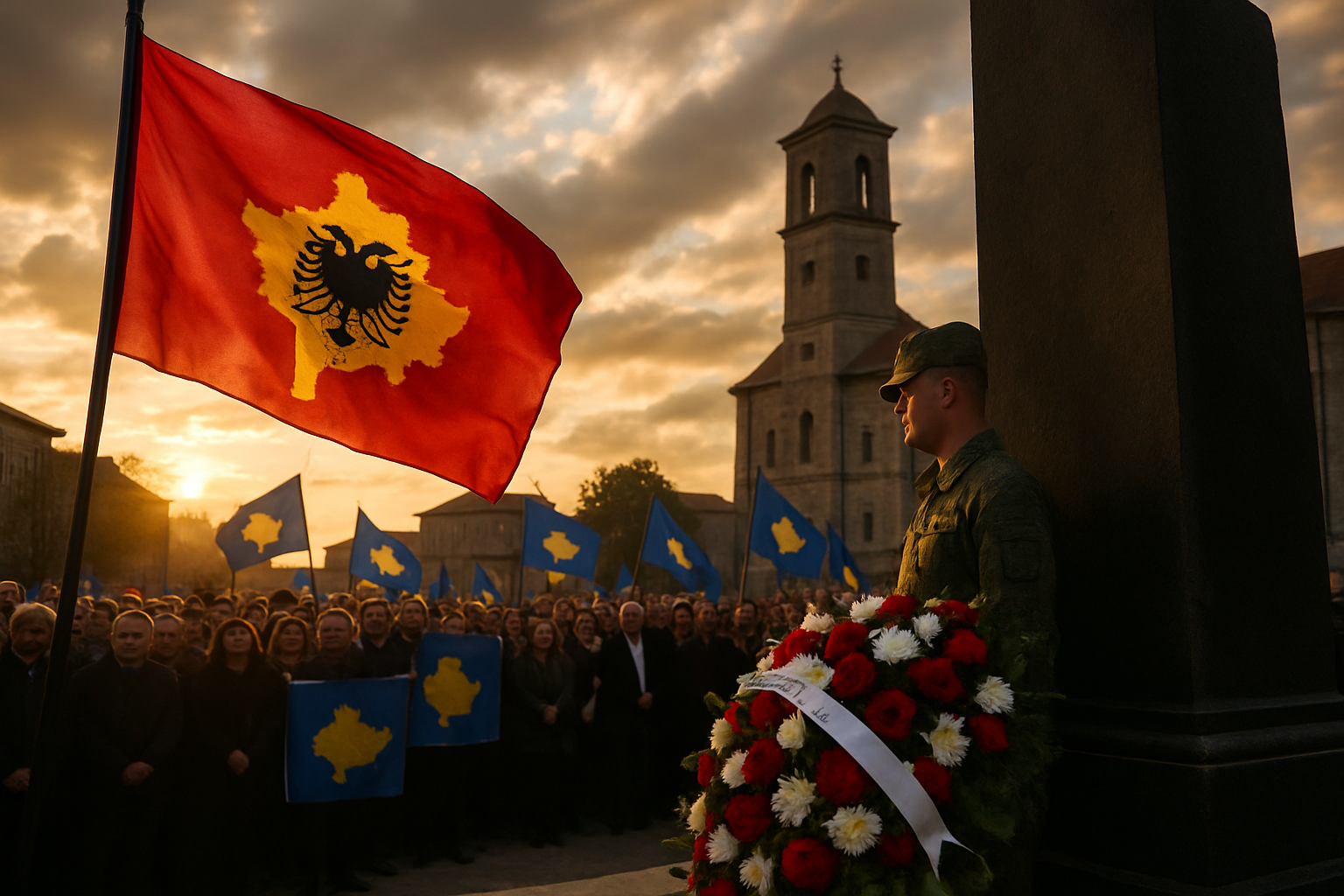
Kosovo marked its 18th independence anniversary with profound commemorative ceremonies in Pristina, while neighboring Bulgaria honored the 153rd anniversary of revolutionary hero Vasil Levski's death, demonstrating the enduring power of historical memory in shaping contemporary political identity across the Balkans.
The February 17th celebrations in Kosovo's capital drew thousands of citizens to Skënderbeu Square, where Albanian and Kosovo Liberation Army (KLA) flags filled the ceremonial space. The gathering carried a dual message of celebration and defiance, with participants demanding justice for former KLA leaders currently facing trial at the Kosovo Specialist Chambers in The Hague.
Political Consolidation Following Government Formation
The anniversary commemorations occurred against the backdrop of significant political developments, as Prime Minister Albin Kurti successfully formed his third government just days earlier on February 12th. The new administration, approved with 66 votes in favor and 49 against in the 120-seat parliament, represents a consolidation of Kosovo's democratic institutions nearly 15 years after independence.
Kurti's Vetëvendosje (Self-Determination) Movement secured a decisive electoral mandate in December 2025, capturing 57 parliamentary seats and 51% of the vote share. The government formation ended a year-long political deadlock that had persisted since the February 2025 crisis, demonstrating the resilience of Kosovo's democratic processes.
"We are entering the decisive phase of justice reform," Prime Minister Kurti declared during the anniversary ceremonies, emphasizing his administration's commitment to anti-corruption efforts "without fear, without favors."
— Albin Kurti, Prime Minister of Kosovo
The Shadow of The Hague
The celebrations were overshadowed by ongoing proceedings at the Kosovo Specialist Chambers, where international prosecutors have demanded 180 years of total imprisonment for four former KLA leaders, including 45 years each for prominent figures such as Hashim Thaçi and Kadri Veseli. The charges include systematic persecution, torture, and murder during the 1998-1999 conflict.
Historian Pëllumb Xhufi, speaking on Radio Television Albania, addressed the tension between celebration and concern over the Hague proceedings. "Today in Kosovo was a festival, but The Hague's demands were deeply troubling and weighed heavily," Xhufi observed, reflecting the complex emotions surrounding the anniversary.
The march in Pristina adopted the motto "Justice, not politics," with participants including families of former KLA commanders, political representatives from Kosovo, Albania, and regional countries, as well as President Vjosa Osmani. The demonstration represented a unified political stance defending the KLA's historical role as a legitimate liberation movement against what Kosovo's leadership describes as the "genocidal regime" of Slobodan Milošević's Serbia.
Regional Responses and Diplomatic Tensions
Even 18 years after Kosovo's declaration of independence, regional tensions persist. Serbia's Office for Kosovo continued its policy of non-recognition, with director Petar Petković describing February 17th as a "loss for the international legal order." Belgrade characterized the independence declaration as a "violation of international law," maintaining its position that Kosovo remains an integral part of Serbia.
In a statement to Serbian media, Petković claimed that "Serbs in Kosovo have faced the full destruction of chauvinist hatred over the past eighteen years," portraying the Serbian minority as victims of separatist policies. This narrative directly contradicts Kosovo's efforts to build inclusive institutions, including the appointment of Serbian representative Nenad Rašić as a minister in Kurti's new cabinet.
The contrasting responses highlight the unresolved nature of Kosovo-Serbia relations, which remain a central challenge for European integration efforts in the Western Balkans.
Bulgaria's Revolutionary Legacy
Simultaneously, Bulgaria observed the 153rd anniversary of Vasil Levski's execution on February 18, 1873, a commemoration that resonates deeply with national identity. Levski, known as the "Apostle of Freedom," was hanged by Ottoman authorities near Sofia for his revolutionary activities aimed at Bulgarian liberation.
The Bulgarian commemoration, while focused on 19th-century liberation struggles, shares thematic connections with Kosovo's contemporary celebration of independence. Both events highlight the enduring significance of national liberation narratives in Balkan political culture, where historical memory continues to shape present-day identity and political discourse.
Bulgarian media coverage emphasized Levski's vision of a democratic, European Bulgaria, drawing implicit parallels to contemporary European integration aspirations. The revolutionary's ideals of freedom and self-determination echo through modern Balkan political movements, including Kosovo's own struggle for international recognition and democratic consolidation.
European Integration Challenges
Kosovo's 18th anniversary occurs at a critical juncture for European integration prospects. The new government under Kurti faces pressure to accelerate judicial reforms and strengthen rule of law institutions, requirements that are central to Kosovo's EU candidate status aspirations.
The international community, while supporting Kosovo's democratic development, has expressed concern over the political establishment's unanimous rejection of the Hague tribunal's legitimacy. European Union representatives have emphasized the importance of supporting judicial processes while working to address the underlying tensions between defending Kosovo's founding narrative and meeting international legal standards.
Albanian President Bajram Begaj's presence at the celebrations, along with his declaration that Kosovo represents an "irreversible reality," demonstrated continued regional solidarity. Begaj emphasized that "history cannot be written without the names of Thaçi, Veseli, Krasniqi, and Selimi," reinforcing the political establishment's position on the KLA leaders' historical significance.
Symbolic Resistance and National Memory
The anniversary demonstrations included powerful symbolic elements that illustrated Kosovo's approach to managing historical memory. Activists surrounded the iconic NEWBORN monument in Pristina with iron bars, representing what they termed "imprisoned Kosovo" – a reference to the legal constraints facing former liberation leaders.
Five thousand KLA emblems were placed on the monument, transforming it into a site of political expression and historical commemoration. The presence of Rifat Jashari, brother of legendary KLA commander Adem Jashari, added gravitas to the proceedings, with parliamentary deputies seeking photographs with him as a gesture of reverence for the liberation movement's legacy.
These symbolic acts demonstrate how contemporary Kosovo navigates the complex relationship between celebrating independence achievements and protesting international judicial processes that the political establishment views as fundamentally unjust.
Looking Forward: Democracy and International Relations
The successful government formation and peaceful anniversary commemoration reflect Kosovo's democratic maturation since declaring independence in 2008. The clear parliamentary mandate provides Kurti's administration with the political stability necessary for implementing its reform agenda while managing challenging international relationships.
The government's policy priorities include accelerating justice reform, combating corruption, and promoting economic development while maintaining Kosovo's principled stance on sovereignty issues. This balancing act requires careful navigation between satisfying domestic political expectations and meeting international partnership obligations.
As Kosovo enters its 19th year of independence, the country faces the ongoing challenge of transforming from a post-conflict society into a stable European democracy while preserving the historical narratives that define its national identity. The anniversary commemorations, occurring alongside significant political developments, suggest that Kosovo's democratic institutions possess the resilience necessary for this complex transition.
The parallel commemorations in Kosovo and Bulgaria demonstrate how historical memory continues to provide meaning and direction for contemporary political communities in the Balkans, where the struggles for freedom and self-determination remain powerful forces shaping national consciousness and political aspirations.