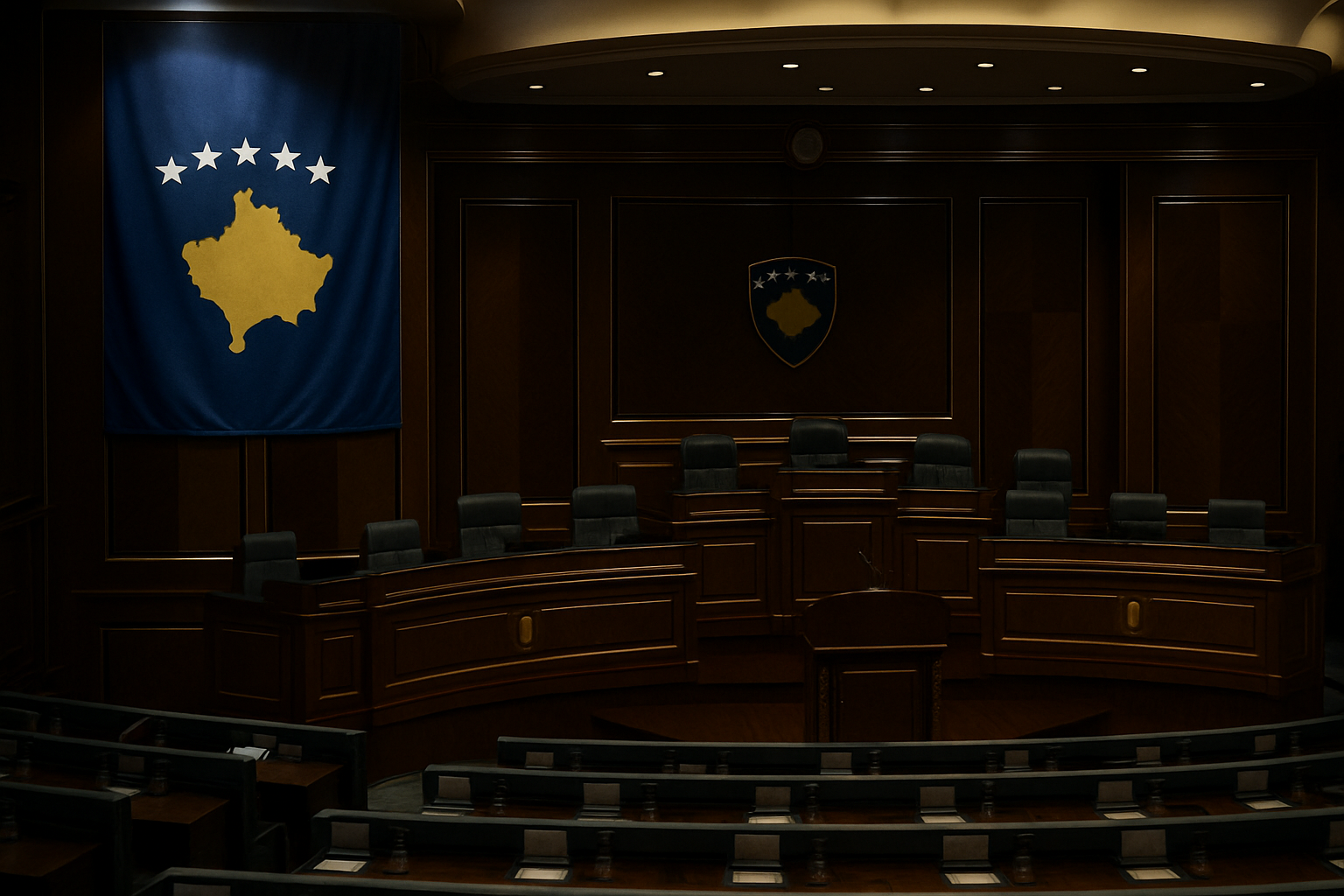
Albin Kurti was sworn in as Kosovo's Prime Minister for the third time on February 11, 2026, after Parliament approved his new government with 66 votes in favor, 49 against, and no abstentions, marking a significant political milestone for the Balkan nation.
During his oath-taking ceremony at the Parliament, Kurti emphasized his commitment to constitutional governance and national development. "Let me thank you for your support. I swear that I will fulfill with dedication and honor the duty of Government member, I will respect the Constitution, laws and legal order, and I will engage for the overall progress of the Republic of Kosovo," he declared to the assembled lawmakers.
Cabinet Composition and Key Appointments
Kurti presented a comprehensive cabinet structure, dubbed "Kurti 3," featuring three deputy prime ministers and key ministerial positions. The new government includes:
- First Deputy Prime Minister and Foreign Minister – Glauk Konjufca
- Second Deputy Prime Minister and Justice Minister – Donika Gërvalla
- Third Deputy Prime Minister for Minority Affairs – Fikrim Damka
- Finance Minister – Hekuran Murati
- Defense Minister – Ejup Maqedonci
- Interior Minister – Xhelal Sveçla
- Health Minister – Arben Vitia
- Education Minister – Hajrulla Çeku
Notably, the cabinet includes Serbian representative Nenad Rašić as a minister, reflecting Kosovo's commitment to minority representation and European integration standards.
Justice Reform and Anti-Corruption Focus
Kurti outlined an ambitious agenda centered on judicial reform and the fight against corruption. He announced that the Justice Reform would enter its "decisive phase" and emphasized that "the law will be implemented without fear and without favors."
"These past nearly 5 years, of which 1 year without full competencies, we have built a stronger and more inclusive Kosovo. We have had economic growth..."
— Albin Kurti, Prime Minister of Kosovo
The Prime Minister stressed that the fight against organized crime and corruption would continue "without fear," signaling a robust approach to governance challenges that have historically plagued the region.
Regional and Historical Context
During his parliamentary address, Kurti addressed the ongoing proceedings at The Hague against former Kosovo Liberation Army (KLA) leaders, including demands for 45-year prison sentences for each defendant. He characterized the comparison between KLA leaders and the Milošević regime as "unacceptable," defending the KLA's role as a legitimate liberation movement.
"The cases of the last sessions against former KLA leaders. The demand for 45 years imprisonment for each, where allegations of crimes against humanity are included, is an atrocity that contradicts the truth. Crimes against humanity were committed in Kosovo and they were committed by Milošević's regime," Kurti stated.
Presidential Mandate and Constitutional Process
President Vjosa Osmani officially appointed Kurti as the mandate holder for government formation, following constitutional procedures. In a Facebook announcement, she stated: "Today, in accordance with the Constitution of Kosovo, I have appointed Prime Minister Albin Kurti as the mandate holder for the formation of the Government of the Republic of Kosovo."
The appointment came after the Vetëvendosje (Self-Determination) Movement, led by Kurti, secured sufficient parliamentary support following recent elections.
European Integration Priorities
The new government takes office during a critical period for Kosovo's European aspirations. With judicial reform identified as a key requirement for EU integration, Kurti's administration faces the challenge of implementing substantial institutional changes while maintaining domestic stability.
The emphasis on transparency and rule of law reflects European Union expectations for candidate countries, particularly in the Western Balkans where democratic governance remains under close international scrutiny.
Economic and Social Challenges
Kurti highlighted economic achievements over the past five years, noting periods of growth despite facing limited competencies during certain periods. The new government will inherit challenges including youth unemployment, regional economic integration, and the need to attract foreign investment.
The appointment of experienced figures like Hekuran Murati as Finance Minister suggests continuity in economic policy, while new appointments in other portfolios indicate potential policy adjustments.
International Implications
This third term represents a significant vote of confidence in Kurti's leadership, particularly given the complex regional dynamics involving Serbia, ongoing dialogue processes, and NATO presence in Kosovo. The international community will closely monitor the new government's approach to regional cooperation and conflict resolution.
The inclusion of minority representation in the cabinet, combined with strong institutional reform commitments, positions Kosovo as seeking to demonstrate democratic maturity and European readiness.
Looking Forward
As Kosovo continues its nation-building process nearly 15 years after declaring independence, Kurti's third term as Prime Minister represents both continuity and the ongoing challenges of democratic consolidation in the Balkans. The success of his judicial reform agenda and anti-corruption efforts will likely determine not only his political legacy but also Kosovo's trajectory toward greater international integration.
With a clear parliamentary mandate and experienced team, the new government faces the critical task of delivering on promises of transparency, justice, and economic progress while navigating complex regional and international relationships.