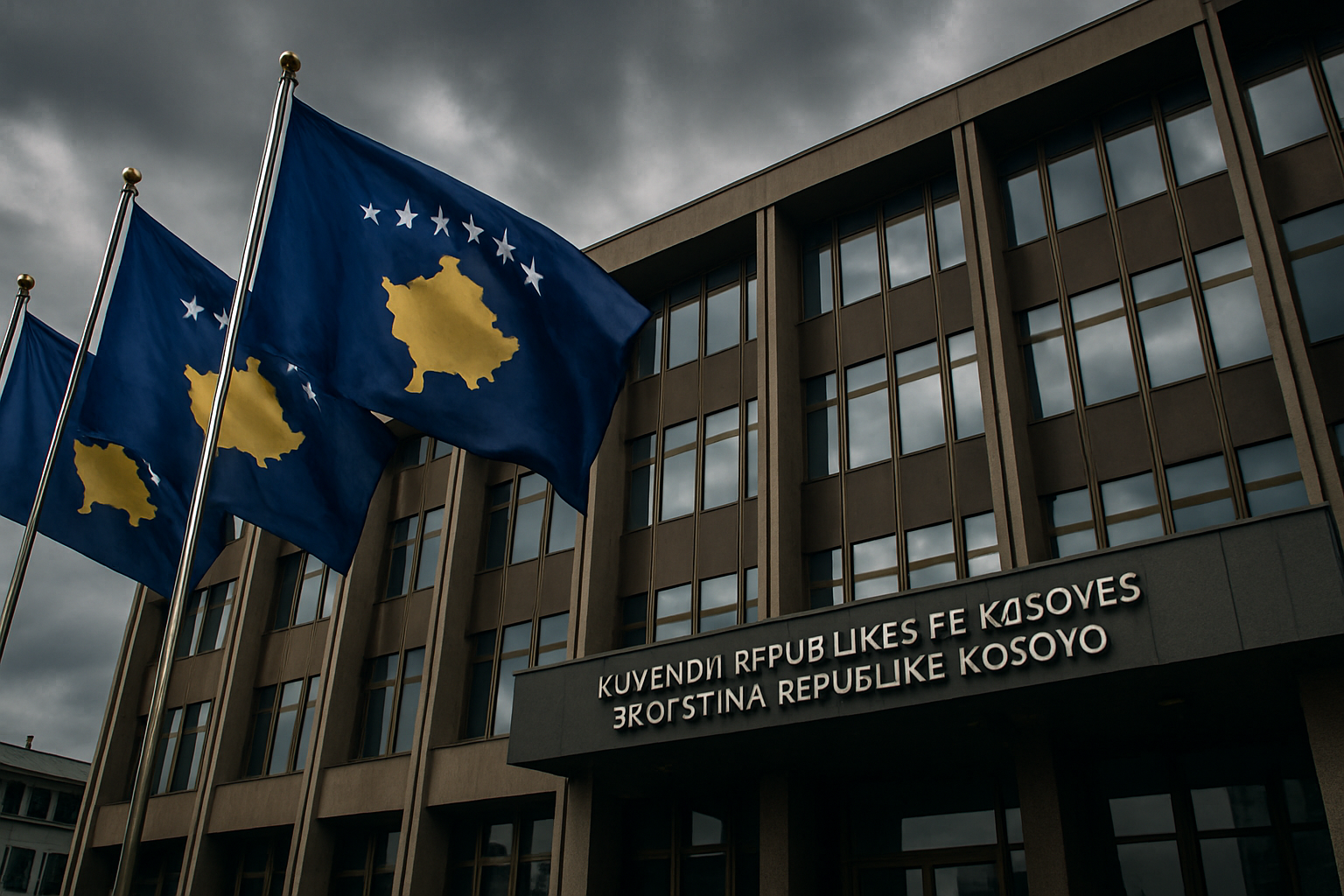
Kosovo President Vjosa Osmani has dissolved the country's parliament and called for early elections, creating a new political crisis just weeks after Prime Minister Albin Kurti successfully formed his third government in February 2026.
The dissolution, announced on March 6, 2026, represents a dramatic turn in Kosovo's political landscape, coming barely one month after Kurti's Vetëvendosje (Self-Determination) Movement had secured parliamentary approval for a new cabinet with 66 votes in favor and 49 against.
Constitutional Crisis Unfolds
According to reports from multiple regional sources, President Osmani exercised her constitutional authority to dissolve parliament, though the specific triggers for this decision remain unclear from the limited information available. The move effectively ends what was expected to be Kurti's third full term as Prime Minister, cutting short a mandate that had only begun in February.
The timing is particularly striking given that Kurti had just completed a successful government formation process following Vetëvendosje's strong electoral performance in December 2025. The party had secured 57 parliamentary seats, providing what appeared to be a stable foundation for governance.
Recent Political Context
Kosovo's political system has experienced significant turbulence over the past year. The country went through a prolonged political deadlock lasting from February 2025 until Kurti's successful government formation in February 2026. This crisis period was marked by institutional paralysis and uncertainty about the country's direction.
The February 2026 government formation had been seen as a stabilizing moment. Kurti's cabinet included key figures such as Glauk Konjufca as Deputy Prime Minister and Foreign Minister, and Donika Gërvalla as Deputy Prime Minister for Justice. The government had emphasized priorities including justice reform entering a "decisive phase," anti-corruption efforts "without fear, without favors," and continued progress on European integration.
International Implications
The parliamentary dissolution comes at a critical time for Kosovo's European aspirations. EU High Representative Kaja Kallas had recently welcomed the February government formation as "encouraging news" and expressed readiness for high-level Belgrade-Pristina dialogue meetings. The EU has emphasized the importance of accelerating reforms to unlock "hundreds of millions of euros" in support for Kosovo's European integration.
Kosovo's democratic stability serves as an important example in the Western Balkans region, where several countries have experienced governance challenges. The country's ability to manage political transitions peacefully has been viewed as evidence of democratic consolidation nearly 15 years after independence.
Electoral Implications
While specific dates for the new elections have not been announced, the dissolution sets in motion a process that will test Vetëvendosje's continued popular support. The party had achieved a strong mandate in December 2025 with 51% of the vote share, reflecting sustained confidence in Kurti's leadership.
The upcoming elections will likely focus on the same core issues that dominated recent political discourse: justice reform, anti-corruption measures, economic development, and Kosovo's relationship with the international community, particularly regarding EU integration and the ongoing Hague tribunal proceedings.
Historical Precedent
This dissolution marks another chapter in Kosovo's evolving democratic institutions. The country has demonstrated remarkable resilience in managing political transitions through constitutional processes rather than extra-legal means, a pattern that has strengthened institutional credibility.
The peaceful nature of political transitions in Kosovo, even during periods of crisis, has been noted by international observers as evidence of the country's democratic maturity. This institutional stability becomes particularly important given ongoing regional tensions and Kosovo's unique international status.
Looking Ahead
The early elections will provide another opportunity for Kosovo's citizens to express their democratic will and for the country's political parties to articulate their vision for the future. Key challenges facing any new government will include managing the European integration process, addressing economic needs of a young population, and maintaining Kosovo's international partnerships.
Given Vetëvendosje's strong recent electoral performance and Kurti's experience in government formation, the party may well emerge from new elections with renewed mandate. However, the political dynamics that led to the parliamentary dissolution suggest that Kosovo's democratic institutions continue to face pressures that require careful navigation.
As Kosovo prepares for another electoral cycle, the focus will be on ensuring that democratic processes remain transparent, inclusive, and focused on addressing the practical needs of Kosovo's citizens while advancing the country's long-term strategic goals.