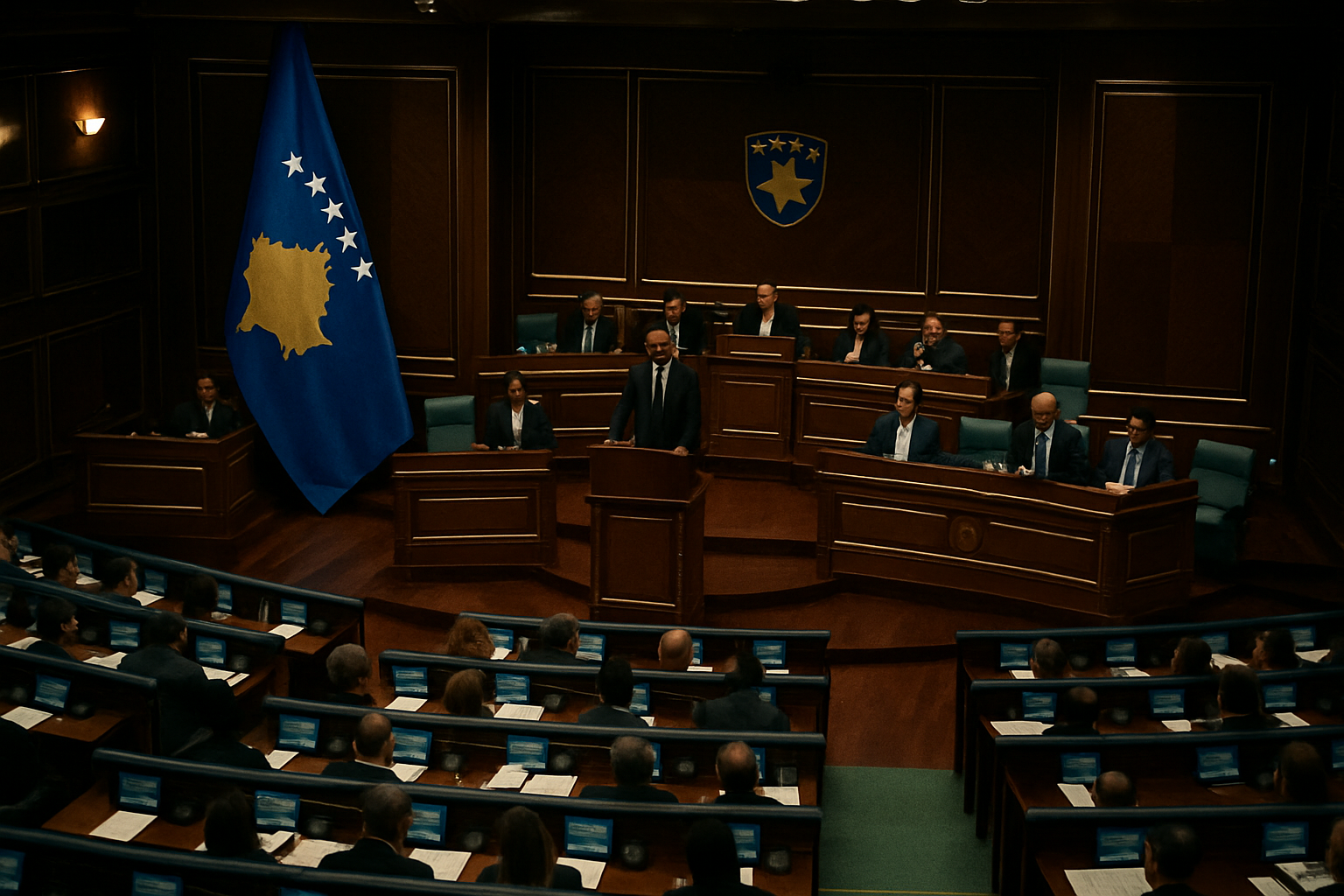
Kosovo's parliament elected Albin Kurti as prime minister on Wednesday, securing his third term and ending a year-long political stalemate that had paralyzed the young Balkan nation's governance since February 2025.
The 120-seat assembly approved Kurti's appointment with 66 votes in favor and 49 against, with no abstentions recorded. The decisive vote came after his left-nationalist Vetevendosje (Self-Determination) party topped December's snap election, prompting applause from supporters in the parliamentary gallery.
The election brings to a close one of Kosovo's most challenging political periods since independence in 2008, restoring stable government after months of caretaker administration that severely limited the country's ability to implement crucial reforms and advance its European integration agenda.
Political Crisis Resolution
Kosovo had been gripped by political crisis since February 2025, when the previous government fell amid internal coalition disputes and mounting pressure over corruption allegations against senior officials. The prolonged deadlock had raised concerns among international partners about the country's democratic stability and its commitment to EU accession requirements.
President Vjosa Osmani appointed Kurti following the Vetëvendosje Movement's electoral success in December 2025, which saw the party secure the largest share of parliamentary seats despite not achieving an outright majority. The party's performance represented a significant vote of confidence in Kurti's leadership amid widespread public frustration with political instability.
"This represents a decisive moment for Kosovo's democratic consolidation nearly 15 years after independence. A clear parliamentary mandate enables implementation of transparency, justice, and economic progress agenda amid complex regional and international relationships."
— Political analyst quoted in government formation coverage
Cabinet Appointments and Policy Priorities
Following his appointment, Kurti announced key cabinet positions demonstrating his government's commitment to both continuity and reform. Glauk Konjufca was named Deputy Prime Minister and Foreign Minister, while Donika Gërvalla will serve as Deputy Prime Minister for Justice. Fikrim Damka was appointed Deputy Prime Minister for Minorities, reflecting the government's emphasis on inclusive governance.
The cabinet also includes Hekuran Murati as Finance Minister, Ejup Maqedonci as Defense Minister, and Xhelal Sveçla as Interior Minister. Significantly, the government includes Serbian representative Nenad Rašić as a minister, demonstrating commitment to minority representation in a country where ethnic tensions remain a sensitive issue.
Kurti outlined his government's priorities during the parliamentary session, emphasizing that justice reform would enter a "decisive phase" under his leadership. He pledged an anti-corruption fight "without fear, without favors" and stressed the importance of law implementation across all sectors of society.
Economic and Regional Context
The new government takes office amid significant economic challenges but also notable achievements from Kurti's previous terms. Despite periods with limited governmental competencies during the political crisis, Kosovo has shown economic growth over the past five years, though unemployment and emigration remain persistent concerns.
Kurti addressed the ongoing trial of Kosovo Liberation Army (KLA) leaders at The Hague during his parliamentary appearance, characterizing 45-year sentence demands as "unacceptable." He defended the KLA as a legitimate liberation movement against the Milošević regime and rejected comparisons between liberation forces and Serbian war criminals.
The timing of government formation is particularly critical as Kosovo navigates complex relationships with neighboring Serbia and seeks to advance its European integration aspirations. EU integration remains central to the government's agenda, with judicial reform identified as crucial to meeting European requirements for candidate country status.
International and Regional Implications
The successful formation of Kurti's third government has been welcomed by international partners who had grown increasingly concerned about the extended political vacuum. The European Union, United States, and other key allies view stable governance in Kosovo as essential for regional stability in the Western Balkans.
The government formation occurs against a backdrop of broader regional tensions, including Kosovo's ongoing efforts to normalize relations with Serbia and advance its international recognition. Kurti's administration will need to balance domestic priorities with international expectations while maintaining Kosovo's commitment to democratic governance and rule of law.
The inclusion of minority representatives in the cabinet, particularly the Serbian minister position, sends an important signal about the government's commitment to multi-ethnic governance and could help ease tensions with Belgrade and international partners.
Looking Forward
With a clear parliamentary mandate and experienced leadership team, Kurti's third term represents a significant opportunity for Kosovo to advance key reforms and strengthen its democratic institutions. The government's emphasis on transparency, anti-corruption efforts, and European integration aligns with both domestic expectations and international requirements.
However, challenges remain substantial. The government must address economic concerns, improve rule of law, advance EU integration requirements, and manage complex regional relationships while maintaining political stability. Success in these areas will be crucial for Kosovo's long-term development and its aspirations for full European integration.
The peaceful transition and broad parliamentary support for Kurti's appointment demonstrates the resilience of Kosovo's democratic institutions and provides a foundation for addressing the country's most pressing challenges in the years ahead.