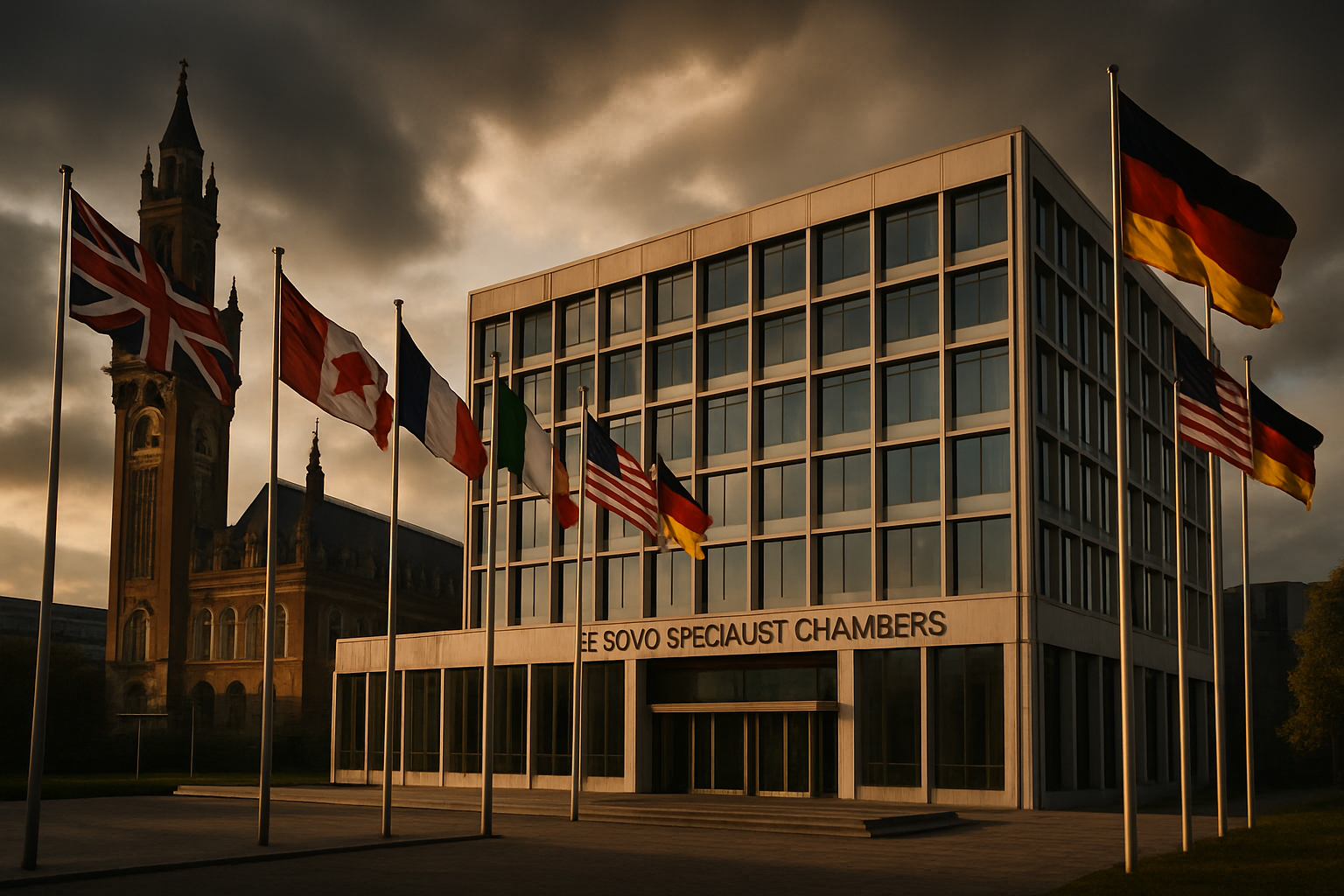
The Special Prosecutor's Office at The Hague has demanded 45-year prison sentences for each of four former Kosovo Liberation Army (UÇK/KLA) leaders, including former Kosovo President Hashim Thaçi, in closing statements that have sent shockwaves across the Balkans and prompted fierce political reactions from Kosovo and Albania.
In an unprecedented legal development, prosecutors at the Kosovo Specialist Chambers requested a total of 180 years imprisonment for the four defendants: former President Hashim Thaçi, former Parliament Speaker Kadri Veseli, former KLA General Staff member Rexhep Selimi, and former KLA spokesman Jakup Krasniqi. All four face charges of crimes against humanity related to their roles during the 1998-1999 Kosovo War.
Prosecution's Case Based on "Gravity" of Charges
The prosecution's demand, delivered during closing statements at the specialized court in The Hague, was based on what they termed the "gravity" of the war crimes charges against the former guerrilla leaders. The defendants are accused of establishing a systematic campaign of persecution, imprisonment, torture, and murder against civilians during the Kosovo conflict.
The charges stem from allegations that the KLA operated detention centers where Serbian, Albanian, and Roma civilians were held under inhumane conditions, with many subjected to torture and summary execution. Prosecutors argue the defendants held command responsibility for these alleged crimes as senior figures within the liberation movement's hierarchy.
Strong Political Backlash from Regional Leaders
The prosecution's sentencing demand has triggered an immediate and forceful response from political leaders across the region, with officials in both Kosovo and Albania denouncing the proceedings as unjust and politically motivated.
Kosovo's acting Prime Minister Albin Kurti issued a defiant statement declaring that "the Republic of Kosovo remains unwavering in its conviction that the KLA fought a just war and anti-colonial uprising." Kurti emphasized that "Kosovo's institutions will continue to defend the factual and historical truth, the value and dignity of the liberation war, as well as the fundamental principles of justice, while opposing any attempt to distort them."
"The moral and historical core of our liberation war consists in the survival and dignity of the people. The KLA was the bearer of a just, preserving and protective war."
— Albin Kurti, Acting Prime Minister of Kosovo
Albanian Prime Minister Edi Rama also strongly criticized the prosecution's approach, stating he could not understand the logic behind such severe sentencing demands. In a post on social media platform X, Rama described the request as unjustified and questioned what he termed the prosecution's approach to "burying these men alive."
Claims of Orchestrated Process
Political analyst Blerim Burjani, commenting on Albanian media, characterized the prosecution's demands as "well-orchestrated" and suggested the proceedings were aimed at proving the existence of a "criminal plan" within the KLA leadership. Burjani argued that such claims were illogical, noting that the KLA operated as a volunteer army without the capacity for centralized control over all operations throughout Kosovo.
The analyst drew comparisons with other liberation movements, suggesting the prosecution's approach unfairly criminalized what he and other regional observers view as a legitimate struggle for independence and self-determination against Serbian forces during the late 1990s conflict.
Background of the Kosovo Specialist Chambers
The Kosovo Specialist Chambers, established through Kosovo law but operating under international oversight in The Hague, was created specifically to investigate and prosecute crimes allegedly committed by KLA members during and after the 1998-1999 war. The court's mandate covers war crimes, crimes against humanity, and other serious violations of international law.
The establishment of the specialized court has been controversial from its inception, with many in Kosovo viewing it as disproportionately focused on alleged KLA crimes while giving insufficient attention to Serbian forces' documented atrocities during the conflict that prompted NATO's 1999 intervention.
Regional and International Implications
The trial and its potential outcomes carry significant implications for regional stability and reconciliation efforts in the Western Balkans. The proceedings have become a focal point for competing narratives about the Kosovo War, with supporters viewing the defendants as heroes of national liberation while critics argue that accountability must apply to all parties regardless of their cause.
The case also tests the credibility and effectiveness of international justice mechanisms in addressing post-conflict accountability in ethnically divided societies. The strong political reactions from Kosovo and Albanian leadership highlight the ongoing tensions between legal proceedings and political realities in societies still grappling with the aftermath of armed conflict.
Impact on Kosovo's European Integration
The trial's progress and outcomes may also influence Kosovo's aspirations for European Union membership and broader international recognition. The European Union has consistently emphasized the importance of rule of law and cooperation with international justice as prerequisites for closer integration.
However, the fierce resistance from Kosovo's political establishment to what they view as an unfair targeting of liberation war veterans could complicate these relationships and create additional challenges for Kosovo's diplomatic efforts.
Defense Strategy and Next Steps
The defense teams for the four defendants are expected to present their closing arguments in the coming weeks, likely challenging both the factual basis of the charges and the legal interpretations applied by the prosecution. The defense has consistently maintained that their clients were engaged in a legitimate armed struggle for independence and that any civilian casualties were either unintended consequences of war or the result of individual actions not authorized by the leadership.
The trial, which has been ongoing for several years, is expected to conclude with a verdict in the coming months. Given the severity of the requested sentences and the high-profile nature of the defendants, any final judgment will likely be subject to appeals processes that could extend legal proceedings for several more years.
Historical Context and Continuing Divisions
The current proceedings reflect the enduring divisions over how to interpret and adjudicate the complex legacy of the Kosovo conflict. For ethnic Albanians in Kosovo and Albania, the KLA represents a heroic liberation movement that secured independence after decades of oppression. For Serbia and its supporters, the organization is viewed as a terrorist group responsible for serious crimes against Serbian civilians and other minorities.
These competing narratives have made post-conflict justice particularly challenging in the Kosovo context, with each community maintaining vastly different understandings of victimhood, heroism, and criminal responsibility during the 1998-1999 war and its immediate aftermath.
As the legal proceedings continue, the case serves as a reminder of the ongoing challenges facing international justice in post-conflict societies, where legal accountability must navigate complex political realities and deeply held communal beliefs about historical events and their meaning.