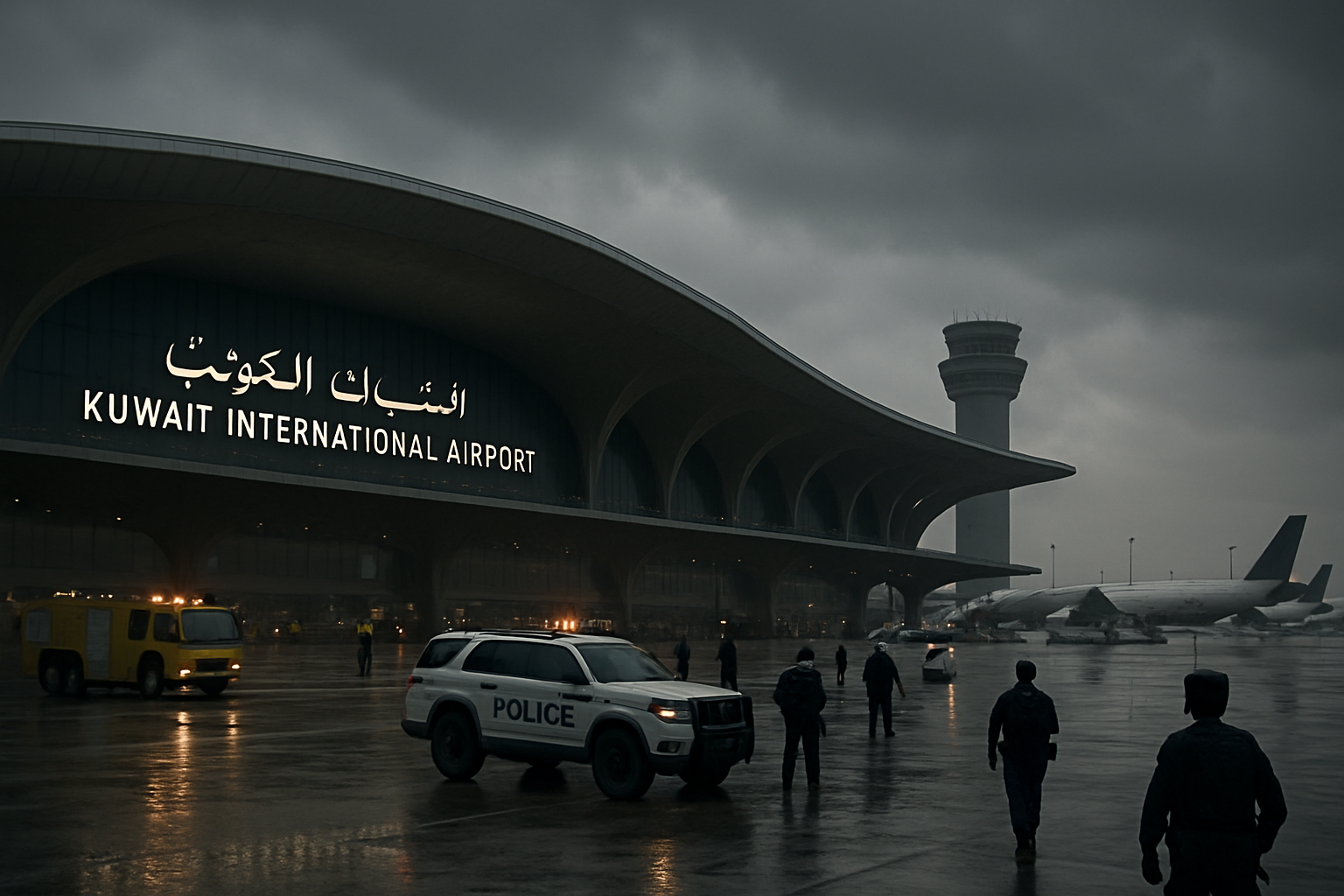
Kuwait International Airport was targeted by multiple drones on Saturday evening, sustaining damage to critical radar systems in the latest escalation of regional tensions that have transformed the Middle East security landscape.
The Directorate General of Civil Aviation confirmed the attack occurred on March 14, 2026, marking another concerning development in what security experts describe as an unprecedented period of instability across the Gulf region. According to Abdullah Al-Rajhi, the official spokesman for Kuwait's civil aviation authority, the incident was handled according to established emergency protocols in coordination with relevant state agencies.
"The General Authority for Civil Aviation announces that Kuwait International Airport was targeted this evening by several drones that hit the airport's radar system without recording any human casualties," Al-Rajhi stated in an official announcement to the Kuwait News Agency (KUNA).
Pattern of Regional Attacks
This attack represents part of a broader escalation that has engulfed the Middle East since early March 2026, when Iranian forces launched "Operation True Promise 4" in retaliation for US-Israeli strikes. The coordinated Iranian campaign declared "no red lines remain," systematically targeting Western assets and allied territories across the region.
Kuwait has found itself caught in this expanding conflict despite its traditionally diplomatic stance. The airport attack follows a series of Iranian strikes across Gulf states that have killed civilians and damaged critical infrastructure. The United Arab Emirates reported one civilian death in Abu Dhabi from missile debris, while Qatar intercepted 65 missiles and 12 drones using Patriot defense systems, resulting in eight injuries from falling fragments.
The targeting of Kuwait's airport represents a particularly concerning development given the facility's strategic importance to both civilian aviation and regional logistics networks. Kuwait International Airport serves as a crucial hub for the region, and any disruption to its operations has cascading effects across international flight schedules already strained by the ongoing crisis.
Aviation Crisis Deepens
The Kuwait airport strike compounds an unprecedented global aviation crisis that has seen over 18,000 flights cancelled worldwide – the most extensive disruption since the COVID-19 pandemic. Eight Middle Eastern countries have simultaneously closed their airspace, including Iran, Iraq, Israel, the UAE, Qatar, Syria, and Bahrain, effectively severing critical Europe-Asia aviation connections.
Dubai International Airport, the world's busiest with over 86 million passengers annually, remains completely shut down following missile damage sustained during the initial wave of Iranian retaliation. Major airlines including Emirates, Air France-KLM, Wizz Air, and Bulgaria Air have suspended operations indefinitely, stranding hundreds of thousands of passengers globally.
The aviation industry faces unprecedented challenges as airlines cannot schedule long-term operations with multiple countries maintaining closed airspace. Recovery timelines remain uncertain, dependent on military and diplomatic developments rather than the predictable weather patterns that typically cause flight disruptions.
Energy Security at Risk
Beyond aviation, the regional crisis has triggered severe energy market disruptions. Iran's Revolutionary Guard declared the Strait of Hormuz "unsafe for shipping," effectively closing the waterway that handles 40% of global seaborne oil transit. Oil prices have surged past $80 per barrel, while natural gas prices have increased by 24% in Europe and 78% in the United States.
Major shipping companies Maersk and MSC have suspended Persian Gulf operations, leaving over 150 oil and LNG tankers stranded with billions of dollars in cargo. Qatar has halted LNG production at its Ras Laffan and Mesaid facilities following Iranian attacks, affecting approximately 20% of global LNG exports and threatening European gas supplies.
Diplomatic Breakdown Context
The current crisis stems from the complete collapse of nuclear diplomacy between the United States and Iran, despite what had been described as a breakthrough in Geneva talks achieving "broad agreement on guiding principles" – the most progress since the 2018 JCPOA collapse.
However, fundamental disagreements proved insurmountable. Iran excluded ballistic missiles and proxy forces as "red lines" in nuclear-only negotiations, while the US demanded comprehensive agreements covering missiles, armed groups, and human rights issues. Iran continues uranium enrichment at 60% purity with over 400 kilograms of material approaching weapons-grade levels.
The diplomatic breakdown led to "Operation Epic Fury," the largest coordinated US-Israeli military operation since 2003, which resulted in significant Iranian casualties including confirmed deaths of Defense Minister Aziz Nasirzadeh, IRGC Chief Mohammad Pakpour, and over 40 high-ranking officials.
Regional Coalition Under Strain
The expanding conflict has severely strained an unprecedented regional coalition that included Saudi Arabia, the UAE, Qatar, and Egypt backing diplomatic solutions. Egyptian President Abdel Fattah el-Sisi condemned the attacks on "sisterly Arab countries," warning of "comprehensive chaos" if the situation escalates further.
The targeting of coalition member territories has fundamentally altered regional dynamics. Kuwait's airport attack, alongside strikes in the UAE and Qatar, represents a dangerous expansion of the conflict that threatens to undermine decades-old security arrangements in the Gulf.
International Response
The Kuwait airport strike has prompted urgent international discussions about protecting critical civilian infrastructure. The attack on RAF Akrotiri in Cyprus marked the first Iranian strike on European territory since World War II, triggering an unprecedented naval coalition including HMS Dragon, Spanish frigates, and vessels from Italy, France, Netherlands, and Greece.
Multiple governments have activated emergency evacuation protocols rivaling the scale of the 2011 Arab Spring. Australia reports 115,000 nationals trapped in the region, while Germany has 30,000 tourists stranded. The European Union activated its ESTIA evacuation plan for the first time, coordinating the extraction of European nationals from affected areas.
Nuclear Governance Crisis
The crisis occurs against the backdrop of broader nuclear governance challenges. The New START treaty between the US and Russia expired in February 2026, creating the first 50-year period without nuclear constraints between the superpowers. Combined with China's nuclear expansion and Iran's uranium enrichment, UN Secretary-General António Guterres has warned that nuclear risks are at their "highest in decades."
Looking Ahead
The attack on Kuwait International Airport represents a dangerous escalation in what has become the most serious international crisis since the Cold War's end. The systematic targeting of civilian infrastructure across multiple countries demonstrates the conflict's expansion beyond traditional military targets.
Recovery timelines remain uncertain for both aviation and energy sectors, as resolution depends on military and diplomatic developments rather than technical repairs. The crisis has exposed fundamental vulnerabilities in global supply chains and transportation networks that depend on Middle Eastern stability.
As Al-Rajhi emphasized, Kuwait's civil aviation authority "always strives to take all necessary measures to preserve the security and safety of civil aviation in the country." However, the attack underscores how regional conflicts now directly threaten civilian infrastructure across the Gulf, with implications extending far beyond the Middle East's borders.
The international community faces urgent decisions about crisis containment versus broader escalation, with stakes including regional war prevention, global energy security, nuclear governance credibility, and the effectiveness of international law enforcement mechanisms established after World War II.