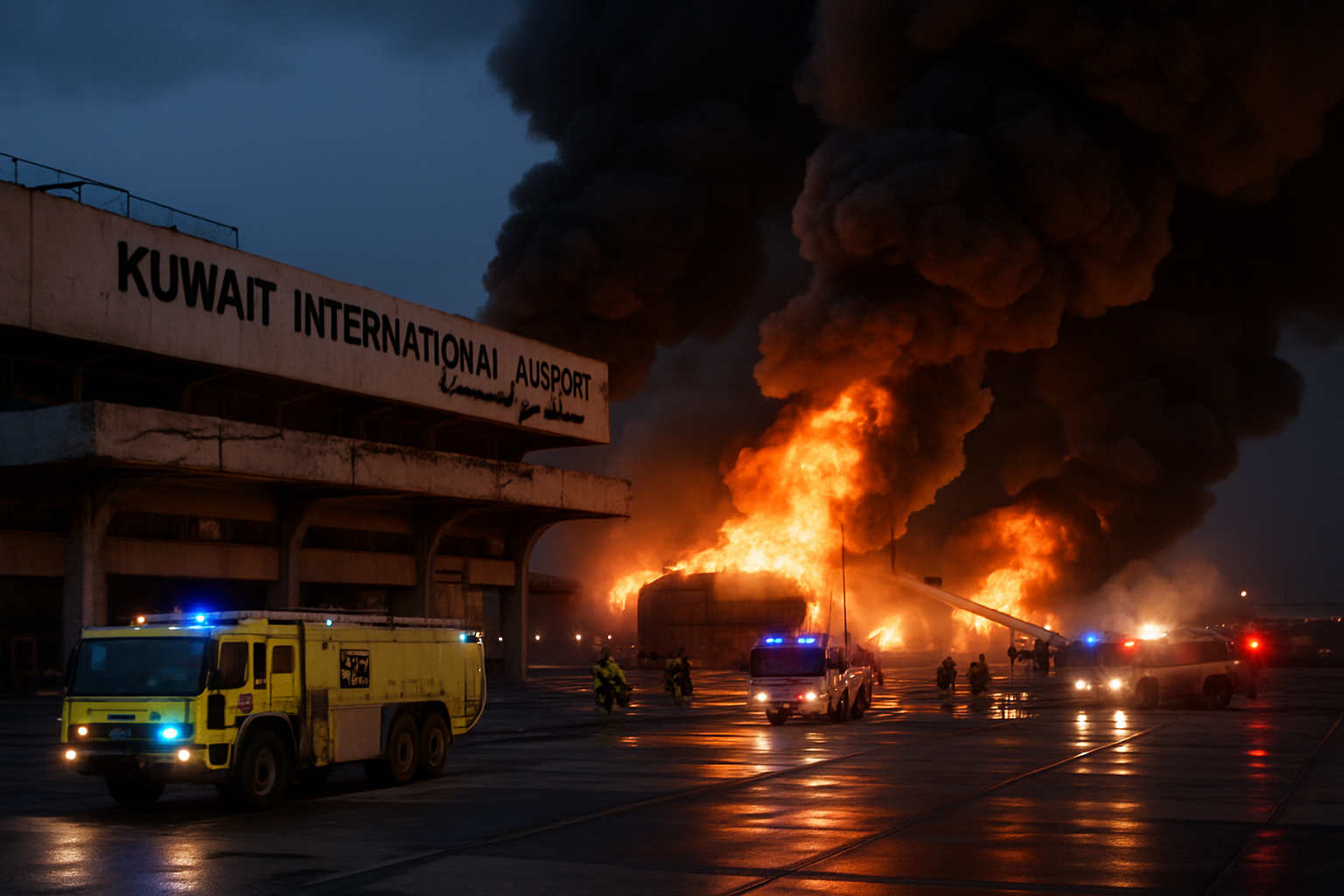
Kuwait's defense forces detected and intercepted 15 hostile drones over a 24-hour period, with several strikes targeting Kuwait International Airport and causing extensive damage to critical radar systems, according to official statements from the Ministry of Defense on Saturday, March 28, 2026.
The coordinated attacks represent the latest escalation in what officials describe as ongoing Iranian aggression against Kuwait, part of the broader "Operation True Promise 4" campaign that has systematically targeted civilian infrastructure across the Gulf region since March 2026.
Airport Infrastructure Under Attack
Colonel Saud Abdulaziz Al-Otaibi, official spokesperson for Kuwait's Ministry of Defense, confirmed that Armed Forces detected the hostile drones targeting the perimeter of Kuwait International Airport. The strikes resulted in "significant damage to the radar system without recording any human casualties."
Civil Defense spokesperson Muhammad Al-Ghareeb announced that firefighting teams successfully extinguished a major blaze that erupted in fuel tanks at the airport following the drone strikes. The firefighting operation, which lasted 58 continuous hours, involved coordinated efforts from Kuwait's Fire Force, supported by teams from the Kuwaiti Army, National Guard, and oil sector emergency services.
"The losses were limited to material damage without recording any human injuries."
— Brigadier Muhammad Al-Ghareeb, Civil Defense Spokesperson
Despite the successful fire suppression efforts, the attacks have severely impacted airport operations, with multiple airlines relocating services to Saudi Arabia due to the repeated targeting of Kuwaiti aviation infrastructure.
Comprehensive Defense Response
Interior Ministry spokesperson Nasser Bousleib detailed the sophisticated defense operation, confirming that special forces, in coordination with air defense units, successfully tracked, intercepted, and shot down three drones within Kuwaiti airspace through "qualitative and precise operations" during the 24-hour period.
The Ministry of Defense's comprehensive response involved:
- Detection and tracking of 15 hostile drones
- Successful interception of multiple aerial threats
- Coordinated fire suppression operations lasting 58 hours
- Enhanced security measures across critical infrastructure
Explosive ordnance disposal teams addressed nine reports related to falling debris from interception operations, with the total number of shrapnel-related incidents rising to 588 reports as defense forces continue countering the systematic aerial bombardment campaign.
Regional Context and Iranian Campaign
The attacks on Kuwait are part of Iran's declared "Operation True Promise 4," launched in retaliation for the death of Supreme Leader Ali Khamenei during US-Israeli strikes in early March 2026. The Islamic Revolutionary Guard Corps has maintained that "no red lines remain" in targeting what they consider legitimate Western and allied assets across the Middle East.
Kuwait's targeting fits into a broader pattern of Iranian attacks against Gulf allies, which have also affected the UAE (one civilian killed in Abu Dhabi), Qatar (8 injured despite successful Patriot missile interceptions), and for the first time since World War II, European territory in Cyprus.

Historical Precedent and Strategic Implications
According to historical context from ongoing regional monitoring, this represents the most systematic targeting of civilian infrastructure since the Iranian crisis began in March 2026. The attacks have forced the unprecedented closure of eight Middle Eastern countries' airspace simultaneously, creating what aviation experts describe as the most comprehensive flight disruption since the COVID-19 pandemic.
The strategic targeting of Kuwait's airport infrastructure appears designed to pressure the Gulf state's support for diplomatic solutions to the regional crisis. Kuwait, along with Saudi Arabia, UAE, Qatar, and Egypt, had formed an unprecedented consensus supporting diplomatic engagement before Iranian retaliation campaigns began targeting member territories directly.
Economic and Aviation Impact
The repeated targeting of Kuwait International Airport has forced a significant restructuring of regional aviation operations. Several international carriers have suspended services or relocated operations to Saudi Arabian airports as a security precaution.
The broader regional crisis has already resulted in:
- Over 18,000 flight cancellations worldwide
- Closure of Dubai International Airport (the world's busiest)
- Oil prices surging past $100 per barrel due to Strait of Hormuz tensions
- The largest international evacuation effort since the Arab Spring of 2011
Energy markets have been particularly affected, with Iran's threats to the Strait of Hormuz—which handles 40% of global seaborne oil transit—creating severe supply disruptions and triggering the largest strategic petroleum reserve release in the International Energy Agency's 50-year history.
International Response and Support
The systematic targeting of Kuwait has drawn condemnation from the international community and support from regional allies. Saudi Arabia's Crown Prince Mohammed bin Salman received support calls from UK Prime Minister Starmer and Pakistani Prime Minister Shehbaz Sharif, specifically condemning Iranian attacks threatening Kuwait's security and sovereignty.
Egypt's President Abdel Fattah al-Sisi condemned what he termed attacks on "sisterly Arab countries," warning that continued Iranian aggression could lead to "comprehensive chaos" across the region. This represents a significant strain on the previously unified diplomatic approach favored by Gulf states.
"These systematic attacks violate all international laws and require a firm international stance."
— Nasser Al-Hain, Kuwait's Permanent Representative to the UN Human Rights Council
Technological Sophistication and Precision
The drone attacks demonstrate Iran's sophisticated capability to conduct precision strikes against specific military and civilian infrastructure while generally avoiding mass civilian casualties. This calculated approach appears designed to pressure governments without triggering NATO Article 5 responses or broader international military intervention.
Defense analysts note that the systematic 58-hour firefighting operation required to extinguish fuel tank fires indicates the substantial impact these attacks can achieve on critical infrastructure, even when defensive systems successfully prevent loss of life.
Looking Ahead: Regional Stability at Risk
The continuing attacks on Kuwait represent a dangerous expansion of what began as a US-Iran nuclear dispute into a broader regional conflict affecting civilian populations and critical infrastructure across multiple countries. UN Secretary-General António Guterres has described the situation as "the greatest test of multilateral cooperation and crisis management in the modern era."
The success of Kuwait's defensive operations, while preventing casualties, highlights both the effectiveness of modern air defense systems and the persistent threat posed by asymmetric drone warfare capabilities. As the broader regional crisis continues into its fourth week, the targeting of civilian infrastructure like airports represents a concerning escalation that threatens to further destabilize the already volatile region.
With oil prices continuing to climb and international evacuations ongoing, the world watches as diplomatic efforts struggle to contain what has become the most dangerous international crisis since the end of the Cold War, with implications extending far beyond Middle Eastern boundaries to global energy security and economic stability.