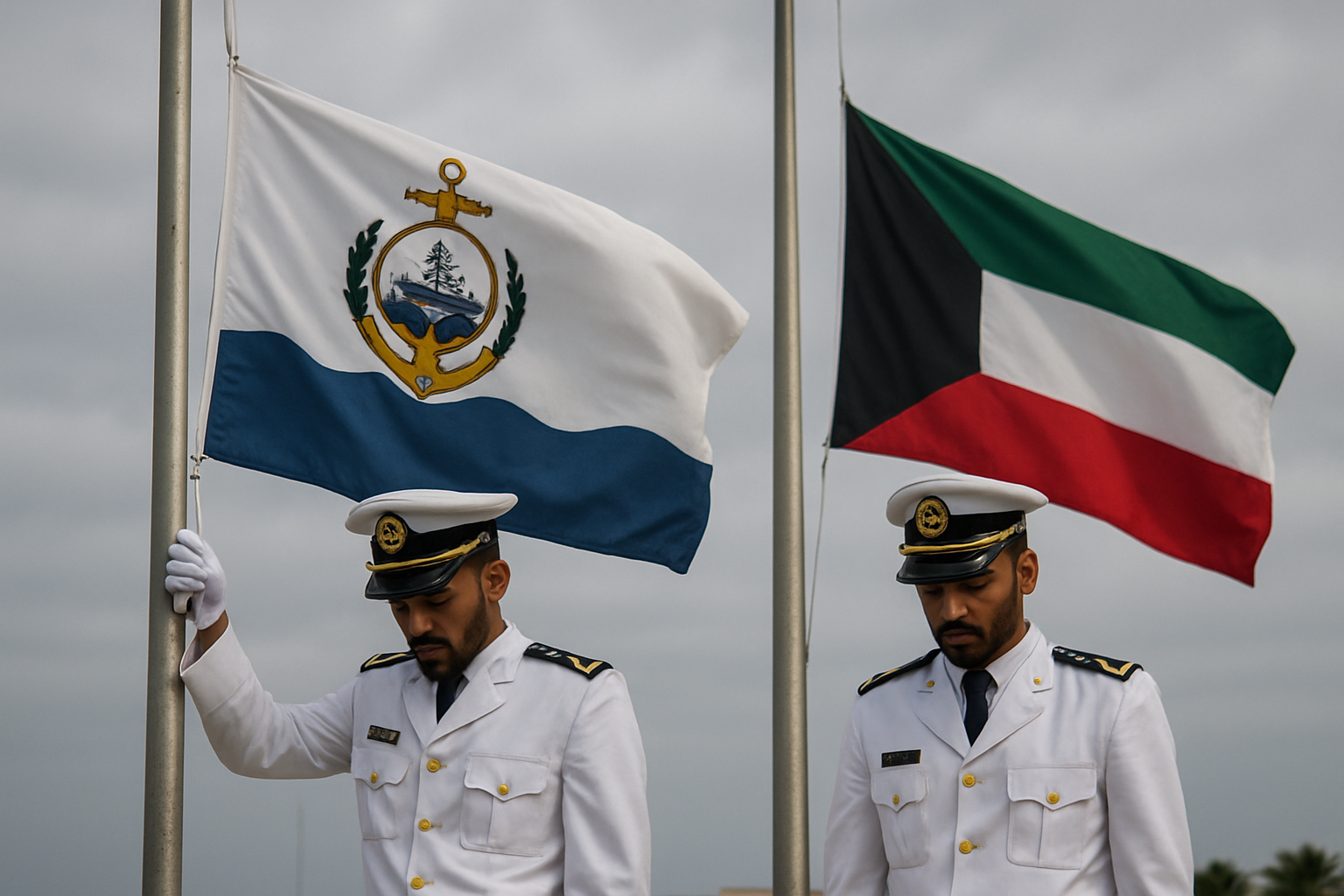
Kuwait is mourning the loss of two naval sergeants killed during Iranian military operations, as the Gulf nation finds itself caught in the crossfire of escalating regional tensions following the largest Middle East crisis since the Cold War ended.
The General Staff of the Kuwaiti Army announced the deaths of Sergeant Waleed Majeed Suleiman and Sergeant Abdul Aziz Abdul Mohsen Dakhel Nasser, both members of the Kuwaiti Naval Force, who were killed while performing their national duties amid Iranian retaliation strikes.
International Support Pours In
In the wake of these tragic losses, Kuwait has received widespread international condolences and support. Crown Prince Sheikh Sabah Khaled Al-Hamad Al-Sabah received phone calls from multiple world leaders condemning the Iranian attacks on Kuwaiti territory.
The President of the Maldives, Dr. Mohamed Muizzu, strongly condemned what he described as "blatant Iranian attacks on Kuwaiti territory," calling them a "flagrant violation of sovereignty and international law." He confirmed his country's complete support for all measures Kuwait takes to preserve its sovereignty and security.
Similarly, Somali President Hassan Sheikh Mohamud condemned the Iranian attacks as a "flagrant violation of sovereignty and international law," reaffirming Somalia's full support for Kuwait's measures to protect its sovereignty and security.
Pakistani Prime Minister Muhammad Shehbaz Sharif also contacted the Crown Prince to condemn the Iranian attacks, describing them as targeting Kuwait's territories and expressing Pakistan's solidarity with the Gulf nation.
"We strongly condemn these attacks on Kuwait's sovereign territory and stand firmly with our Kuwaiti brothers in these challenging times."
— Dr. Mohamed Muizzu, President of Maldives
Context of Regional Escalation
The deaths of the Kuwaiti naval personnel occurred during Iran's massive retaliation campaign dubbed "Operation True Promise 4," launched in response to the US-Israeli "Operation Epic Fury" strikes. This unprecedented regional escalation has been described as the most dangerous moment since the Cold War ended.
Kuwait's strategic location in the Persian Gulf has made it vulnerable to spillover effects from the broader Iran crisis. Kuwait International Airport was struck by Iranian drones, causing employee injuries and forcing flight suspensions, while other Gulf nations also experienced attacks on their territories.
The crisis began following the complete breakdown of nuclear diplomacy between the United States and Iran, despite achieving what was described as "broad agreement on guiding principles" in Geneva talks - the most progress since the JCPOA collapse in 2018.
Gulf Coalition Under Strain
The Iranian attacks have severely strained the unprecedented regional coalition of Saudi Arabia, UAE, Qatar, and Egypt that had been backing diplomatic efforts to prevent military confrontation. Egyptian President Abdel Fattah el-Sisi condemned the attacks on "sisterly Arab countries," warning of "comprehensive chaos" if the situation escalates further.
Saudi Arabia's Foreign Ministry also expressed its condolences to Kuwait over the martyrdom of the two army personnel during the performance of their national duties, highlighting the solidarity among Gulf Cooperation Council members during this crisis.
Global Implications
The crisis has triggered unprecedented global disruptions, with over 18,000 flights cancelled worldwide as multiple countries closed their airspace simultaneously. Oil prices have surged as Iran threatened shipping through the Strait of Hormuz, which handles 40% of global oil transit.
The UN Security Council has convened emergency sessions, with Secretary-General António Guterres warning of a "serious threat to international peace and security." Russia condemned what it called "reckless actions by Washington and West Jerusalem" as violations of international law.
Kuwait's Response
Despite the tragic losses, Kuwait has maintained its commitment to regional stability and diplomatic solutions. The deaths of Sergeants Suleiman and Nasser have been mourned as martyrs who died in service of their nation, with military leadership praying for their souls and offering condolences to their families.
The Kuwait government has activated security protocols while maintaining its position as a regional mediator, emphasizing the importance of de-escalation and return to diplomatic channels.
Looking Forward
As Kuwait mourns its fallen naval personnel, the broader regional crisis continues to unfold with global implications. The template-setting nature of this conflict - representing the most dangerous moment since the Cold War - will have lasting effects on international approaches to nuclear crisis resolution, territorial sovereignty enforcement, and diplomatic versus military solutions.
The coming days will be crucial in determining whether the crisis can be contained as a regional confrontation or will escalate into a broader Middle Eastern war with worldwide implications affecting energy markets, supply chains, and international stability mechanisms.
Kuwait's resilience in the face of these challenges, combined with the international support it has received, demonstrates the global community's recognition of the need to protect sovereignty and maintain stability in this critical region of the world.