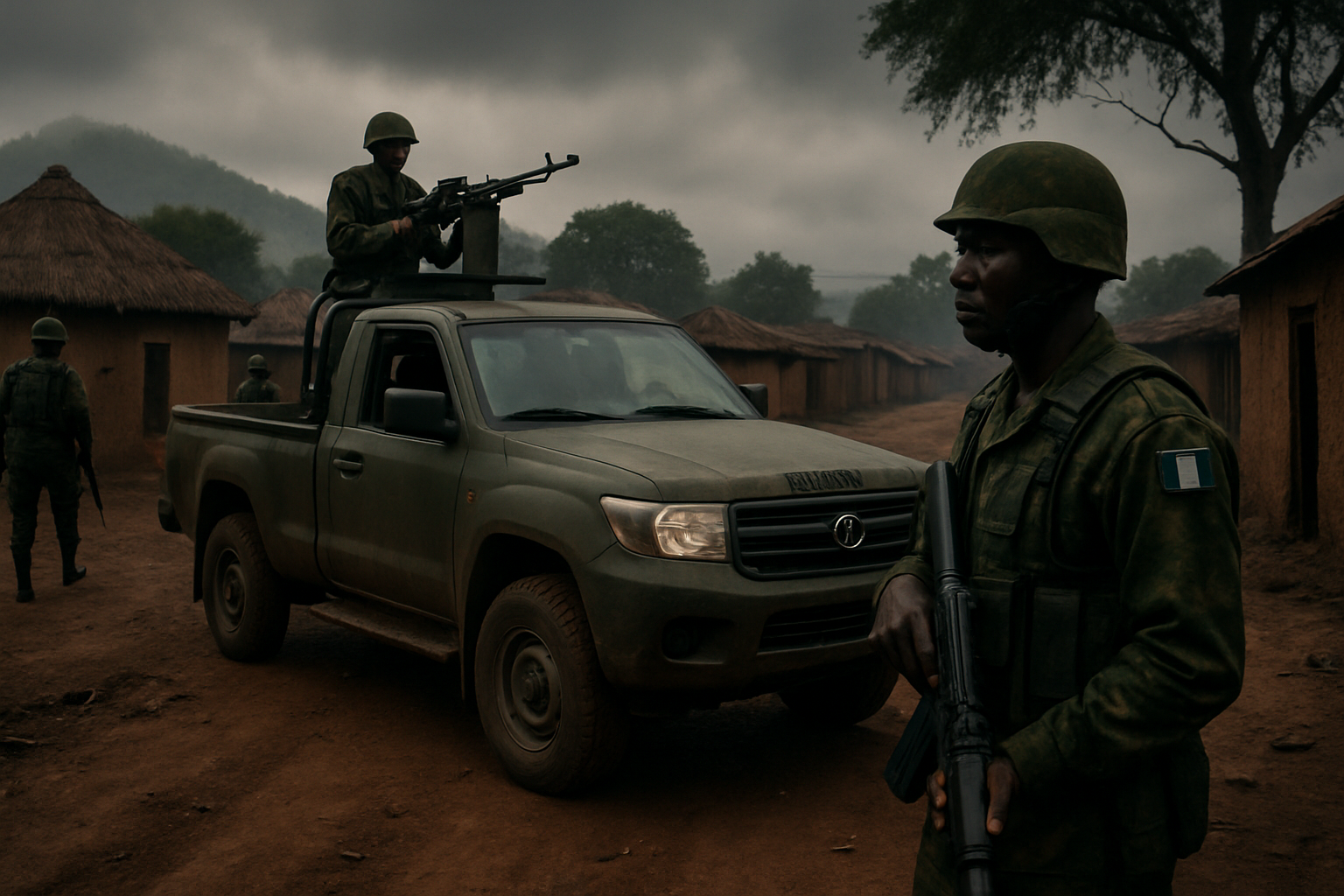
President Bola Ahmed Tinubu has deployed an army battalion to Nigeria's western Kwara State after armed gunmen killed at least 162 people in what authorities are calling one of the country's deadliest terrorist attacks in recent months.
The devastating attack has left survivors terrorized and entire communities devastated, marking a concerning expansion of Nigeria's security crisis beyond its traditional northeastern strongholds to previously stable regions of the country.
Details of the Massacre
The coordinated attack targeted villages in the Kaiama Local Government Area of Kwara State, with gunmen systematically killing civilians in what has been described as one of the most brutal assaults in the region's recent history. Multiple sources confirm the death toll has reached 162, though rescue operations continue and some residents remain unaccounted for.
According to eyewitness accounts, the attackers moved through communities with deadly precision, leaving behind scenes of unprecedented destruction. The assault has prompted immediate military intervention from Nigeria's federal government, recognizing the severity of the threat posed by these terrorist cells.
Government Response and Military Deployment
Following emergency consultations between President Tinubu and Kwara State Governor AbdulRazaq, the federal government swiftly authorized the deployment of military personnel to secure the affected areas. The governor met with President Tinubu at Aso Rock villa in Abuja to discuss the security response to what officials are categorizing as a terrorist attack.
"The federal government has ordered military deployment to ensure the security of our citizens and prevent further attacks,"
— Federal Government Statement
The military deployment represents a significant escalation in Nigeria's security response, acknowledging that the threat has moved beyond conventional criminal activity to organized terrorism requiring specialized counter-terrorism capabilities.
Regional Security Context
This devastating attack comes as part of a broader deterioration in West African security, with Nigeria facing multiple fronts of insecurity. The country has been grappling with various forms of violence, from Boko Haram insurgency in the northeast to banditry and kidnapping in the northwest and north-central regions.
The expansion of terrorist activities into Kwara State, traditionally considered more stable than Nigeria's northern border regions, represents a concerning geographic spread of insecurity that challenges the country's security architecture.
The incident follows a pattern of escalating violence across the Sahel region, including recent attacks in Niger and Mali that have destabilized regional security frameworks and strained international cooperation efforts.
Impact on Local Communities
The massacre has created a humanitarian crisis in the affected areas, with survivors forced to flee their homes and seek shelter in surrounding communities. Many residents have reportedly taken refuge in bushland, fearful of returning to their villages due to the continued security threat.
Local authorities and humanitarian organizations are working to provide emergency assistance to displaced residents, though the scale of the crisis has overwhelmed local capacity. The psychological trauma inflicted on survivors adds another layer of complexity to the recovery efforts.
The systematic nature of the attack, which included the destruction of commercial establishments and symbolic buildings, suggests the perpetrators aimed not just at causing casualties but at permanently displacing communities and destroying local social structures.
National Security Implications
Security analysts view this attack as a significant escalation that demands a comprehensive national response. The ability of armed groups to carry out such large-scale operations in previously secure areas indicates either a failure of intelligence gathering or an evolution in terrorist capabilities that Nigeria's security forces must address.
The federal government's attribution of the attacks to "terrorist cells" suggests official recognition that Nigeria faces not just criminal gangs but organized extremist groups with the capacity for coordinated military-style operations.
This development places additional strain on Nigeria's already stretched security apparatus, which is simultaneously dealing with various forms of insecurity across multiple regions of the country.
International Context and Concerns
The Kwara State massacre occurs against the backdrop of deteriorating security conditions across West Africa, where multiple countries face threats from various armed groups. The international community has expressed concern about the spread of terrorist activities across the region, which threatens not only national stability but regional economic development and cooperation.
Nigeria's role as West Africa's largest economy and most populous country means that internal security challenges have implications far beyond its borders, affecting regional trade, migration patterns, and diplomatic relationships.
Ongoing Security Operations
Nigerian security forces, including both military units and forest guards, have been deployed to secure the affected communities and conduct search operations for any remaining attackers. The operation aims not only to provide immediate security but to restore confidence among local populations that have been traumatized by the scale of violence.
Authorities have emphasized that the security deployment will be sustained to prevent further attacks and to enable displaced residents to return to their communities. However, the effectiveness of these measures will depend on addressing the root causes that allowed such attacks to occur and preventing similar incidents in other vulnerable areas.
Looking Forward
The Kwara State massacre represents a critical juncture in Nigeria's ongoing struggle with insecurity. The federal government's rapid deployment of military resources demonstrates recognition of the severity of the threat, but long-term success will require sustained commitment to security sector reform and community protection.
As rescue operations continue and the full extent of the tragedy becomes clear, Nigeria faces the challenge of preventing similar attacks while addressing the humanitarian needs of survivors and rebuilding devastated communities. The international community will be watching closely to see how Africa's most populous nation responds to this latest security crisis.