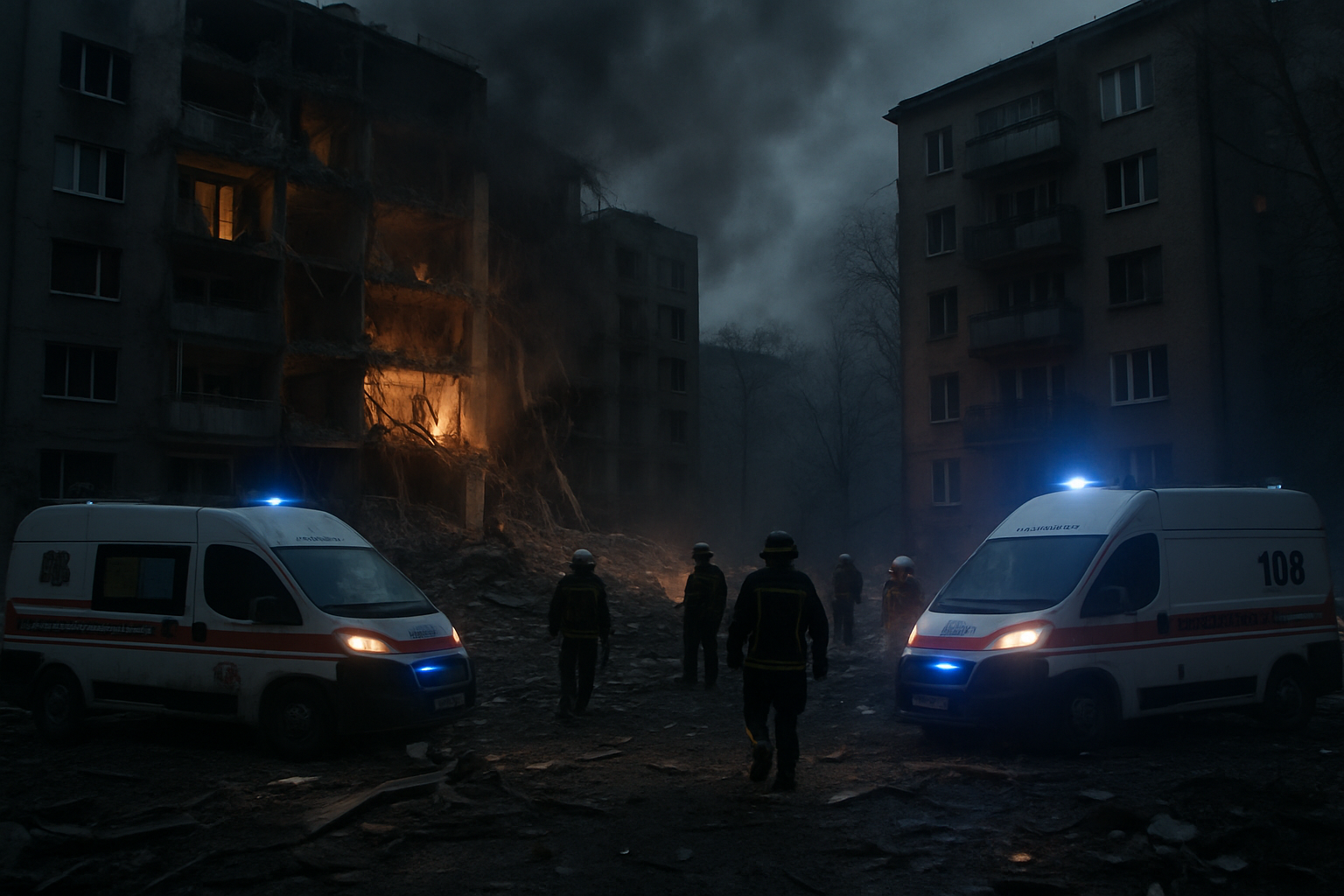
The Ukrainian capital Kyiv came under renewed Russian missile attack in the early hours of February 3, 2026, with multiple explosions reported across the city as emergency crews responded to damage at residential buildings, educational facilities, and commercial establishments.
Head of Kyiv's military administration Timur Tkachenko confirmed the attack via Telegram, stating that several apartment buildings, an educational institution, and a commercial facility sustained damage. Kyiv Mayor Vitali Klitschko immediately ordered emergency medical teams to deploy to affected areas of the city.
Witnesses reported powerful explosions throughout the capital, describing a coordinated assault involving both missiles and drones targeting various districts. The attack marks a significant escalation in Russian strikes on the Ukrainian capital, coming just days before scheduled trilateral peace negotiations between Ukraine, Russia, and the United States.
Kharkiv Also Under Fire
The missile barrage was not limited to Kyiv, with reports indicating that Ukraine's second-largest city, Kharkiv, also came under Russian attack. The simultaneous strikes on multiple urban centers suggest a coordinated offensive aimed at disrupting Ukrainian civilian life and infrastructure.
According to multiple international news sources, the attacks targeted both military and civilian infrastructure, continuing Russia's pattern of strikes against Ukrainian energy and transportation networks. The timing of these attacks, occurring amid extreme winter conditions with temperatures dropping to minus-30°C in some regions, amplifies their impact on the civilian population.
Peace Talks Context
The missile attacks come as Ukraine prepares for the second round of trilateral peace negotiations with Russia and the United States, scheduled for February 5-6, 2026, in Abu Dhabi. President Volodymyr Zelensky recently approved the framework and objectives for Ukraine's delegation to these crucial talks.
The timing appears calculated to pressure Ukrainian negotiators ahead of what many consider the most significant diplomatic opportunity since the conflict began in February 2022. US Special Envoy Steve Witkoff is expected to participate in the Abu Dhabi discussions, representing the highest level of American involvement in the peace process to date.
"These attacks demonstrate Russia's continued commitment to terrorizing civilian populations even as diplomatic channels remain open,"
— Ukrainian officials, speaking on condition of anonymity
Strategic Shift in Russian Tactics
Military analysts note that Russia has recently shifted its strategy from targeting energy infrastructure to what Ukrainian officials term "logistics terror" – attacks focused on transportation networks and civilian infrastructure. This tactical change has resulted in at least 20 civilian casualties over the past five days, according to Ukrainian authorities.
The Ukrainian railway company has issued warnings that eastern routes are becoming increasingly dangerous, with several key transportation hubs targeted in recent weeks. This strategy appears designed to disrupt Ukraine's ability to move personnel, supplies, and civilians across the country.
Intelligence reports suggest that over 10,000 Russian drones and bombs were launched against Ukrainian targets in January 2026 alone, representing one of the most intensive bombardment campaigns since the early stages of the conflict.
International Response and Diplomatic Complications
The renewed attacks have exposed ongoing divisions within European diplomatic circles regarding engagement with Russia. Germany continues to oppose direct talks with President Putin due to what officials describe as "maximalist demands," while France and Italy advocate for maintaining diplomatic channels.
NATO Secretary General Mark Rutte is scheduled to visit Kyiv on Tuesday and address the Ukrainian Parliament, though NATO has not officially confirmed the trip. The visit would represent significant alliance support for Ukraine amid the current escalation.
The United Kingdom and France have pledged troop deployments to help enforce any future peace agreement, a commitment that has prompted threats of retaliation from Russian officials. These security guarantees represent a crucial component of ongoing peace negotiations.
Civilian Impact Amid Extreme Weather
The timing of the attacks coincides with some of the harshest winter conditions Ukraine has experienced, with temperatures in some regions dropping to minus-30°C. Thousands of Ukrainian civilians remain without electricity due to previous attacks on energy infrastructure, making the current bombardment particularly devastating.
The World Bank has allocated $40 million for Ukrainian energy system restoration, according to Deputy Prime Minister Denys Shmyhal, highlighting the ongoing challenges facing Ukraine's power grid. Emergency services are working to restore heating and electricity to affected areas before the next wave of severe weather.
Recent attacks have specifically targeted energy sector workers, with 15 DTEK energy workers killed and 7 wounded in a drone strike on February 1 in Dnipropetrovsk region. This pattern of targeting civilian infrastructure personnel has drawn international condemnation as potential war crimes.
Technology and Counter-Measures
In a positive development for Ukrainian defense capabilities, SpaceX successfully implemented measures to prevent Russian forces from using Starlink satellite internet terminals to control attack drones. Ukrainian Defense Minister Rustem Umerov praised the countermeasures, calling Elon Musk "a true champion of freedom."
Ukraine has also officially designated Iran's Islamic Revolutionary Guard Corps (IRGC) as a terrorist organization over its provision of Shahed attack drones to Russia. This designation reflects the international nature of the conflict and the complex web of military support systems involved.
Looking Ahead to Peace Negotiations
Despite the current escalation, President Zelensky has expressed "cautious optimism" about achieving what he terms "lasting and dignified peace" through the upcoming Abu Dhabi negotiations. The talks represent the second round of trilateral discussions, with the first round in January making limited progress on the core issue of territorial control.
The Kremlin continues to maintain that any direct talks between Putin and Zelensky must occur in Moscow, a condition that Ukrainian officials reject. This fundamental disagreement over venue and format represents one of many obstacles facing negotiators.
An upcoming Ramstein meeting in Brussels will focus on air defense priorities, NATO consolidation, and continued military aid for Ukraine. These discussions will occur parallel to the peace negotiations, reflecting the dual-track approach of diplomatic engagement coupled with military preparedness.
As emergency crews continue their work in Kyiv and other affected cities, the international community watches closely to see whether the latest Russian escalation will derail peace efforts or strengthen resolve for a negotiated settlement. The coming days will prove crucial for both the immediate security situation and longer-term prospects for ending Europe's largest conflict since World War II.