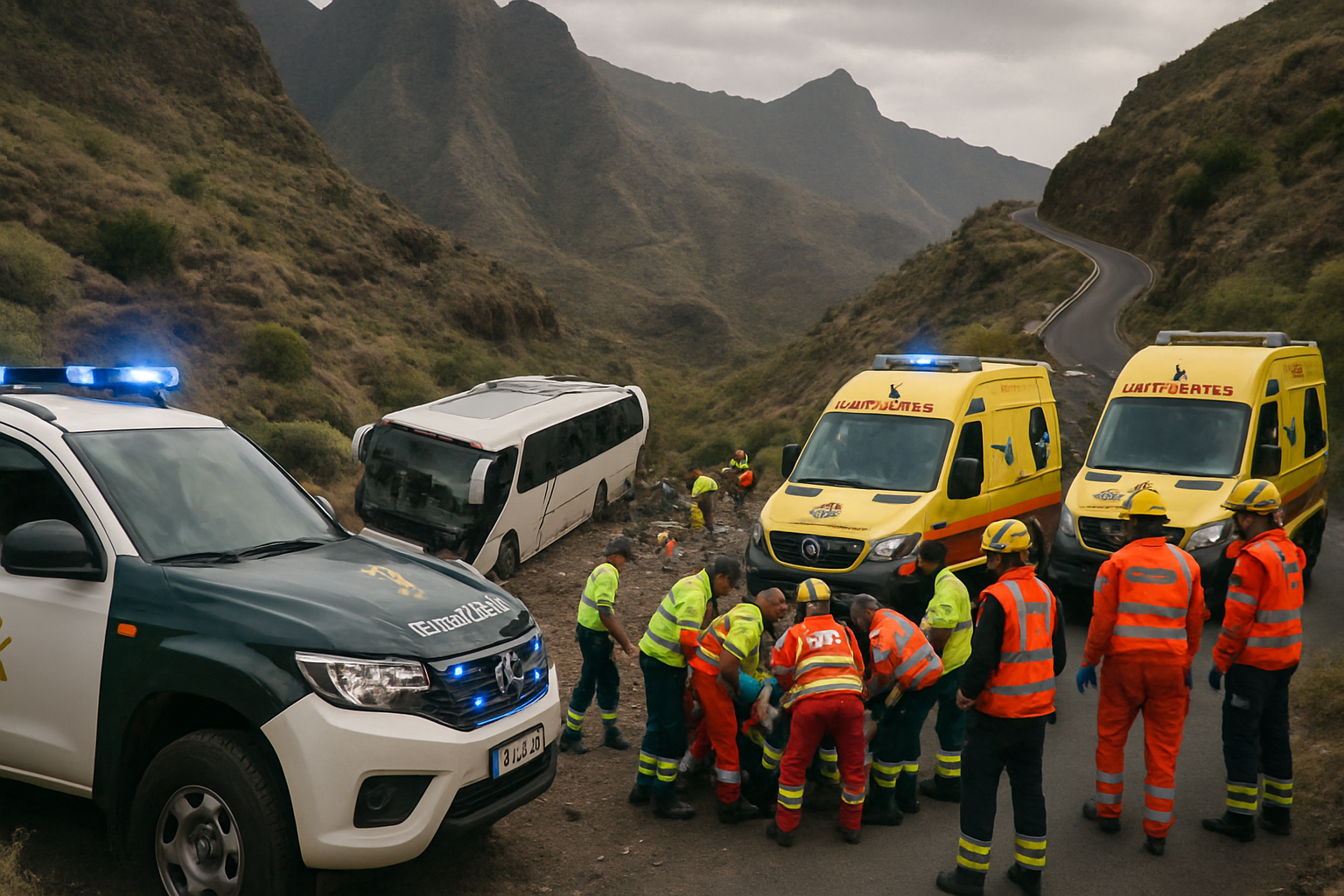
A tourist bus carrying British passengers veered off a road and tumbled down a ravine on Spain's Atlantic island of La Gomera on Friday, killing one person and injuring 27 others in a tragic accident that highlights growing safety concerns for international tourism.
The bus, carrying 28 British tourists, crashed on the GM-2 highway near San Sebastián de La Gomera at approximately 1:15 PM local time while transporting passengers for a boat excursion. Spanish authorities confirmed that one man died at the scene, while 27 others were hospitalized, with three passengers reported in critical condition.
Investigation Points to Brake Failure
Initial investigations suggest the accident may have been caused by brake failure, according to local emergency services. The modern tourist coach lost control while navigating the mountainous terrain characteristic of the Canary Islands, ultimately crashing through safety barriers before plunging into the ravine below.
Images from the scene show the bus overturned after veering off its intended route, with the exact circumstances of how the accident occurred still under investigation by Spanish authorities. Emergency responders worked for hours to extract passengers from the wreckage in challenging terrain conditions.
Emergency Response and Medical Treatment
The accident prompted a massive emergency response involving multiple rescue units, ambulances, and medical helicopters. The injured passengers were quickly transported to hospitals across the island and to neighboring Tenerife for specialized treatment.
Local emergency coordinator confirmed that the rescue operation was complicated by the remote location and difficult access to the crash site. "The terrain made it extremely challenging for our teams to reach all the victims quickly," said a spokesperson for the emergency services.
Context of Growing Tourism Safety Concerns
This tragic incident occurs against a backdrop of mounting transportation safety challenges affecting tourist destinations worldwide. The Canary Islands have become increasingly popular with British tourists seeking winter sun destinations, particularly as the archipelago benefits from redirected European demand following aviation disruptions in the Middle East.
However, this increased tourism pressure coincides with mounting infrastructure challenges and safety concerns that experts have been documenting across Europe and beyond throughout 2026.
Part of Global Transportation Crisis
The La Gomera crash represents the latest incident in what transportation safety experts are calling a global crisis. Since February 2026, more than 200 significant transportation incidents have been documented across 50+ countries, occurring during a period when global temperatures have exceeded 1.5°C above pre-industrial levels for 22 consecutive months.
These unprecedented climate conditions are creating operational challenges that stretch transportation infrastructure beyond their original design parameters. From avalanche-related transport disruptions across Europe to infrastructure failures in developing nations, the convergence of aging systems, climate volatility, and increasing travel demand is creating what experts describe as a "perfect storm" for safety incidents.
Tourism Industry Impact
The accident is likely to have significant implications for the tourism industry in the Canary Islands, which welcomed over 16 million visitors in 2023. The archipelago has been positioning itself as a safe alternative destination as travelers seek options amid ongoing global transportation uncertainties.
British tourists represent a significant portion of visitors to the Canary Islands, with many drawn to the volcanic landscapes and year-round warm climate. The islands have invested heavily in tourism infrastructure, but incidents like this raise questions about the adequacy of safety measures for the growing number of international visitors.
Investigation Ongoing
Spanish authorities have launched a comprehensive investigation into the cause of the accident, focusing on potential mechanical failures, driver factors, and road conditions. The investigation will examine maintenance records of the vehicle, the route taken, and whether proper safety protocols were followed.
The findings from this investigation are expected to influence international transportation safety standards and could lead to enhanced safety protocols for tourist transportation operations not just in Spain, but across popular European destinations.
International Safety Response
The International Civil Aviation Organization (ICAO) has been reviewing emergency coordination protocols at airports worldwide following a pattern of transportation incidents in 2026. While this bus crash is unrelated to aviation, it adds to growing calls for enhanced international cooperation on transportation safety standards.
Successful safety models exist: Sweden's Vision Zero approach has achieved dramatic fatality reductions through infrastructure design that accounts for human error, while the Netherlands' Safe System Approach minimizes accident consequences through better engineering and emergency response protocols.
Looking Forward
As the investigation continues, this tragedy serves as a stark reminder of the vulnerabilities facing modern transportation systems. The convergence of aging infrastructure, climate pressures, and increasing tourism demand requires what experts call "transformative rather than reactive" approaches to safety.
The choice between reactive crisis management and transformative adaptation is becoming increasingly urgent, as prevention windows narrow and operational environments become more challenging. The human cost of inaction makes coordinated international action essential for protecting the millions who depend on safe transportation daily.
For now, the focus remains on caring for the survivors and supporting the families affected by this tragedy, while authorities work to ensure such incidents can be prevented in the future.