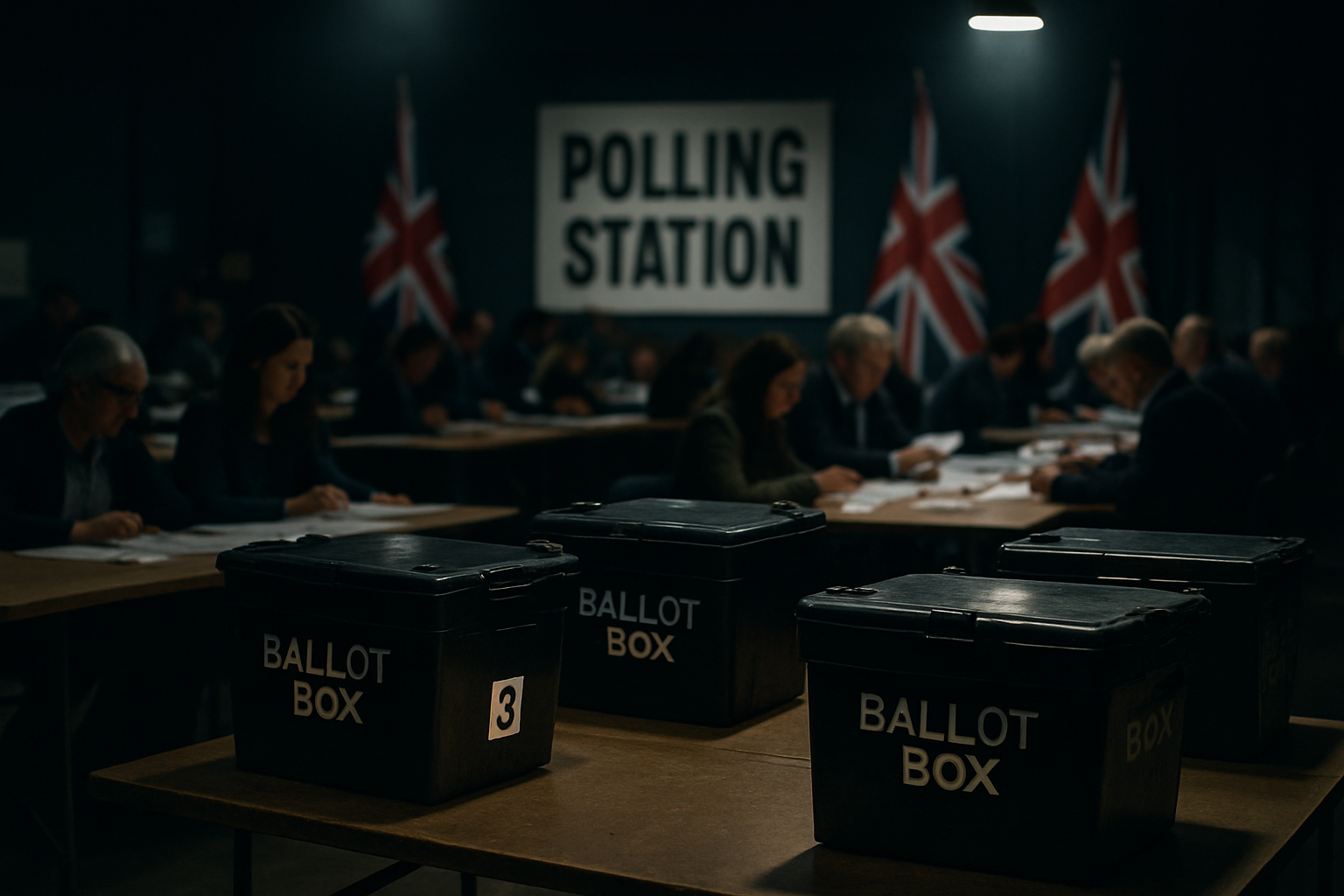
The UK Labour Party has suffered a catastrophic electoral defeat in the Gorton and Denton by-election, losing to the Green Party in what represents one of the most significant political upsets in recent British history.
Hannah Spencer, a 34-year-old plumber and Green Party councillor, achieved a stunning victory with 14,980 votes (40.7% vote share), overturning Labour's commanding 13,000-vote majority from the 2024 general election. In an unprecedented political earthquake, Labour was relegated to third place with just 9,364 votes (25.4%), finishing behind Nigel Farage's Reform UK, which secured second place with 10,578 votes (28.7%).
The result marks the first time the Green Party has won a parliamentary seat in northern England and represents Labour's loss of a constituency it has held since 1935 - nearly nine decades of continuous representation wiped out in a single night.
A Political Earthquake in Greater Manchester
The scale of Labour's collapse cannot be overstated. In 2024, Labour won more than half the vote in Gorton and Denton with a comfortable majority. Thursday's result saw the party's vote share plummet by over 25 percentage points, transforming what should have been a safe Labour stronghold into a Green Party breakthrough.
Spencer's victory speech captured the historic nature of the moment: "I didn't grow up wanting to be a politician. I'm a plumber. And two weeks ago, during all this, I also qualified as a plasterer. Because even in chaos, even under pressure, I get things done." Her authentic working-class credentials and commitment to maintaining her trade work while serving as an MP resonated powerfully with voters seeking genuine representation.
"We defeated the parties of billionaire donors. We don't have to fight dirty to fight for change."
— Hannah Spencer, Green Party MP
The celebration at Manchester Central Convention Complex witnessed unprecedented scenes as Green Party supporters erupted in joy at toppling one of Labour's safest seats. The party's supporters had remained cautiously optimistic throughout the count, but the scale of their victory exceeded even their most ambitious expectations.
Starmer's Authority in Crisis
Prime Minister Keir Starmer had personally invested significant political capital in the campaign, making multiple visits to the constituency and blocking popular Manchester Mayor Andy Burnham from standing as the Labour candidate. The defeat represents a devastating blow to his authority, coming at a time when his government is already facing its gravest crisis since taking office.
The electoral defeat compounds mounting pressure from the ongoing Peter Mandelson scandal, which has seen multiple senior government resignations including Chief of Staff Morgan McSweeney and Cabinet Secretary Chris Wormald. Metropolitan Police searches of Mandelson's properties over alleged government leaks to Jeffrey Epstein during the 2008 financial crisis have created a "toxic atmosphere" within the parliamentary Labour Party.
In an unprecedented move, Scottish Labour leader Anas Sarwar has publicly called for Starmer's resignation, representing a extraordinary breach of party unity that signals the depth of internal dissent. The defeat in Manchester provides ammunition for critics who question whether Starmer can unite the party and deliver effective governance.
Reform UK's Northern Breakthrough
Perhaps equally significant for British politics is Reform UK's strong second-place finish. The party, led by Nigel Farage, achieved its best performance in a traditional Labour heartland, demonstrating that anti-establishment sentiment extends far beyond Reform's traditional southern strongholds.
The result suggests a fundamental realignment of British politics, with voters increasingly willing to look beyond the traditional Labour-Conservative duopoly. Political analysts describe it as evidence of the "breakdown of Britain's two-party politics," with citizens seeking alternatives that address both economic inequality and concerns about immigration and national identity.
Green Party's Historic Moment
Spencer's victory represents more than just a local upset - it demonstrates the Green Party's ability to connect environmental politics with working-class economic concerns in post-industrial constituencies. Her background as a plumber who entered politics in 2023 driven by "the growing gap between the super-rich and the rest of us" embodies the authentic working-class environmental activism that has propelled the party's breakthrough.
The victory provides the Green Party with crucial momentum ahead of May's local elections, where Labour faces the prospect of significant losses that could further destabilize Starmer's leadership. It establishes a template for combining economic justice with environmental messaging that could prove attractive in similar post-industrial constituencies across northern England.
International Perspective and Analysis
International media coverage has been extensive, with German outlets reporting that Starmer has "no credit left" with the British public. Israeli media has noted the role of Green Party leader Zack Polanski's "anti-Israel" positions in appealing to Manchester's diverse electorate, while Middle Eastern coverage has emphasized the historic nature of the environmental breakthrough in an industrial heartland.
The defeat occurs against the backdrop of broader international political upheaval, with anti-establishment sentiment visible across democracies worldwide. However, the victory of a progressive environmental party over both mainstream Labour and populist Reform UK represents a unique outcome that challenges conventional assumptions about voter behavior in post-industrial constituencies.
Looking Ahead: Implications for British Politics
The Gorton and Denton result will reverberate far beyond Manchester. For Labour, it raises fundamental questions about Starmer's leadership and the party's ability to maintain its traditional working-class base while pursuing a centrist agenda. The defeat suggests that significant sections of Labour's core vote are prepared to defect to parties offering more radical alternatives.
For the Green Party, Spencer's victory proves that environmental politics can succeed outside metropolitan areas when combined with authentic working-class representation and economic justice messaging. The challenge now is whether the party can build on this breakthrough to establish itself as a significant force in British politics.
The result also validates Reform UK's strategy of targeting working-class constituencies with anti-immigration and populist economic messaging. Their strong second-place finish suggests the party could pose a significant threat to both Labour and Conservative seats in future elections.
The Broader Context
Thursday's by-election took place against the backdrop of Labour's worst governmental crisis since taking power, with Starmer fighting for political survival amid the escalating Jeffrey Epstein document scandal. The Prime Minister's admission that he was "lied to" by Peter Mandelson about Epstein connections before appointing him as US Ambassador has created a credibility crisis that clearly influenced voter behavior.
The timing of the defeat, coming as Labour faces its most serious challenges in government, suggests that voters are losing faith not just in individual politicians but in the party's capacity for effective governance. The "toxic atmosphere" reported within the parliamentary Labour Party has now translated into electoral consequences that could reshape British politics.
With May's local elections approaching, Labour faces the prospect of further defeats that could prove fatal to Starmer's leadership. The Gorton and Denton result has established a precedent for voters to punish governing parties through support for radical alternatives, creating uncertainty about the stability of British democratic institutions.
As Hannah Spencer prepares to take her seat as Britain's newest MP, her victory stands as a testament to the power of authentic representation and the potential for environmental politics to transcend traditional class and regional boundaries. Whether this represents a temporary protest vote or the beginning of a fundamental realignment in British politics remains to be seen, but the reverberations from Manchester will be felt across Westminster for months to come.