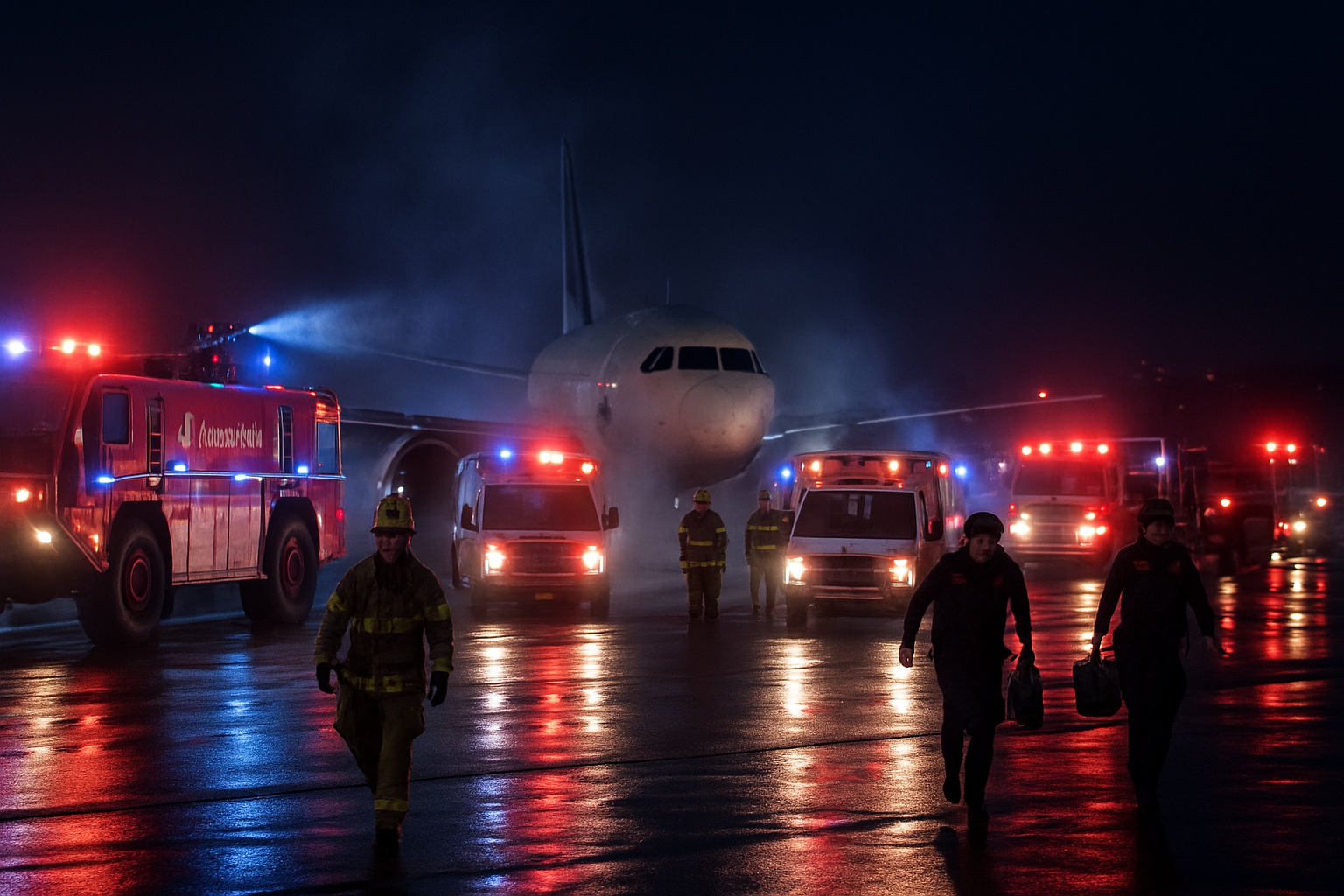
An Air Canada Express Bombardier CRJ-900 regional jet collided with a Port Authority fire truck during landing operations at LaGuardia Airport Sunday night, killing both pilots and injuring 41 passengers and two firefighters in a devastating accident that has prompted a comprehensive federal investigation.
The aircraft, operating as Flight 8646 from Montreal with 72 passengers and 4 crew members aboard, struck the fire truck at approximately 11:40 PM EST while landing on Runway 4. The collision occurred during what officials described as routine landing operations, with the aircraft traveling at approximately 30 mph after touchdown when it collided "nose first" with the emergency vehicle.
Casualties and Emergency Response
The impact completely destroyed the aircraft's cockpit and nose section, killing both pilots instantly. Among the fatalities was Antoine Forest, a Quebec resident from Coteau-du-Lac, highlighting the human tragedy that has deeply affected the aviation community. The pilots' extensive experience and expertise represent a significant loss to aviation safety.
Emergency responders transported 13 individuals to area hospitals, including 11 passengers with largely non-life-threatening injuries and two firefighters from the struck vehicle. The successful evacuation of passengers from the main cabin prevented what could have been a far more catastrophic outcome.
"It's a total miracle. She had multiple fractures to one leg and would need surgery but otherwise was OK."
— Sarah Lepine, daughter of surviving flight attendant Solange Tremblay
In a remarkable survival story, flight attendant Solange Tremblay survived being ejected from the aircraft while still strapped in her crew seat. Aviation safety experts believe her four-point restraint system, standard for crew members, likely contributed to her survival during the violent impact.
Investigation and Airport Closure
The National Transportation Safety Board (NTSB) and Federal Aviation Administration (FAA) have launched a comprehensive investigation into the collision. Investigators are examining multiple factors including mechanical systems, weather conditions, communication protocols, and emergency vehicle coordination procedures.
The incident forced a complete closure of LaGuardia Airport through Monday 2:00 PM, with the FAA issuing a ground stop that affected thousands of passengers nationwide. As one of the country's critical domestic aviation hubs, LaGuardia's closure created ripple effects throughout the national aviation network, forcing airlines to implement emergency protocols and alternative routing strategies.
NTSB investigators have successfully recovered the aircraft's black box recording systems, which will be crucial in determining the sequence of events leading to the collision. Venezuelan authorities confirmed the recovery of flight data recorders, which will undergo comprehensive analysis as part of the multi-month investigation process.
Operational Context and Safety Concerns
The fire truck was responding to a separate, unrelated emergency incident on the active runway when the collision occurred. This detail has raised critical questions about coordination protocols between aircraft operations and ground emergency responses at busy airports.
Aviation safety experts note that runway incursions and conflicts between aircraft and ground vehicles, while rare, remain a serious operational concern at major airports. The incident highlights potential vulnerabilities in communication systems between air traffic control and emergency vehicles operating on airport grounds.
"They really had no options. The pilots likely had very little chance of survival given the nature of the impact."
— Former transportation safety board accident investigator
The Bombardier CRJ-900, operated by Jazz Aviation under the Air Canada Express banner, is considered a reliable regional aircraft with a strong safety record. However, the devastating nature of the nose-first collision with the fire truck left the flight crew with no opportunity for evasive action or survival.
Aviation Safety in Context
This tragic incident occurs during what has been a challenging year for aviation safety globally. The industry has faced multiple crises in 2026, including the Middle East aviation disruption that cancelled over 18,000 flights worldwide and various military aviation accidents in Latin America that claimed dozens of lives.
Despite these challenges, commercial aviation maintains an exceptional safety record. However, each incident provides crucial lessons that inform ongoing improvements to safety protocols, emergency response procedures, and coordination systems at airports worldwide.
The International Air Transport Association's latest safety report documented 51 aviation accidents among 38.7 million flights globally in 2025, with eight fatal incidents. While these numbers reflect the industry's commitment to safety, every accident represents human tragedy and prompts comprehensive reviews of operational procedures.
Industry and Regulatory Response
Air Canada has activated comprehensive support protocols for victims' families and injured passengers, working closely with Port Authority officials and federal investigators. The airline industry's established accident response procedures include extensive counseling services, family assistance programs, and coordination with regulatory authorities.
The investigation findings are expected to influence global airport safety procedures, particularly regarding protocols for coordinating emergency responses with active flight operations. Questions raised about the adequacy of current procedures may lead to enhanced communication systems between air traffic control and emergency vehicles.
Aviation authorities worldwide will monitor the investigation closely for insights that could improve international safety standards. The focus on simultaneous aircraft operations and ground emergency response coordination represents a critical area for potential safety enhancements.
Looking Forward
As the investigation continues, the aviation community mourns the loss of experienced pilots whose expertise contributed significantly to flight safety. The human cost of this tragedy extends beyond the immediate families affected, touching the broader aviation community that relies on skilled professionals for safe operations.
Recovery efforts at LaGuardia Airport have restored normal operations, but the incident's impact on safety protocols and emergency coordination procedures will likely influence airport operations for years to come. The comprehensive investigation will examine every aspect of the collision to prevent similar tragedies in the future.
The successful evacuation of most passengers and crew, despite the catastrophic cockpit damage, demonstrates the effectiveness of modern aircraft design and emergency response training. However, the loss of two experienced pilots serves as a sobering reminder of the risks inherent in aviation operations and the ongoing need for enhanced safety measures.