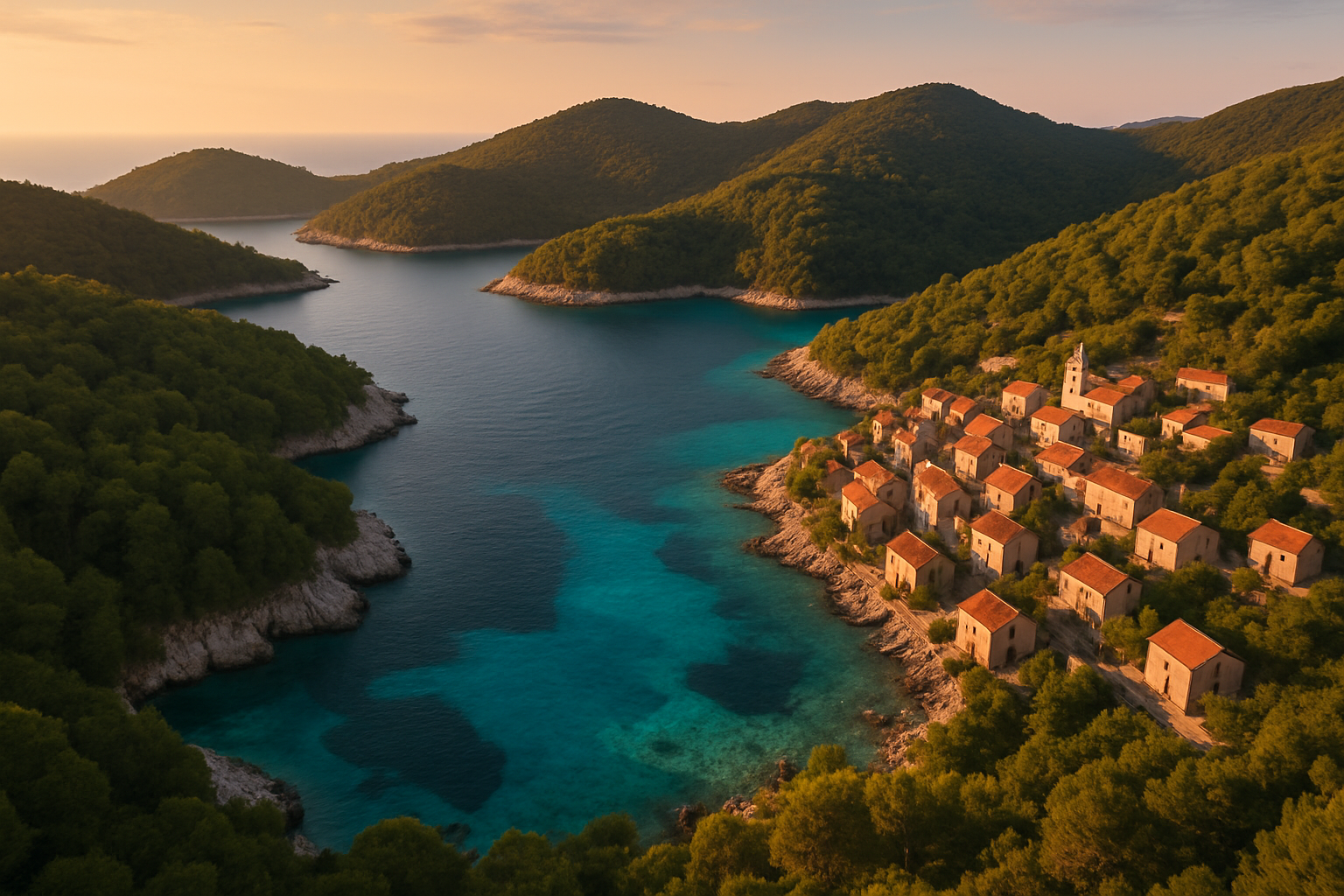
In an era where Mediterranean destinations struggle with overtourism, Croatia's Lastovo island stands as a remarkable exception—a pristine Dalmatian paradise that has successfully avoided the mass tourism plaguing much of the country while offering visitors an authentic glimpse into medieval charm and unspoiled natural beauty.
Located among Croatia's southernmost inhabited islands, Lastovo presents a compelling case study for sustainable tourism development. Unlike destinations such as Dubrovnik or Split, which have implemented strict visitor management systems to combat overcrowding, Lastovo has naturally evolved as a quality-over-quantity destination that attracts discerning travelers seeking authentic experiences.
A Medieval Fairy Tale Preserved
The island's appeal lies in its untouched character, described by travel experts as appearing "straight from a medieval fairy tale." This preservation isn't accidental—Lastovo's remote location and limited infrastructure have created natural barriers to mass development, allowing its traditional character to remain intact.
Visitors to Lastovo discover indented bays illuminated by Mediterranean sun and sheltered by dense pine forests, offering what tourism officials describe as "that rare feeling of freedom and peace" increasingly difficult to find elsewhere in Croatia. The island's crystal-clear waters, deemed among the most unpolluted in the region, provide an almost surreal swimming and diving experience.
Perhaps most remarkably, Lastovo is home to one of Europe's clearest, most unpolluted night skies—a designation that has attracted astronomy enthusiasts and positioned the island as a unique dark-sky tourism destination. This natural asset represents the kind of specialized tourism offering that experts predict will define successful destinations in the coming decade.
Strategic Positioning in Croatia's Tourism Evolution
Lastovo's emergence as a sustainable tourism model comes at a crucial time for Croatia's tourism industry. The country has invested heavily in tourism infrastructure, including the deployment of 62 tourist medical clinics for the 2026 season—Europe's most extensive seasonal healthcare network. This investment demonstrates Croatia's commitment to quality tourism experiences while addressing the practical needs of international visitors.
The island's approach contrasts sharply with other Croatian destinations that have had to implement reactive measures to manage overtourism. While Dubrovnik has introduced visitor quotas and Rome's Trevi Fountain now charges €2 entry fees to manage crowds, Lastovo has developed organically as a destination that naturally attracts the type of quality-focused travelers the industry increasingly seeks.
This positioning aligns with broader industry trends identified in early 2026, where destinations are prioritizing authentic cultural experiences, environmental sustainability, and meaningful community engagement over volume-based approaches. Generation Z travelers, who represent 50% of those making multiple trips annually, are particularly drawn to destinations offering genuine cultural authenticity combined with environmental responsibility.
Natural Infrastructure for Sustainable Tourism
The island's tourism infrastructure reflects principles that industry experts suggest will define successful destinations in the climate-conscious era ahead. Dense pine forests provide natural temperature regulation and carbon sequestration, while the island's varied topography creates microclimates that offer different experiences within a compact area.
Lastovo's pristine marine environment supports sustainable diving and snorkeling activities, while its dark skies create opportunities for astronomical tourism—a rapidly growing niche that generates higher per-visitor spending while maintaining low environmental impact. These assets position the island advantageously for the type of specialized, experience-focused tourism that industry analysts predict will dominate the sector.
The island's limited accommodation capacity ensures that visitor numbers remain within sustainable bounds, creating what tourism researchers describe as an "organic visitor management system" that other destinations are attempting to achieve through regulatory measures.
Regional Context and Mediterranean Parallels
Lastovo's success comes amid a broader Mediterranean transformation toward sustainable tourism practices. Cyprus achieved record tourism performance with 4.5 million visitors generating €3.6 billion in revenue through market diversification and quality-focused strategies. Meanwhile, destinations like Capri have implemented revolutionary overtourism management systems, limiting tour groups to 40 people and requiring wireless headsets for larger groups.
The island's model demonstrates that proactive sustainable development can be more effective than reactive crowd control measures. Unlike destinations that have had to retrofit sustainability measures after experiencing overtourism impacts, Lastovo has evolved naturally as a quality destination that attracts environmentally conscious travelers.
This approach aligns with emerging international cooperation models where regional destinations work collaboratively rather than competitively. Croatia's broader tourism strategy, including enhanced air connectivity investment and healthcare infrastructure expansion, supports quality destinations like Lastovo while managing pressures on more famous sites.
Economic Model for Quality Tourism
Despite—or perhaps because of—its limited capacity, Lastovo demonstrates the economic viability of quality-focused tourism. Visitors who choose the island tend to stay longer, spend more per day, and generate higher satisfaction scores than those visiting mass-market destinations. This mirrors successful models emerging globally, where destinations achieve better economic outcomes through quality experiences rather than volume.
The island's tourism generates comprehensive economic multiplier effects, supporting local businesses, transportation services, and cultural preservation efforts while maintaining community well-being. This balanced approach represents the type of tourism development that industry experts predict will define successful destinations in the climate-resilient future.
Local businesses benefit from the extended stays and higher spending patterns characteristic of quality-focused tourists, while the community avoids the infrastructure strain and cultural displacement often associated with mass tourism. This model provides economic opportunities while preserving the authentic character that attracts visitors in the first place.
A Template for Future Tourism Development
As the global tourism industry invests over $570 billion in infrastructure while grappling with climate resilience and community impact concerns, Lastovo offers a compelling template for sustainable destination development. The island's success suggests that natural limitations, rather than being obstacles to tourism development, can become competitive advantages when properly leveraged.
The destination's appeal to quality-conscious travelers aligns with industry trends toward authentic experiences, environmental sustainability, and meaningful community engagement. As global temperatures continue exceeding 1.5°C above pre-industrial levels for consecutive months, destinations like Lastovo that have developed climate-resilient tourism models position themselves advantageously for long-term success.
Tourism industry leaders studying Lastovo's model identify key success factors: authentic cultural preservation, natural environmental protection, community involvement in tourism planning, and strategic positioning as a quality rather than volume destination. These principles offer guidance for other destinations seeking to balance economic development with sustainability.
Looking Forward: Sustainable Tourism's Future
Lastovo's emergence as Croatia's mass tourism-free paradise coincides with broader industry transformation toward sophisticated destination management that balances economic objectives with cultural preservation and environmental responsibility. The island's success demonstrates that sustainable tourism development isn't just environmentally responsible—it's economically advantageous when properly executed.
As international cooperation in tourism development increases and destinations seek to differentiate themselves through authentic experiences, Lastovo's model provides practical guidance for achieving sustainable success. The island proves that in an increasingly connected world, the greatest luxury may be genuine tranquility and authentic cultural experiences.
For travelers seeking alternatives to crowded Mediterranean destinations, Lastovo offers the promise of discovery without destruction, tourism without tourism's typical impacts, and authentic experiences that remain genuinely authentic. In an industry evolving toward sustainability, this Croatian island stands as both destination and inspiration for tourism's more responsible future.