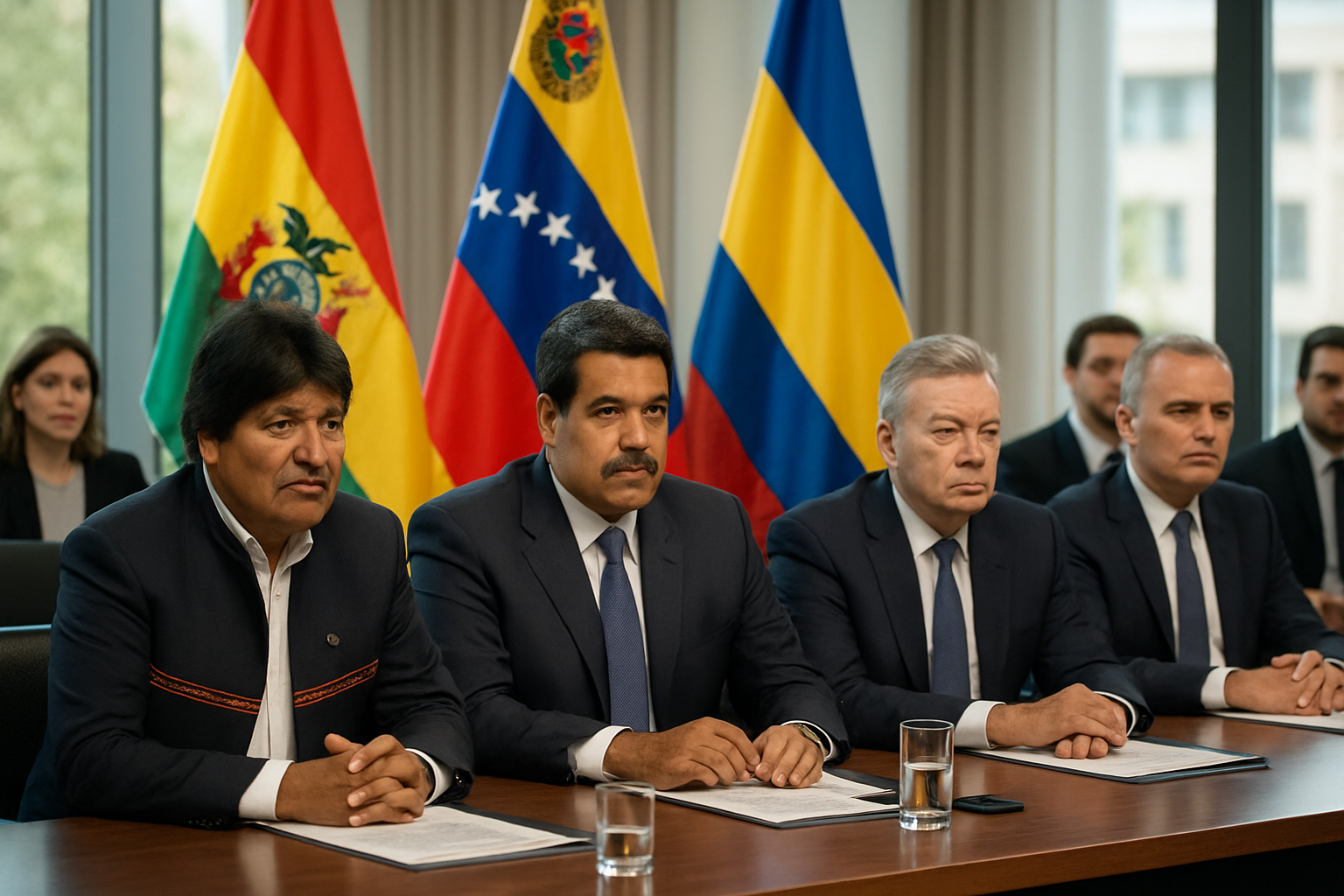
Major political developments across Latin America are reshaping the continent's democratic landscape, with Bolivia confronting electoral disputes, Venezuela continuing its dramatic diplomatic transformation, and regional governments navigating complex domestic and international pressures.
Bolivia's Constitutional Crisis Before Key Elections
Bolivia's electoral process faces significant turbulence just nine days before crucial subnational elections scheduled for March 22, 2026. The Constitutional Court of Tarija delivered a decisive blow to opposition candidate Mario Cossío, rejecting his constitutional appeal (amparo) and effectively removing him from the gubernatorial race.
Cossío, representing the Camino Democrático al Cambio (CDC) alliance, had sought legal recourse to secure his candidacy after previous eligibility challenges. His legal team has announced plans to appeal the decision and request a precautionary measure to remain in the race while awaiting a ruling from the Constitutional Court's Full Chamber.
The timing of this decision creates significant logistical challenges, as political alliances have until just three days before the election to replace candidates. This constitutional crisis highlights the ongoing tensions within Bolivia's democratic institutions under President Rodrigo Paz's administration.
Parliamentary Tensions and Democratic Accountability
Simultaneously, Bolivia's Chamber of Deputies approved a unanimous resolution mandating that public authorities respond to legislative information requests and attend interpellations convoked by the Legislative Assembly. This measure emerged following the suspension of a scheduled interpellation of Hydrocarbon Minister Mauricio Medinaceli.
"The chamber resolution has been approved. It shall be forwarded to the Constitutional Court, Executive, Senate, and Supreme Court of Justice for their knowledge."
— Roberto Castro Salazar, Chamber of Deputies President
Chamber President Roberto Castro Salazar announced the measure with backing from both government and opposition legislators present at the session, demonstrating rare bipartisan consensus on legislative oversight mechanisms.
Venezuela's Continued Diplomatic Evolution
Venezuela's transformation under Acting President Delcy Rodríguez continues to generate international attention, with recent developments highlighting both progress and persistent challenges in the democratic transition process.
Venezuelan Vice President for Communication Rander Peña announced ongoing conversations between Venezuela and the United States, describing daily diplomatic exchanges as both nations work to normalize relations after their historic restoration of diplomatic ties following a seven-year break.
This diplomatic engagement occurs against the backdrop of Venezuela's comprehensive political prisoner amnesty program, which has released over 750 detainees since January 2026 under the historic 1999-2026 amnesty law - representing the most ambitious Latin American political reconciliation effort in recent history.
Economic Transformation and Energy Partnerships
The economic dimension of Venezuela's transformation has been equally dramatic. Venezuelan oil exports have surged 60% to 800,000 barrels daily, with the United States displacing China as the country's top customer following the lifting of sanctions imposed during the previous administration.
Energy cooperation agreements signed during U.S. Energy Secretary Chris Wright's historic February visit to Caracas have opened unprecedented opportunities for American companies, including major oil corporations such as Chevron, BP, Shell, Eni, and Repsol.
These developments represent a complete reversal from the "maximum pressure" campaign to what analysts describe as a strategic partnership approach, creating a template for bilateral energy diplomacy that could influence similar situations globally.
Political Protests and Social Movements
Despite diplomatic progress, Venezuela continues to experience internal tensions. Recent reports indicate that Chavista supporters organized peace marches on the same day that trade unionists protested demanding salary improvements, illustrating the complex social dynamics within the country's transitional period.
The simultaneous occurrence of pro-government demonstrations and labor protests reflects the ongoing challenges facing Venezuelan society as it navigates economic recovery while addressing longstanding social grievances.
Labor organizations have maintained pressure on the interim government to address wage concerns, highlighting that political reconciliation must be accompanied by tangible economic improvements for ordinary citizens.
Regional Implications and Democratic Governance
These developments across Bolivia and Venezuela occur within a broader context of Latin American democratic evolution. The region faces multiple challenges including institutional stability, economic recovery, and social cohesion while managing international partnerships and domestic reforms simultaneously.
Bolivia's electoral disputes demonstrate the ongoing tensions between established political machinery and emerging opposition forces, while Venezuela's transformation provides both opportunities and cautionary lessons about rapid political transitions.
International observers continue monitoring both situations as potential templates for democratic governance in complex political environments, with particular attention to institutional resilience and peaceful conflict resolution mechanisms.
Looking Forward: Challenges and Opportunities
The coming weeks will prove critical for both nations. Bolivia's March 22 elections will test the country's democratic institutions' capacity to manage electoral disputes fairly and transparently, while Venezuela's continued implementation of political reconciliation measures will indicate the sustainability of its democratic transition.
Success in both cases could influence broader Latin American approaches to democratic governance, institutional reform, and peaceful political change. However, failure to address underlying structural challenges could undermine progress and affect regional stability.
The international community, including regional organizations and global partners, continues to play crucial roles in supporting these democratic processes while respecting national sovereignty and self-determination principles.
As Latin America navigates these complex political transitions, the experiences of Bolivia and Venezuela will likely serve as important case studies for understanding contemporary challenges to democratic governance and the potential paths forward for sustainable political development in the 21st century.