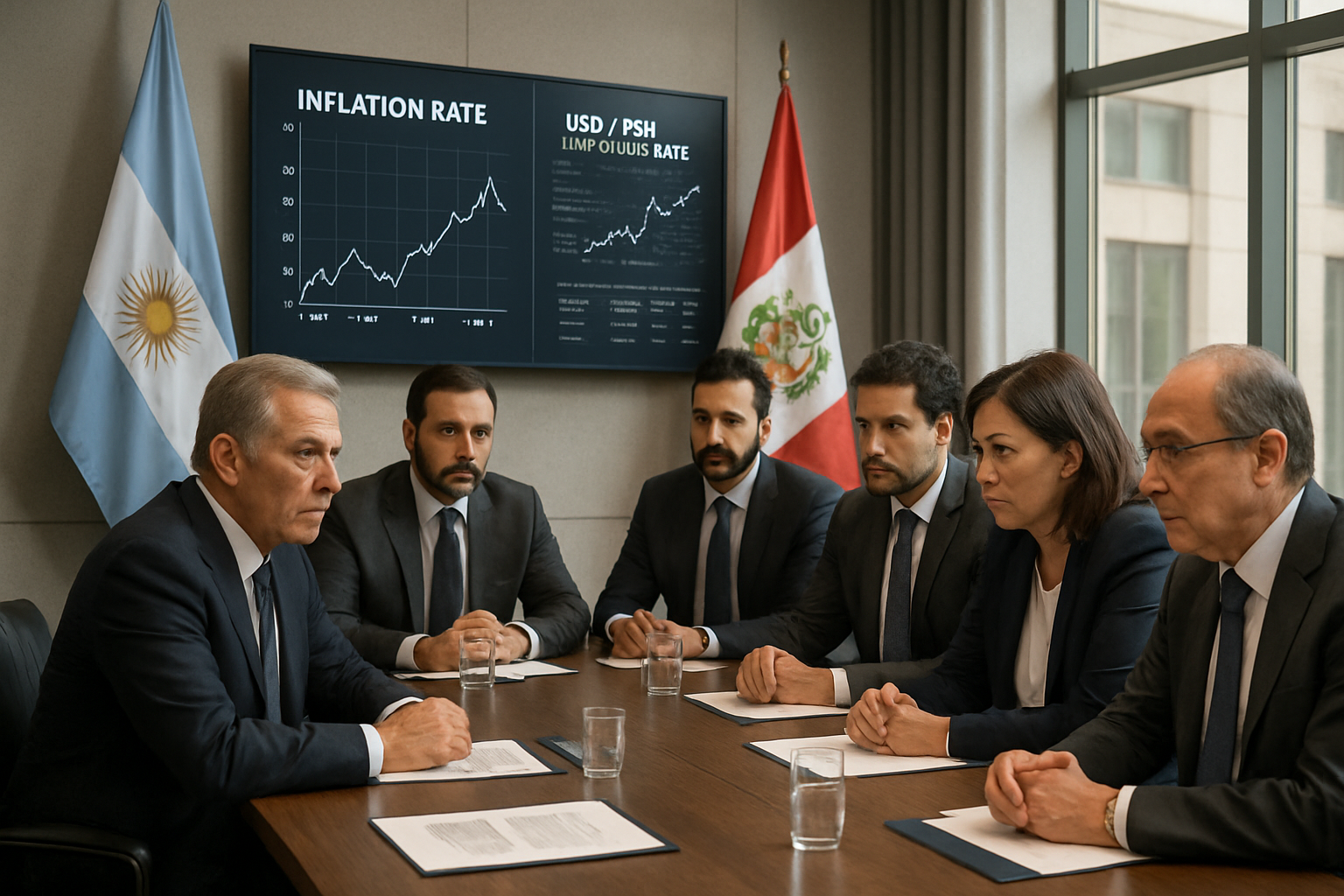
As Latin America navigates complex economic transformations, Argentina's paradoxical combination of political triumphs and economic stagnation has emerged alongside Peru's stark confrontation between campaign rhetoric and policy implementation, revealing the broader challenges facing the region's economic modernization efforts.
The situation in Argentina under President Javier Milei's administration presents what economists describe as a "peculiar dynamic" - a government securing significant political victories while the economy remains fundamentally stagnant. This contradiction has become increasingly apparent as the administration pushes forward with comprehensive structural reforms despite persistent inflationary pressures and employment challenges.
Argentina's Reform Momentum Amid Economic Headwinds
Argentina's current economic landscape presents a complex picture of reform ambition colliding with stubborn realities. The Milei administration has successfully advanced major legislative initiatives, including historic labor reforms and a groundbreaking trade agreement with the United States that eliminates over 1,600 tariffs. Yet beneath these political achievements, fundamental economic indicators tell a more troubling story.
The country's wholesale dollar market recently operated below $1,400 for the first time since October, signaling currency instability despite government efforts to maintain exchange rate stability. This development comes as economists project annual inflation of 22.4% for 2026, more than doubling the government's optimistic forecast of 10.1%.
The disconnect between political success and economic performance has created what observers describe as a learning curve for an administration that continues to demonstrate both achievements and vulnerabilities. Interior Minister Patricia Bullrich's successful modification of over 30 articles in the labor reform legislation to gain crucial political support exemplifies the government's tactical adaptability, even as broader economic challenges persist.
The Employment Crisis Behind Political Victories
Perhaps most concerning for Argentina's long-term prospects is the employment situation that has developed under the current reform agenda. Recent data reveals that 21,938 employers have been lost over the past two years, directly affecting 290,602 workers. This represents a significant contraction in the formal economy, occurring precisely as the government promotes policies designed to attract investment and stimulate growth.
The construction sector has been particularly hard hit, with companies reporting negative profit margins due to surging material costs. These challenges underscore the complex relationship between structural reforms and immediate economic outcomes, as short-term disruptions accompany longer-term modernization efforts.
"En un contexto favorable se puede observar la peculiar dinámica de un gobierno que aún tiene mucho para aprender."
— Argentine Political Analysis
This assessment captures the essence of Argentina's current moment - a favorable political context that nevertheless reveals the substantial learning curve facing an administration attempting comprehensive economic transformation.
Peru's Reality Check: Promises Versus Performance
Meanwhile, Peru provides a compelling counterpoint with its own examination of the gap between electoral promises and governing reality. The emergence of technical analysis spaces led by economists like David Tuesta reflects growing demands for accountability in evaluating the viability of government plans versus actual implementation.
Peru's experience highlights a universal challenge in Latin American politics: the tendency for campaign promises to far exceed what practical governance can deliver. This phenomenon, captured in the concept of "dato mata relato" (data kills narrative), has become increasingly relevant as voters across the region demand more sophisticated analysis of policy proposals.
The focus on technical evaluation rather than political rhetoric represents a maturation of democratic discourse, with media outlets like Perú21 partnering with analytical organizations to provide more rigorous assessment of government performance. This development suggests a broader trend toward evidence-based policy evaluation across Latin America.
Regional Patterns and International Implications
These developments in Argentina and Peru reflect broader patterns affecting economic policy debates throughout Latin America. The region faces the challenge of implementing necessary structural reforms while managing immediate social and economic pressures from constituents who expect rapid improvements in living standards.
The success of Argentina's recent Senate approval of labor reforms, despite violent protests and significant opposition, demonstrates both the possibility and the costs of advancing controversial economic modernization. The reform package, which introduces flexible overtime systems and modified severance structures, represents the kind of structural change economists argue is necessary for competitive integration with global markets.
International observers have closely monitored these developments, particularly given Argentina's emerging role as a key Trump administration partner in South America. The bilateral trade agreement that eliminates significant tariff barriers positions Argentina as a strategic regional ally, but also increases pressure for successful economic performance to validate the partnership.
The Challenge of Democratic Economic Reform
Both countries illustrate the inherent tensions in democratic economic reform. Argentina's approach of simultaneous multiple reforms - trade agreements, labor modernization, and institutional restructuring - aims to create "irreversible changes" that future governments cannot easily undo. This strategy recognizes the political reality that comprehensive reform windows may be limited in democratic systems.
Peru's emphasis on technical analysis and accountability reflects a different approach - attempting to improve the quality of democratic discourse by providing voters with more sophisticated tools for evaluating government performance. Both strategies address the fundamental challenge of implementing necessary but often unpopular economic reforms within democratic frameworks.
The regional implications extend beyond individual countries. Success or failure of these reform efforts will influence similar attempts throughout Latin America, where many nations face comparable challenges of economic modernization, international integration, and domestic political constraints.
Looking Forward: Sustainability and Legitimacy
The sustainability of current reform efforts depends critically on their ability to deliver tangible improvements in citizens' lives. Argentina's gamble on comprehensive structural change requires demonstrating that short-term disruptions will yield medium-term benefits. Peru's focus on analytical rigor suggests an alternative path emphasizing incremental improvements based on evidence rather than dramatic policy shifts.
Both approaches face the test of international economic pressures, including global inflation trends, supply chain disruptions, and changing trade relationships. The success of these different strategies will likely influence economic policy debates throughout Latin America for years to come.
As the region continues to navigate between democratic governance and economic modernization imperatives, the experiences of Argentina and Peru provide valuable case studies in the complexities of contemporary Latin American economic policy. The ultimate test will be whether political achievements can translate into sustained economic improvements that benefit the broader population while maintaining democratic legitimacy and international competitiveness.