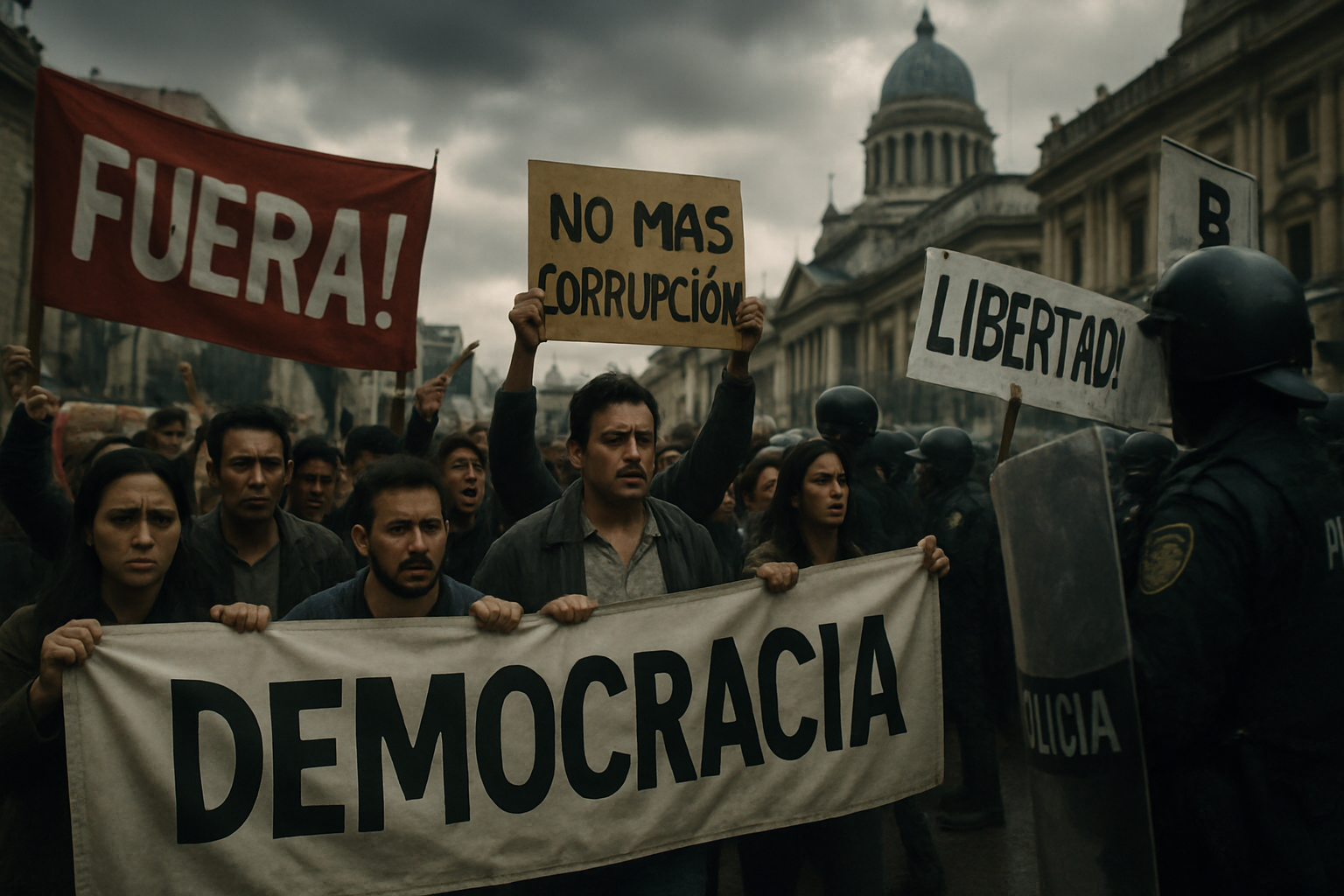
Latin America is experiencing a profound political crisis as democratic institutions across the region face unprecedented challenges, with Peru's Congress preparing to debate censure motions against interim President José Jerí while Nicaragua's authoritarian regime escalates pressure on opposition figures and their families.
The convergence of political instability across multiple Latin American nations highlights broader concerns about democratic backsliding and institutional fragility that have plagued the region in recent years. From constitutional crises to authoritarian consolidation, the events unfolding this February underscore the precarious state of governance across the hemisphere.
Peru's Constitutional Crisis Deepens
In Peru, interim President José Jerí faces his most severe political challenge yet as Congress prepares to debate seven censure motions that could remove him from power. The crisis comes just weeks before general elections, raising serious questions about political stability and democratic continuity in the Andean nation.
According to reports from Argentine media outlet Perfil, Jerí is confronting allegations of influence trafficking, private meetings with businessmen, questionable hiring practices, and personal controversies that have collectively undermined his interim administration. The timing of these revelations, occurring so close to upcoming elections, has intensified the political drama surrounding his leadership.
"The president will be subjected this Tuesday to a decisive vote that could remove him from power."
— Perfil, reporting on congressional procedures
The business community has expressed serious concerns about the potential for renewed political instability. The National Confederation of Private Business Institutions (CONFIEP) issued a stark warning about the country's trajectory, stating that Peru "is going through an electoral process and cannot afford a new stage of political uncertainty."
CONFIEP's statement reflects broader anxiety within Peru's economic establishment about the consequences of another constitutional crisis. The organization has urged political forces to act with "institutional responsibility" and preserve governability during this critical juncture.
Political Maneuvering Intensifies
The political dynamics surrounding Jerí's potential removal have created unusual alliances and strategic calculations. Notably, Keiko Fujimori, leader of the Fuerza Popular party, has publicly stated that her party will not pursue censure motions against the president.
Fujimori's position appears motivated by concerns about further destabilizing the political system rather than support for Jerí's administration. In a statement reported by Perú 21, she emphasized that Fuerza Popular would "not generate more instability," suggesting that the party views additional political turmoil as counterproductive to Peru's democratic processes.
This stance by one of Peru's most significant opposition parties indicates the complex calculations political leaders are making as they weigh the costs of constitutional confrontation against the benefits of maintaining institutional stability, however fragile.
Nicaragua's Authoritarian Escalation
While Peru grapples with democratic dysfunction, Nicaragua represents a different but equally concerning trend toward authoritarian consolidation. The Ortega-Murillo regime has intensified its campaign against opposition figures and their supporters, both within the country and in exile.
Vice President Rosario Murillo, who serves as co-dictator alongside her husband Daniel Ortega, delivered a particularly ominous message to opponents in exile. During a Sandinista event, she made pointed references to the families of exiled dissidents who remain in Nicaragua.
"May God forgive those who every day strive to spread hatred toward their homeland, toward their land, toward their family, because many of them have families here, who live safely here."
— Rosario Murillo, Nicaragua's Vice President
Political analysts interpreted Murillo's comments as a veiled threat, designed to intimidate opposition figures by suggesting their relatives could face consequences for their political activities. This tactic represents a particularly cruel form of political repression that extends persecution beyond individual dissidents to their family members.
Ortega's Anti-American Rhetoric Returns
Meanwhile, Daniel Ortega has resumed his characteristic anti-American rhetoric, appearing at a February 16 event in Managua where he looked notably physically deteriorated. The occasion marked the delivery of 180 Chinese Yutong buses to local cooperatives, with Chinese Ambassador Qu Yuhui in attendance.
Ortega used the event to direct sharp accusations toward Washington, blaming the United States for manipulating Nicaragua since 1990 through "intimidation and military threats." His appearance and statements suggest the regime is maintaining its confrontational posture toward the United States despite his apparent declining health.
The participation of the Chinese ambassador at this anti-American event underscores the geopolitical dimensions of Nicaragua's authoritarian turn, as the Ortega regime increasingly aligns itself with Beijing while rejecting Western democratic norms and institutions.
Regional Context and Implications
These developments in Peru and Nicaragua reflect broader patterns of democratic stress across Latin America. The region has witnessed a concerning trend of political instability, with constitutional crises, authoritarian consolidation, and institutional weakness becoming increasingly common.
The contrast between Peru's chaotic but still nominally democratic system and Nicaragua's consolidated authoritarianism illustrates the different pathways through which democratic governance can deteriorate. While Peru struggles with institutional dysfunction and political fragmentation, Nicaragua has systematically dismantled democratic institutions and civil society.
Argentina's recent experience with labor reform protests and political polarization, as documented in historical context from previous coverage, demonstrates that even relatively stable democracies in the region face significant challenges in managing social tensions while maintaining democratic norms.
International Concerns and Responses
The international community has expressed growing concern about democratic backsliding across Latin America. The deteriorating situation in Nicaragua, in particular, has drawn criticism from human rights organizations and democratic governments worldwide.
Peru's constitutional crisis, while different in nature, also raises concerns about the stability of democratic institutions in a country that has experienced significant political turbulence in recent years. The potential for another change of government through constitutional means, while technically legal, raises questions about the sustainability of democratic governance when political systems face constant crises.
The timing of these events, occurring simultaneously across the region, suggests broader structural problems with democratic governance in Latin America that extend beyond the specific circumstances of individual countries.
Economic and Social Consequences
Political instability carries significant economic costs for the affected nations. In Peru, business leaders have explicitly warned about the consequences of renewed political uncertainty for economic growth and investment. CONFIEP's intervention reflects genuine concern about the practical implications of constitutional crisis for the country's economic development.
Nicaragua's authoritarian path has already resulted in international sanctions and reduced foreign investment, while the regime's repressive tactics have prompted significant emigration. The combination of political repression and economic stagnation creates a vicious cycle that undermines the country's long-term prospects.
These economic consequences extend beyond national borders, affecting regional trade, migration patterns, and international confidence in Latin American institutions. The instability creates ripple effects that can influence investment decisions and diplomatic relationships across the hemisphere.
Looking Ahead
The coming weeks will be crucial for determining the trajectory of political developments in both countries. Peru's congressional debate on censure motions will test whether the country's democratic institutions can manage political crisis without descending into complete dysfunction.
In Nicaragua, the regime's increasingly repressive tactics suggest further deterioration of human rights and democratic space. The international community faces difficult decisions about how to respond to authoritarian consolidation while protecting the Nicaraguan people from the worst consequences of their government's actions.
The broader implications for Latin American democracy remain concerning. The simultaneous occurrence of political crises across multiple countries suggests systemic challenges that require coordinated international attention and support for democratic institutions throughout the region.
As these events unfold, they serve as a reminder of the fragility of democratic governance and the constant vigilance required to maintain constitutional order and respect for human rights. The international community's response to these challenges may well determine the future trajectory of democracy across Latin America.