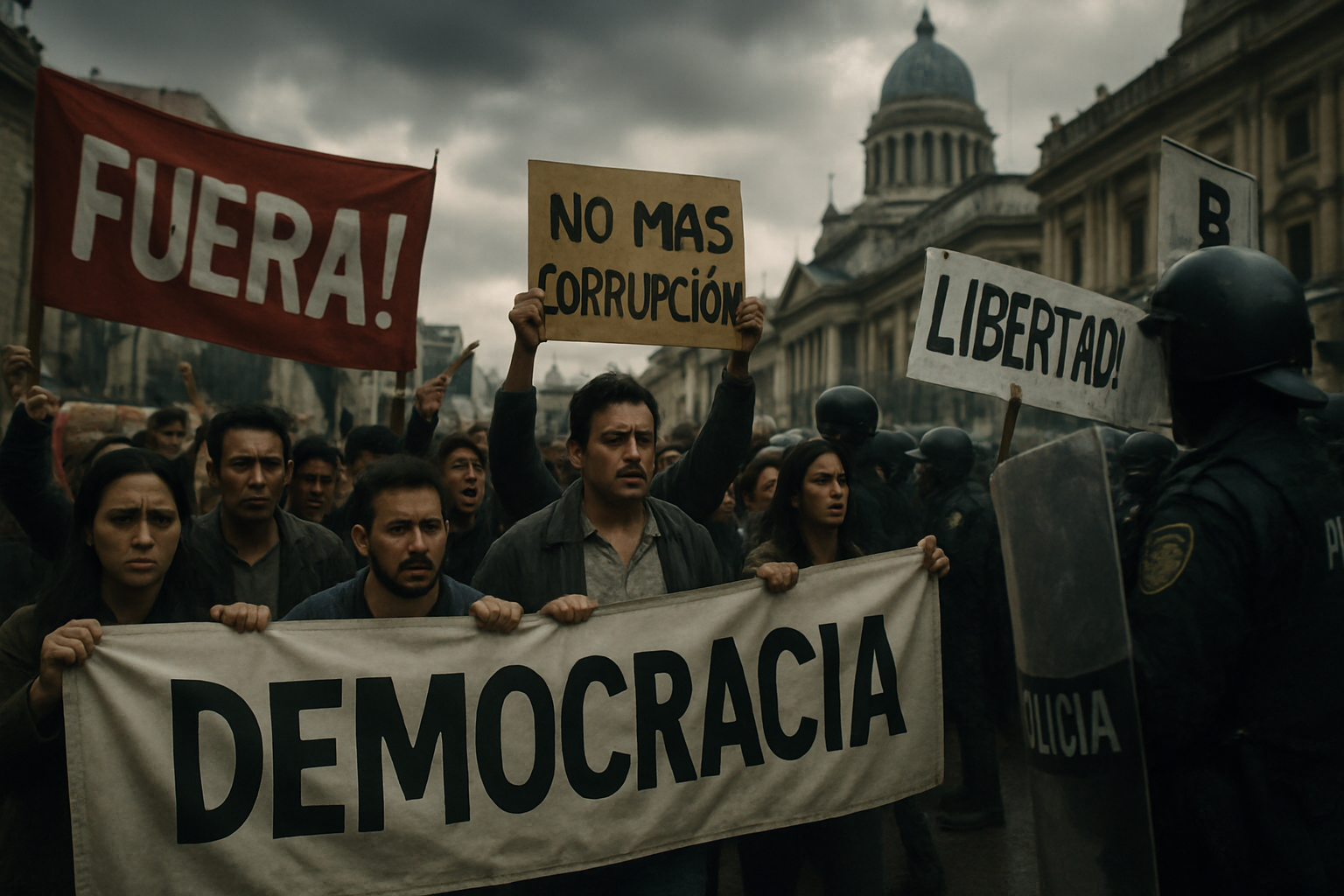
A wave of political upheaval is sweeping across Latin America, with countries from Argentina to Colombia experiencing unprecedented challenges to their democratic institutions as governments face mounting opposition from organized labor, security crises, and constitutional confrontations that threaten regional stability.
The political turbulence spans multiple fronts, with Argentina experiencing massive labor strikes against economic reforms, Colombia grappling with escalating violence that has reached the highest levels of government, and a broader pattern of institutional strain that experts warn could reshape the region's political landscape.
Argentina's Labor Reform Battle Intensifies
Argentina has emerged as the epicenter of Latin America's current political crisis, with President Javier Milei's administration facing the most sustained organized opposition since the country's return to democracy. The General Confederation of Labor (CGT) has launched its fourth general strike against the libertarian government, achieving complete economic paralysis across the nation.
The strikes, designated as "without mobilization," represent a tactical evolution from previous violent confrontations that saw Molotov cocktails thrown at government buildings and over 50 arrests during Senate debates. The new approach focuses on economic pressure rather than street protests, effectively shutting down transportation networks, banking services, and aviation operations at an estimated cost of $489 million—equivalent to 0.8% of February's GDP.
Interior Minister Patricia Bullrich has been forced to modify over 30 articles of the controversial labor reform legislation to secure political support, demonstrating the government's recognition of the significant opposition. The reform introduces a "bank of hours" overtime system and modified severance structures, changes that the government argues are essential for economic modernization and foreign investment attraction.
"The CGT has demonstrated unprecedented organizational capacity in coordinating resistance across all sectors of the economy," said labor analyst Carlos Rodríguez.
— Independent Labor Relations Expert
The labor conflict occurs against a backdrop of severe economic challenges, with economists projecting annual inflation of 22.4%—more than double the government's 10.1% forecast. Over 21,000 companies have ceased operations under the Milei administration, affecting nearly 300,000 workers, while industrial closures like the FATE tire plant have become symbolic of the broader economic crisis.
Colombia's Security Crisis Reaches Critical Point
While Argentina battles labor unrest, Colombia faces an escalating security crisis that has reached unprecedented levels, with government officials warning of a breakdown in public order across multiple regions. The situation in the Atlantic coast department has become particularly dire, with a "war between bands" resulting in increased homicides and systematic failures in the justice system.
The security deterioration has manifested in brazen criminal activities, including armed robberies conducted in broad daylight by unmasked perpetrators operating without apparent fear of law enforcement. In Briceño, Antioquia, local mayors face direct threats from FARC dissident groups, with authorities requesting military bombardments against criminal leaders—a stark indication of the state's diminished capacity to maintain territorial control through conventional means.
The crisis extends beyond common criminality to systematic targeting of social leaders and community organizers. Recent incidents include the assassination of a campesino leader in Cauca province, found with signs of torture, highlighting the dangerous environment facing those who defend territorial rights against armed groups.
Natural disasters have compounded the security challenges, with severe storms causing infrastructure damage that stretches security resources thin and creates additional opportunities for criminal exploitation. The convergence of security threats, natural disasters, and institutional weaknesses has created a perfect storm that challenges the government's capacity to maintain effective governance.
Political Violence and Democratic Norms Under Pressure
The political crisis extends beyond economic and security issues to fundamental questions about democratic norms and institutional behavior. Recent events have demonstrated how political opposition movements are increasingly willing to employ confrontational tactics that push the boundaries of democratic discourse.
The pattern of political violence and institutional confrontation reflects broader challenges facing Latin American democracies as traditional political arrangements come under pressure from economic modernization, social inequality, and changing citizen expectations. Opposition movements appear increasingly willing to challenge government authority through direct action, while governments struggle to balance reform agendas with social stability.
Regional Implications and International Concern
The political upheaval in Latin America has captured international attention, with the region serving as a test case for democratic governance under pressure. Argentina's position as a potential Trump administration partner in South America adds geopolitical significance to the domestic political crisis, while Colombia's security deterioration affects broader regional stability and counter-narcotics efforts.
The economic dimensions of the crisis extend beyond national borders, with Argentina's strikes affecting transportation networks in neighboring Chile and Paraguay, demonstrating how political instability can rapidly spread across regional integration frameworks.
"What we're witnessing represents the most serious challenge to Latin American democratic institutions in a generation," noted regional political analyst Maria Santos.
— Inter-American Development Bank
European and international observers are monitoring developments closely, recognizing that the success or failure of democratic governance in managing these crises will influence approaches to similar challenges elsewhere. The region's response to current political pressures could establish templates for democratic resilience or provide cautionary examples of institutional breakdown.
Economic Context and Reform Challenges
The political crises occur within a broader context of economic transformation and structural adjustment that has created winners and losers across Latin American societies. Argentina's comprehensive reform agenda, including trade agreements eliminating over 1,600 tariffs with the United States, represents an ambitious attempt to reposition the country within global economic networks while managing significant domestic opposition.
The challenge facing governments across the region is implementing necessary but unpopular reforms while maintaining democratic legitimacy and social stability. The Argentine case demonstrates how even governments with clear electoral mandates can face sustained organized opposition when reforms affect established interests and traditional protections.
Implementation challenges extend beyond immediate political opposition to include complex federal-provincial coordination, extensive regulatory development, and the need for sustained political commitment across electoral cycles. Union legal challenges threaten years of litigation, while workplace negotiations remain crucial for operational stability amid ongoing resistance.
Looking Ahead: Critical Junctures and Democratic Resilience
The coming weeks will prove decisive for the trajectory of Latin American political development, with key legislative votes, ongoing strike actions, and security operations determining whether current crises can be managed through democratic institutions or will escalate into more serious challenges to governmental authority.
Argentina faces critical parliamentary votes on labor reform, while Colombia must demonstrate improved capacity to maintain security and territorial control. The success or failure of these efforts will influence broader patterns of democratic governance and institutional effectiveness across the region.
The international community's response will also prove crucial, particularly regarding economic support, security cooperation, and diplomatic pressure for peaceful resolution of political conflicts. The balance between supporting legitimate governance and respecting democratic opposition rights represents a delicate challenge for regional and global partners.
As Latin America confronts these unprecedented political challenges, the region's capacity for democratic innovation and institutional adaptation faces its most severe test in decades. The outcomes will likely establish new paradigms for managing political conflict, economic transformation, and social change within democratic frameworks across emerging democracies worldwide.