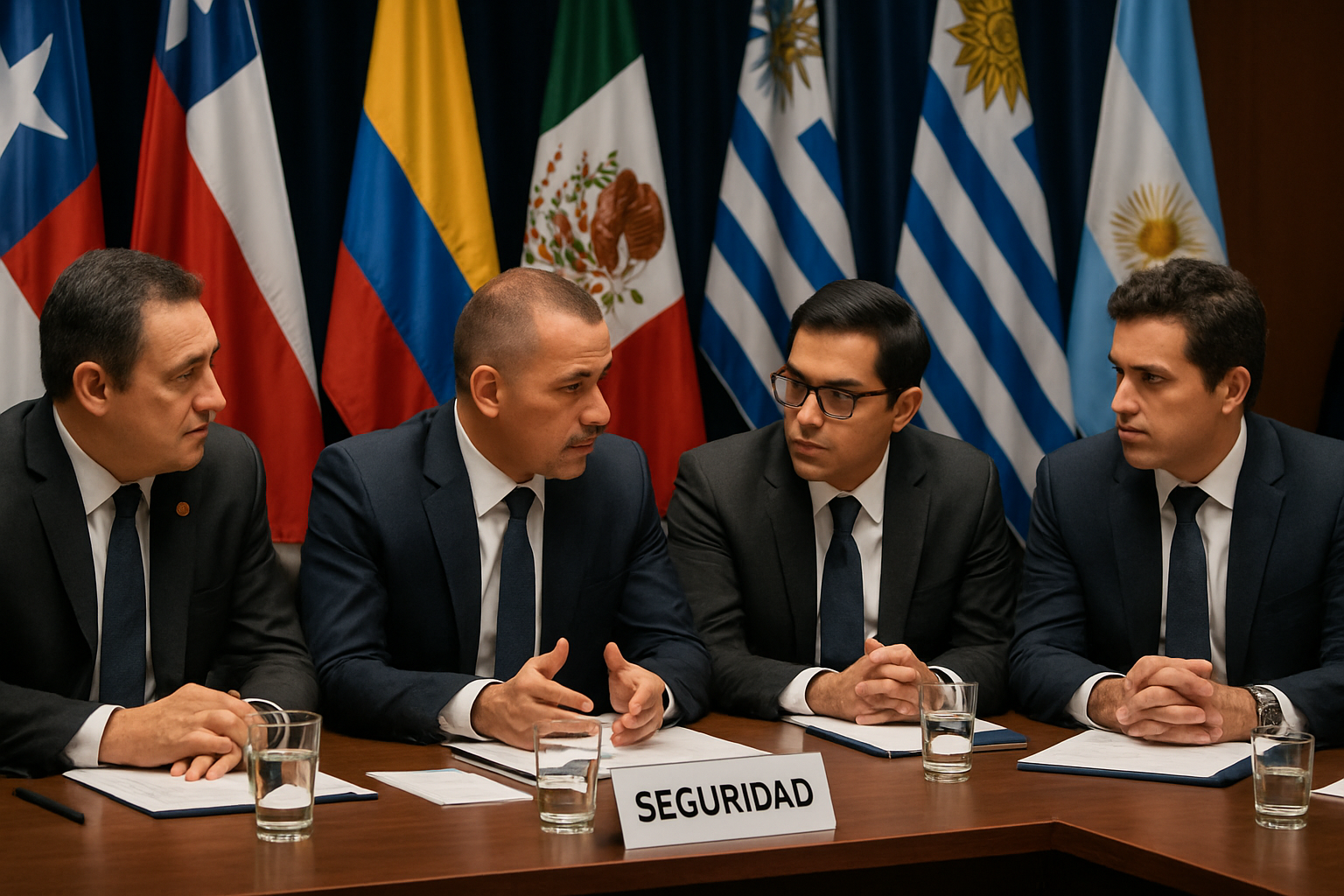
Latin American countries are intensifying security cooperation and studying El Salvador's transformative anti-crime approach as the region confronts escalating transnational threats, with the United States now highlighting El Salvador as an exemplary partner in the global fight against drug trafficking.
At a high-level international security summit held in San Salvador, representatives from across Latin America gathered to examine strategies for combating cross-border crime and strengthening citizen protection frameworks. Paraguay's Interior Ministry Vice Minister Óscar Pereira participated in the groundbreaking discussions, which emphasized the critical importance of coordinated regional responses to organized criminal networks.
El Salvador's Security Transformation Draws International Attention
The summit's timing coincides with unprecedented recognition from the United States of El Salvador's security achievements. Sara Carter, Director of the White House Office of National Drug Control Policy and President Trump's "drug czar," praised the strategic alliance between the US and El Salvador in combating narcotics trafficking and transnational crime.
"Our partnership with El Salvador is just one example of how the United States is committed to building security and mutual prosperity with our neighbors in the Western Hemisphere through law enforcement cooperation," Carter declared in an official statement released by the ONDCP.
This endorsement represents a dramatic shift in how the international community views El Salvador's security policies under President Nayib Bukele's administration. The country's unprecedented success in reducing violent crime has attracted attention from regional partners seeking to replicate effective anti-crime strategies.
Regional Security Framework Takes Shape
The San Salvador summit brought together representatives from multiple nations, including Panama, Dominican Republic, and Guatemala, demonstrating the breadth of Latin American commitment to coordinated security responses. Participants shared experiences and best practices focused on strengthening regional cooperation in public security matters.
"Border security challenges and the importance of coordinated institutional work to confront organized crime and promote comprehensive prevention and citizen protection strategies"
— Summit Discussion Focus, Interior Ministry Statement
Vice Minister Pereira's presentation highlighted the complex challenges of border security and emphasized how coordinated institutional responses can effectively counter organized criminal networks that exploit jurisdictional boundaries and weak coordination mechanisms.
US-El Salvador Strategic Partnership Strengthens
The growing cooperation between the United States and El Salvador extends beyond rhetoric to concrete operational partnerships. Ambassador Milena Mayorga held strategic meetings with US drug czar Sara Carter to strengthen joint efforts in dismantling trafficking networks that affect both nations and the broader hemisphere.
According to official sources from both governments, this cooperation is consolidated through leadership that has demonstrated measurable results in public security. The partnership represents a significant evolution in US-Latin American security cooperation, moving beyond traditional aid models to genuine strategic collaboration between equal partners.
The timing of increased cooperation coincides with El Salvador's remarkable security achievements, which have transformed it from one of the world's most violent countries to a regional security success story that neighboring nations are actively studying and adapting.
Transnational Crime Networks Face Coordinated Response
The summit addressed the sophisticated evolution of transnational criminal organizations that operate across multiple jurisdictions, exploit technological capabilities, and maintain complex financial networks spanning the hemisphere. These organizations pose challenges that exceed the capacity of individual nations to address effectively.
Recent intelligence indicates that criminal networks have developed advanced communication systems, sophisticated recruitment strategies, and operational capabilities that rival state-level organizations in their complexity and reach. This evolution requires corresponding advancement in international cooperation mechanisms and shared intelligence systems.

The criminal organizations specifically target weak institutional coordination, exploiting gaps between national jurisdictions and insufficient information sharing mechanisms. The San Salvador summit aimed to address these vulnerabilities through enhanced cooperation frameworks that enable real-time intelligence sharing and coordinated operational responses.
El Salvador Model Influences Regional Policy
Countries throughout Latin America are examining El Salvador's comprehensive approach to public security, which combines traditional law enforcement with innovative prevention strategies and institutional strengthening. The model's success has generated international interest in understanding how sustainable security improvements can be achieved in challenging environments.
The approach emphasizes not only immediate crime reduction but also long-term institutional capacity building that creates sustainable improvements in public security. This comprehensive strategy addresses both symptoms and root causes of criminal activity through coordinated institutional responses.
Regional partners are particularly interested in how El Salvador achieved dramatic reductions in violent crime while maintaining democratic institutions and respecting human rights frameworks. The model demonstrates that effective security policies can achieve measurable results without compromising fundamental democratic principles.
Challenges and Implementation Considerations
Despite the success of El Salvador's security transformation, regional experts acknowledge significant challenges in adapting these strategies to different national contexts. Each country faces unique criminal threats, institutional capabilities, and resource constraints that require tailored approaches rather than direct replication.
The summit emphasized the importance of adapting successful strategies to local conditions while maintaining core principles of institutional coordination, intelligence sharing, and comprehensive prevention approaches. Participants recognized that effective security policies must be culturally appropriate and institutionally sustainable.
Implementation challenges include resource limitations, institutional capacity constraints, and the need for sustained political commitment across electoral cycles. Successful security transformation requires long-term strategic planning and consistent implementation rather than short-term reactive measures.
Future of Regional Security Cooperation
The intensified cooperation represents a potential watershed moment for Latin American security policy, with implications extending far beyond traditional bilateral relationships. The emergence of El Salvador as a recognized leader in security innovation provides a regional model that demonstrates effective crime reduction is achievable through appropriate strategies and sustained commitment.
The evolving partnership between the United States and Latin American nations, exemplified by the enhanced US-El Salvador relationship, suggests a new framework for hemisphere security cooperation based on shared results rather than traditional donor-recipient relationships. This evolution could reshape how regional security challenges are addressed collectively.
"The consolidation of cooperation through leadership that has demonstrated results in public security matters"
— Official Sources, US-El Salvador Partnership
As criminal organizations continue evolving their capabilities and operational sophistication, the Latin American response appears to be evolving correspondingly through enhanced cooperation, shared intelligence, and coordinated operational frameworks. The success or failure of this regional approach will likely determine the trajectory of public security throughout the hemisphere for years to come.
The San Salvador summit and strengthened US-El Salvador partnership represent significant developments in the ongoing effort to create effective responses to 21st-century criminal challenges that transcend national boundaries and require unprecedented levels of international cooperation and institutional innovation.