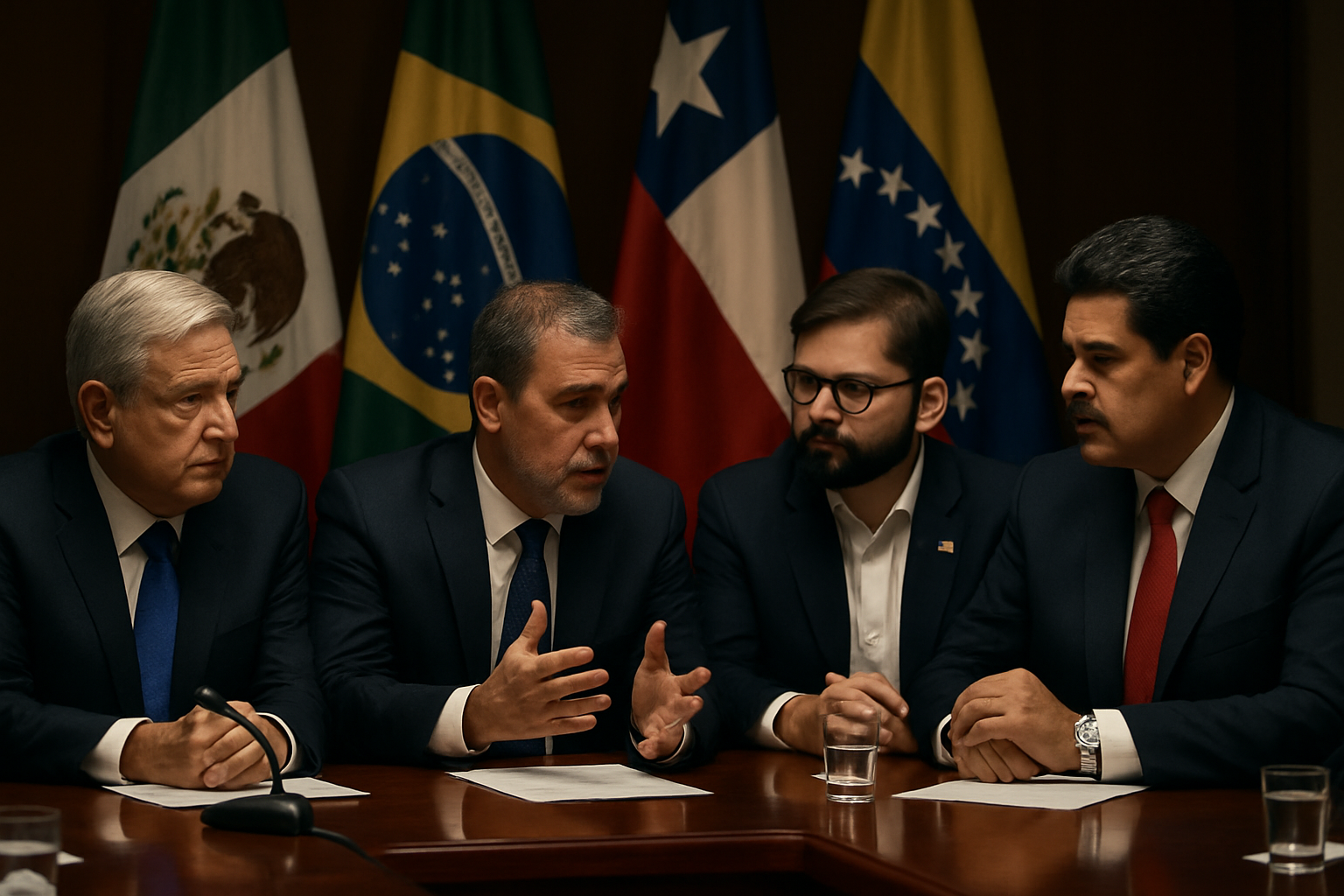
In a rare display of regional diplomatic coordination, Mexico, Brazil, and Chile have formally announced their joint support for former Chilean President Michelle Bachelet's candidacy for UN Secretary-General, marking a significant moment in Latin American political unity as Venezuela continues its complex transition one month after Nicolás Maduro's controversial removal from power.
The trilateral announcement, delivered through a joint communiqué on February 3, 2026, highlights Bachelet's extensive experience in multilateral organizations, including her tenure as UN High Commissioner for Human Rights and Executive Director of UN Women. The 74-year-old former president, who served Chile in two non-consecutive terms (2006-2010 and 2014-2018), would become the first woman and second Latin American to lead the United Nations in its 81-year history if successful.
Regional Diplomacy Takes Center Stage
The coordinated backing represents a sophisticated diplomatic strategy by Latin America's three largest economies to project regional influence on the global stage. According to sources familiar with the nomination process, the joint announcement was carefully timed to demonstrate unprecedented regional consensus ahead of the UN selection process.
"The three governments emphasized that the former president has already held high-level positions in the multilateral system as High Commissioner for Human Rights and Executive Director of UN Women," the joint statement read, underscoring Bachelet's qualifications for leading the world body during a period of increasing global tensions.
This diplomatic initiative comes at a particularly complex moment for Chile's domestic politics, occurring just 37 days before far-right president-elect José Antonio Kast is scheduled to take office in Santiago. The situation creates a unique political paradox where Kast's incoming conservative administration must support the candidacy of his ideological opposite on the international stage.
Venezuela's Uncertain Path Forward
Meanwhile, Venezuela continues to grapple with the aftermath of what has been termed "Operation Absolute Determination" - the controversial events that led to Nicolás Maduro's removal from power in January 2026. One month later, the South American nation finds itself navigating what observers describe as a "forced normality" under an interim government led by Acting President Delcy Rodríguez.
The post-Maduro Venezuela presents a stark contrast to its previous isolation. The country now operates with a dollarized economy in many sectors, an interim government under Washington's watchful eye, and a justice system that increasingly coordinates with U.S. authorities, particularly the Southern District of New York.
Recent diplomatic developments have seen high-level engagement between Venezuelan Acting President Delcy Rodríguez and U.S. Chargé d'Affaires Laura Dogu at the Miraflores Presidential Palace, representing the most significant diplomatic contact between the two nations since relations were severed in 2019. These meetings, attended by National Assembly President Jorge Rodríguez and confirmed by Information Minister Miguel Ángel Pérez, signal a potential thaw in what had been one of the region's most entrenched diplomatic standoffs.
Regional Implications and Recovery Prospects
The Dominican Republic's President has emerged as an early supporter of Venezuela's transition, stating that the country's development "after Maduro will help all of Latin America." This perspective reflects growing regional optimism about Venezuela's potential economic recovery and its positive spillover effects across the hemisphere.
The Dominican leader also announced the reopening of commercial relations between the two countries, including the restoration of air traffic and consular services - practical steps that signal confidence in Venezuela's political stability and economic prospects.
Secretary of State Marco Rubio has outlined a comprehensive three-phase reconstruction plan for Venezuela: stabilization to address the humanitarian crisis, economic recovery requiring sanctions relief, and democratic transition with free elections. This structured approach suggests the United States is preparing for a long-term engagement with post-Maduro Venezuela.
Challenges Ahead
Despite diplomatic progress, Venezuela faces enormous challenges in its transition. The country continues to struggle with hyperinflation, infrastructure decay, and the collapse of oil production from 3 million to 700,000 barrels daily. Power outages, fuel shortages, and food insecurity remain persistent problems requiring substantial international investment and technical assistance.
The interim government has begun implementing political reforms, including a proposed general amnesty law for political prisoners. The first releases are already underway, with Javier Tarazona, director of the NGO Fundaredes, freed on February 1 after more than four years of detention on terrorism and treason charges.
Public sentiment in Venezuela remains mixed, with citizens expressing both hope for democratic change and uncertainty about the country's future direction. The population, affected by years of economic crisis and political repression, is cautiously optimistic about the potential for meaningful reform while remaining wary of further instability.
Bachelet's Global Candidacy
Michelle Bachelet's candidacy for UN Secretary-General comes at a crucial moment for international diplomacy, with global conflicts, climate change, and economic inequality demanding strong multilateral leadership. Her background in human rights advocacy and her experience leading a major Latin American democracy position her as a potentially transformative figure for the United Nations.
The trilateral support from Mexico, Brazil, and Chile demonstrates unprecedented Latin American coordination in global governance, potentially shifting regional influence within international institutions. If successful, Bachelet's leadership could bring fresh perspectives to longstanding global challenges while representing the interests of developing nations.
The convergence of Venezuela's political transformation and Bachelet's UN candidacy represents a pivotal moment for Latin American diplomacy, potentially ushering in a new era of regional cooperation and global engagement. As these developments unfold, the international community watches closely to see how these changes might reshape both regional dynamics and global governance structures.