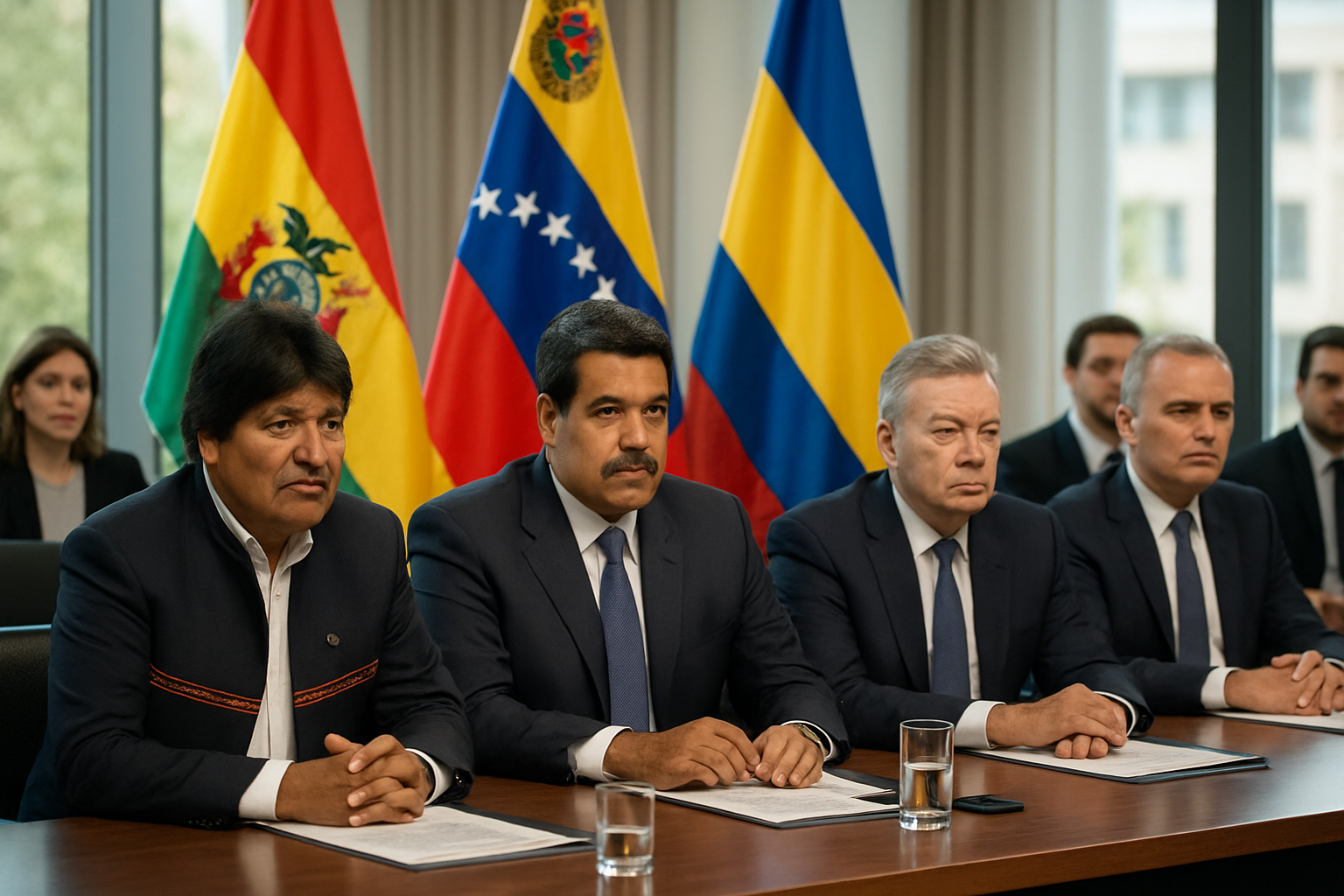
Venezuelan opposition leader María Corina Machado announced on March 1, 2026, that she will return to Venezuela "in a few weeks" to guarantee a democratic transition, marking a significant escalation in the country's evolving political landscape under Acting President Delcy Rodríguez's interim government.
Speaking from an undisclosed location, the Nobel Peace Prize laureate stated: "We will arrive to guarantee a transition to democracy," signaling a strategic shift in opposition tactics following the comprehensive political prisoner amnesty program that has released over 750 detainees since January 2026.
Venezuela's Democratic Transition Accelerates
Machado's announcement comes as Venezuela continues its most promising democratic opening in over two decades. The interim government has implemented sweeping reforms, including the historic amnesty law covering political offenses from 1999-2026 – representing the most comprehensive political reconciliation effort in recent Latin American history.
The political transformation has gained international legitimacy through unprecedented U.S.-Venezuela diplomatic engagement, with oil exports surging 60% to 800,000 barrels daily as American companies displace Chinese competitors. Former Spanish Prime Minister Zapatero continues mediation efforts while Cardinal Porras organizes nationwide prayer vigils supporting the reconciliation process.
"This is a historic moment for the entire Venezuelan democracy movement. The systematic release of political prisoners demonstrates genuine commitment to democratic renewal."
— International Observer, Spanish Mediation Team
Regional Political Developments
While Venezuela advances toward democratic consolidation, other Latin American nations face distinct political challenges. Colombia continues grappling with security deterioration as government officials warn of breakdown in public order across regions, with "war between bands" increasing homicides and systematic justice failures.
The Atlantic coast department faces particularly dire conditions with brazen daylight robberies by unmasked perpetrators, while mayors confront FARC dissident threats requiring military intervention. The systematic targeting of social leaders includes recent campesino assassinations in Cauca province, demonstrating the persistent challenges facing democratic institutions.
Infrastructure and Governance Challenges
In Colombia, a separate political dispute has emerged over control of Barranquilla's Ernesto Cortissoz Airport, with Mayor Alejandro Char asserting that the current facility "does not reflect the development of Barranquilla." This infrastructure debate highlights broader questions about regional development and governance capacity across Latin America.
The Democratic Republic of Congo, while geographically distant, provides relevant context through Jean-Claude Baende's Alliance of Humanist Democrats party supporting the implementation of a Truth and Reconciliation Commission before any political dialogue. This approach offers potential lessons for Latin American reconciliation processes.
International Mediation and Support
The Venezuelan transition has attracted significant international attention and support. Energy Secretary Chris Wright's historic February visit to Caracas resulted in comprehensive cooperation agreements, formally ending Trump's 2019 oil embargo. The partnership encompasses oil, natural gas, and electricity production through U.S. technical assistance and investment.
Dominican Republic has reopened diplomatic and commercial relations with Venezuela, while Brazil and the EU maintain cautious but supportive engagement. This growing international legitimacy contrasts sharply with the previous regime's isolation and provides crucial momentum for democratic consolidation.
Implementation Challenges and Future Prospects
Despite remarkable progress, significant challenges remain. Over 600 political prisoners are still detained according to Foro Penal, and many releases involve conditional arrangements rather than complete freedom. Juan Pablo Guanipa, a close Machado ally, exemplifies this complexity – initially released but subsequently placed under house arrest with electronic monitoring.
Article 9 of the amnesty law excludes those who "promoted attacks on national territory by foreign states," while Article 7's requirement for prisoners to "present themselves to justice" has created implementation delays. Civil society organizations emphasize that releases represent "rights restitution, not state favor," reflecting ongoing debates about the nature of political prosecutions under the previous regime.
Strategic Opposition Positioning
Machado's return announcement represents calculated timing as international momentum builds for Venezuelan democracy. Her Nobel Peace Prize status provides significant moral authority, while the interim government's demonstrated commitment to prisoner releases creates favorable conditions for opposition engagement.
The opposition strategy appears focused on constructive participation in democratic transition rather than confrontational resistance. This approach aligns with international mediation efforts and growing regional support for Venezuelan democratic renewal.
Broader Latin American Context
Venezuela's transition occurs within a complex regional political environment. Recent developments across Latin America demonstrate both democratic resilience and persistent challenges. Argentina continues implementing major economic reforms amid labor opposition, while Peru faces ongoing political instability with frequent presidential changes.
The Venezuelan model of gradual democratic transition through international engagement and systematic reconciliation could provide valuable lessons for other regional democracies facing similar challenges with authoritarian legacies and polarized societies.
Economic Recovery and International Integration
Beyond political reconciliation, Venezuela's economic recovery shows promising signs. The restoration of oil production capacity, infrastructure investments, and normalized international trade relationships provide foundations for sustainable development. American Airlines has requested authorization for Miami-Caracas flights, while over six tons of medical supplies have arrived through diplomatic channels.
This economic dimension reinforces political progress by demonstrating tangible benefits of democratic governance and international cooperation. The combination of political reconciliation and economic recovery creates mutually reinforcing dynamics supporting democratic consolidation.
Looking Forward
Machado's planned return represents a critical test of Venezuela's democratic transition sustainability. Her successful reintegration into domestic politics would demonstrate genuine commitment to pluralistic governance, while any restrictions or harassment would raise questions about the authenticity of democratic reforms.
The coming weeks will prove decisive for Latin America's most significant political transformation in recent memory. International observers, regional partners, and Venezuelan civil society will closely monitor developments as the opposition leader prepares to return to a dramatically changed political landscape.
Success in Venezuela's democratic transition could provide a powerful template for peaceful political change throughout Latin America, demonstrating that sustained international engagement, systematic reconciliation, and gradual confidence-building measures can overcome even deeply entrenched authoritarian systems.