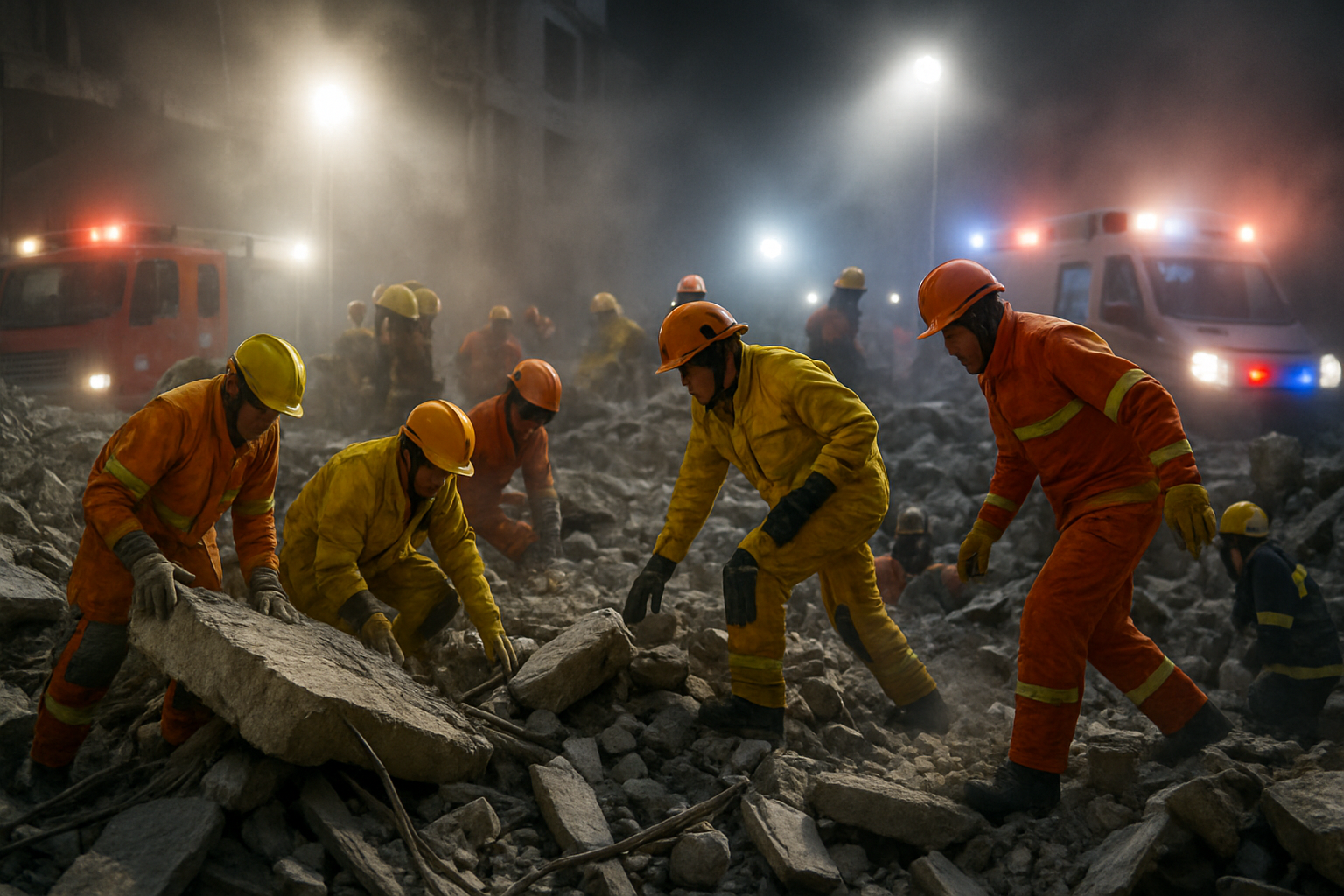
At least six people died and seven were injured when two adjoining buildings collapsed on Sunday in Tripoli, Lebanon's second-largest city, with rescue teams continuing to search for survivors trapped beneath the rubble.
The collapse occurred in Bab al-Tabbaneh, one of the poorest neighborhoods of Tripoli, according to Lebanon's National News Agency. The incident involved an old building on Syria Street, with authorities evacuating surrounding residential buildings as a precautionary measure due to fears of further structural failures.
Among the casualties confirmed by the National News Agency were a child and an elderly woman, while eight people were successfully rescued from the debris. Emergency responders worked through the night to clear the rubble and search for any remaining survivors.
Second Incident in Two Weeks
This tragic event marks the second building collapse in Lebanon within a span of two weeks, highlighting the country's deteriorating infrastructure amid an ongoing economic crisis. The pattern of structural failures has become a growing concern for authorities and residents alike.
Lebanese civil defense teams deployed heavy machinery to the site while firefighters worked to contain blazes caused by gas cylinders that ignited during the collapse. The rescue operation was complicated by these fires and the unstable condition of adjacent structures.
"This is the second such incident in recent weeks, which demonstrates the urgent need for infrastructure assessment and safety measures across our urban areas."
— Lebanese Civil Defense Official
The five-story residential building housed multiple families, and local council member Abdel Hamid Karimeh confirmed the casualty figures while emphasizing that search and rescue operations would continue until all residents were accounted for.
Infrastructure Crisis Context
The collapse comes against the backdrop of Lebanon's severe economic crisis, which has severely limited the country's capacity for building maintenance and infrastructure upgrades. The country has been grappling with a financial meltdown that began in 2019, affecting essential services and leaving many buildings without proper maintenance.
Bab al-Tabbaneh, where the collapse occurred, is known as one of the most economically disadvantaged areas in Tripoli. The neighborhood has faced particular challenges with building safety due to limited resources for maintenance and oversight.
Multiple international news sources reported the incident, with coverage appearing across regional media outlets including Al Jazeera, Greek news agency Naftemporiki, and Serbian broadcaster N1 Info, underlining the international concern over Lebanon's infrastructure challenges.
Emergency Response and Evacuations
Security forces immediately cordoned off the area and began systematic evacuations of nearby buildings to prevent further casualties should additional structures fail. The Lebanese Navy contributed to rescue efforts, deploying personnel and equipment to assist in the operation.
Local authorities worked closely with international emergency response protocols, with the incident drawing attention to the broader regional challenges of urban safety and building standards across the Middle East.
The rescue operation involved multiple agencies, including civil defense teams, firefighters, and medical personnel who established triage areas near the collapse site to treat injured survivors and provide immediate medical care.
Regional Building Safety Concerns
This incident is part of a broader pattern of building safety concerns across the region. Recent memory from our coverage includes similar structural failures that have highlighted the urgent need for enhanced building codes and regular safety inspections.
Urban safety experts have repeatedly warned about the risks posed by aging infrastructure combined with economic constraints that prevent proper maintenance and upgrades. The combination of older construction standards and limited regulatory enforcement has created dangerous conditions in many urban areas.
The international community has been monitoring Lebanon's infrastructure crisis as part of broader humanitarian concerns related to the country's economic collapse and its impact on basic services and public safety.
Government Response and Investigation
Lebanese authorities have launched an investigation into the cause of the collapse, focusing on structural integrity issues and potential regulatory failures that may have contributed to the tragedy. The probe will examine building permits, inspection records, and maintenance protocols.
The incident has renewed calls for comprehensive infrastructure assessment programs and emergency funding to address critical safety issues in residential buildings across Lebanon's major cities.
Prime Minister and other senior officials have expressed condolences to the families of the victims while pledging to accelerate efforts to prevent similar tragedies through enhanced building safety measures and emergency response capabilities.
Looking Forward
As rescue operations continue, the focus remains on ensuring the safety of surrounding buildings and providing support to displaced families. The incident serves as a stark reminder of the urgent need for sustained international assistance to address Lebanon's infrastructure crisis.
Urban planners and safety experts emphasize that preventing future collapses will require not only emergency repairs but also comprehensive urban renewal programs that address the root causes of building deterioration in economically disadvantaged neighborhoods.
The tragedy in Tripoli underscores the intersection of economic crisis, infrastructure decay, and public safety that continues to challenge Lebanon and other countries facing similar pressures on their urban infrastructure systems.