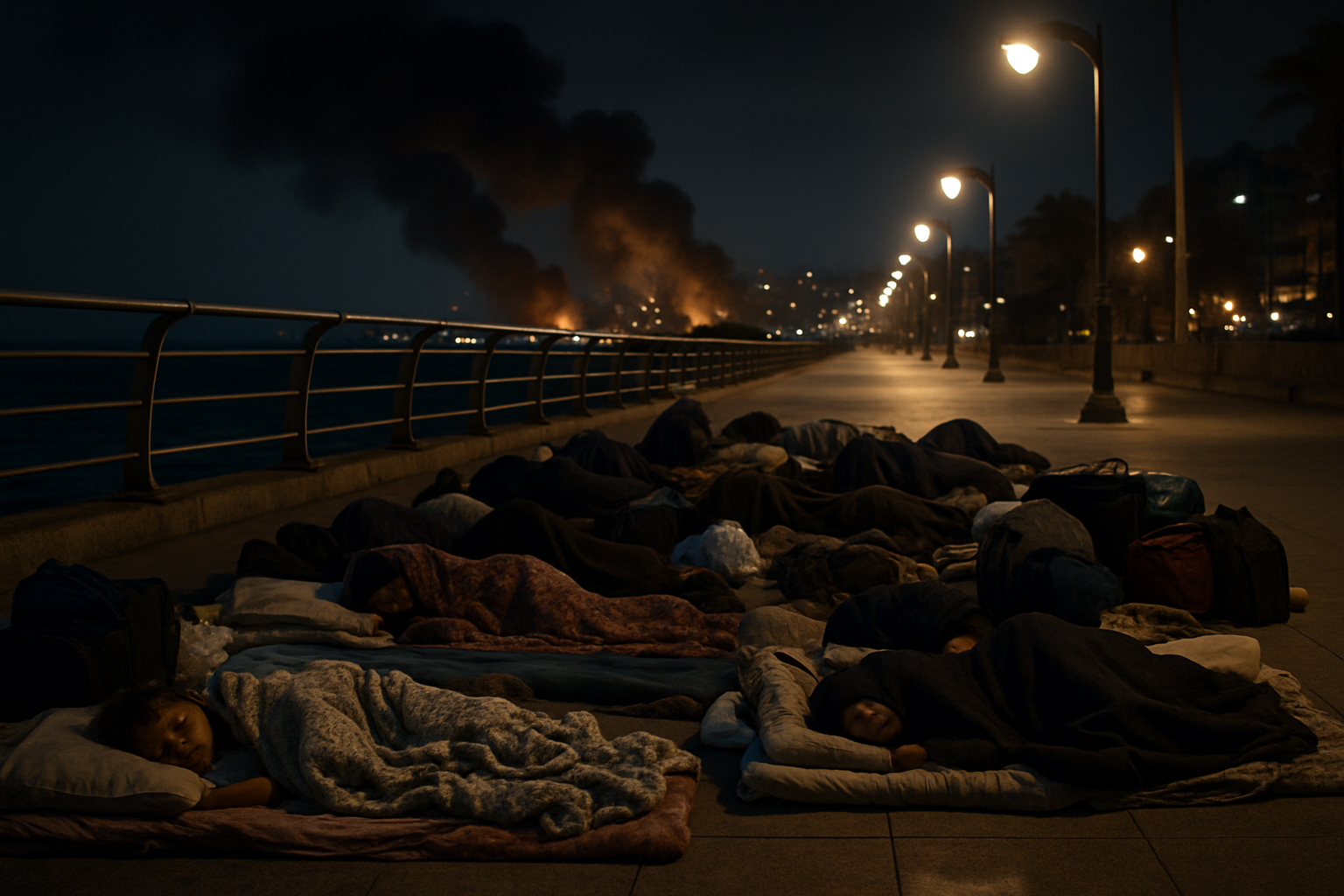
Lebanon is facing its worst humanitarian crisis in decades as Israeli military strikes have killed 394 people, including dozens of children, and forced 454,000 civilians from their homes, according to the Lebanese Health Ministry and displacement tracking organizations.
The dramatic escalation, which began on February 28, has shattered the November 2024 ceasefire agreement between Israel and Hezbollah and plunged Lebanon into a deepening crisis that has reverberated across Lebanese communities globally.
Devastating Toll on Civilians
The Lebanese Health Ministry's latest figures paint a grim picture of the conflict's human cost. Of the 394 confirmed deaths, nearly one-third are women and children, with the youngest victims including infants and primary school students. The most deadly single attack occurred in the eastern Bekaa Valley town of Nabi Chit, where 26 people were killed in what residents described as the small mountain community's darkest day.
Sunday's strikes in southern Lebanon's Sir Al-Gharbiya town added 18 more civilian casualties to the mounting death toll, with eight others injured in what the Israeli occupation army described as operations targeting Hezbollah positions.
France 24 correspondent Catherine Norris Trent, reporting from Beirut, described scenes of desperation: "As Israeli strikes continue in southern Lebanon, for many people there is nowhere left to go. Some are sleeping in cars, on the streets or on the beach."
Unprecedented Displacement Crisis
The scale of displacement has overwhelmed Lebanon's capacity to respond. With 454,000 people now registered as displaced according to official tracking systems, emergency shelters across the country are at breaking point.
"Hundreds of schools, places of worship, and stadiums have been turned into emergency shelters, but many more are needed," Trent reported. "As soon as one opens, it fills up."

The Israeli military has issued some of the most extensive evacuation warnings in its history, with over 300,000 Lebanese civilians evacuated from villages according to Israeli Defense Forces estimates. Lebanese Red Cross sources suggest the actual number could be significantly higher.
Many of the displaced have been forced to sleep rough on Beirut's corniche, the coastal promenade that has become a symbol of the crisis. Families with children can be seen sleeping on makeshift bedding near the beach, having fled their homes in Lebanon's southern suburbs and villages.
Global Lebanese Community in Anguish
The crisis has deeply affected Lebanese diaspora communities around the world, with families watching helplessly as their homeland burns. In Vancouver, British Columbia residents with family in Lebanon are experiencing the escalating conflict with particular anguish.
"B.C. residents with family in Lebanon say they are watching the escalating conflict in the Middle East with fear," reported CBC News. "Israeli airstrikes and evacuation orders push more civilians from their homes and deepen worries that ordinary people will once again bear the cost of war."
"We're seeing our families, our communities being displaced. People we grew up with, relatives we visit every summer – they're now sleeping on the streets or in overcrowded shelters. It's heartbreaking to watch from thousands of miles away."
— Lebanese-Canadian community member interviewed by CBC
The Canadian Broadcasting Corporation documented how Lebanese-Canadians are organizing support networks and trying to maintain contact with relatives as communication infrastructure in affected areas becomes increasingly unreliable.
Strategic Targeting and Military Operations
Israeli operations have concentrated on several key strategic areas, according to military and intelligence sources. The strikes have focused on the Bekaa Valley, long considered a Hezbollah stronghold, where weapons depots and command centers have been systematically targeted.
The February 28 escalation represented the most intensive Israeli campaign since the November 2024 ceasefire breakdown. Operations have targeted not only southern Lebanon and the Bekaa Valley but also Beirut's southern suburbs, known locally as the Dahiyeh, where Hezbollah maintains significant presence.
Nabi Chit, where the deadliest attack occurred, was hit with approximately 40 airstrikes targeting what Israeli forces described as leadership compounds and weapons storage facilities. The small mountain community had strong ties to Hezbollah leadership, making it a prime target in the expanded military operation.
Ceasefire Completely Shattered
The November 2024 US-French brokered ceasefire agreement, which had held for over a year despite minor violations, has completely collapsed. The agreement required both Israeli forces and Hezbollah to withdraw from southern Lebanon, with the Lebanese army and UN peacekeepers establishing a buffer zone.
German and Italian defense sources confirmed this represents the "first major breach since implementation" of what had been considered one of the region's more successful diplomatic achievements. The ceasefire had required Hezbollah's estimated 20,000 fighters to pull back from the Israeli border, while Israeli forces were to end their operations in Lebanese territory.
Regional and International Context
The Lebanon crisis is unfolding within the broader context of the unprecedented Middle East conflict that began with the March 1, 2026 death of Iran's Supreme Leader Ali Khamenei in US-Israeli Operation Epic Fury. This larger regional war has created a situation where Hezbollah faces impossible choices between maintaining ceasefire arrangements and responding to Iranian pressure for retaliation.
The organization declared "resistance only option" in response to continued Israeli operations, effectively abandoning the November 2024 agreement. This decision pulls Lebanon into the broader Iran-Israel confrontation, threatening regional stability amid what analysts describe as the most dangerous Middle East crisis since the Cold War's end.
International Humanitarian Response
Multiple nations have issued travel warnings for Lebanon as the humanitarian situation deteriorates. Embassy evacuations are underway in several countries, with airlines suspending operations to Beirut's international airport.
The European Union has called for immediate de-escalation and civilian protection, while regional mediators struggle to manage the expanding crisis. The situation is complicated by the broader Middle East aviation crisis, with over 18,000 flights cancelled worldwide as eight countries have closed their airspace simultaneously.
Economic and Infrastructure Impact
Beyond the immediate humanitarian crisis, Lebanon's already fragile economy is facing additional devastating blows. The country, which has been grappling with one of the world's worst economic collapses since 2019, now faces massive infrastructure damage and the enormous cost of caring for nearly half a million displaced people.
Critical infrastructure in southern Lebanon and the Bekaa Valley has been severely damaged, affecting electricity, water supplies, and telecommunications. The displacement crisis is straining resources in areas that were already struggling with basic service provision.
Lebanese President Michel Aoun condemned the strikes as violations of sovereignty, but the weak central government has limited capacity to respond to the crisis while managing broader economic and political challenges. Lebanon finds itself caught between Israeli military responses and Iranian proxy obligations, its territory becoming a primary battlefield in the Iran-Israel confrontation.
Voices from the Crisis
Humanitarian workers on the ground describe scenes reminiscent of Lebanon's civil war era, with families loading possessions onto cars and trucks in desperate flights to safety. Medical facilities are overwhelmed treating casualties, while emergency responders struggle to reach affected areas due to ongoing military operations.
One displaced mother from southern Lebanon, speaking to international media, described the terror of the evacuation: "We had fifteen minutes to gather everything. My children were crying. We didn't know where to go. The roads were packed with families like us."
Emergency shelter coordinators report that traditional support systems are breaking down under the unprecedented scale of displacement. Religious institutions, schools, and community centers that typically serve as refuges are already at capacity, forcing families to seek shelter wherever they can find it.
Looking Ahead: Uncertain Future
With no immediate diplomatic solution in sight and the broader regional conflict continuing to escalate, Lebanese civilians face an uncertain future. The international community is stretched managing the Iran crisis while attempting Lebanon escalation containment, creating additional challenges for effective humanitarian response.
The coming days and weeks will be crucial in determining whether the Lebanon-Israel fighting can be contained through renewed diplomatic efforts or whether this represents the beginning of an even broader regional war that could affect millions more civilians across the Middle East.
For the 454,000 displaced Lebanese and their families worldwide watching this humanitarian catastrophe unfold, each day brings new uncertainty about when – or if – they will be able to return to their homes and rebuild their lives in a country that has already endured so much suffering.