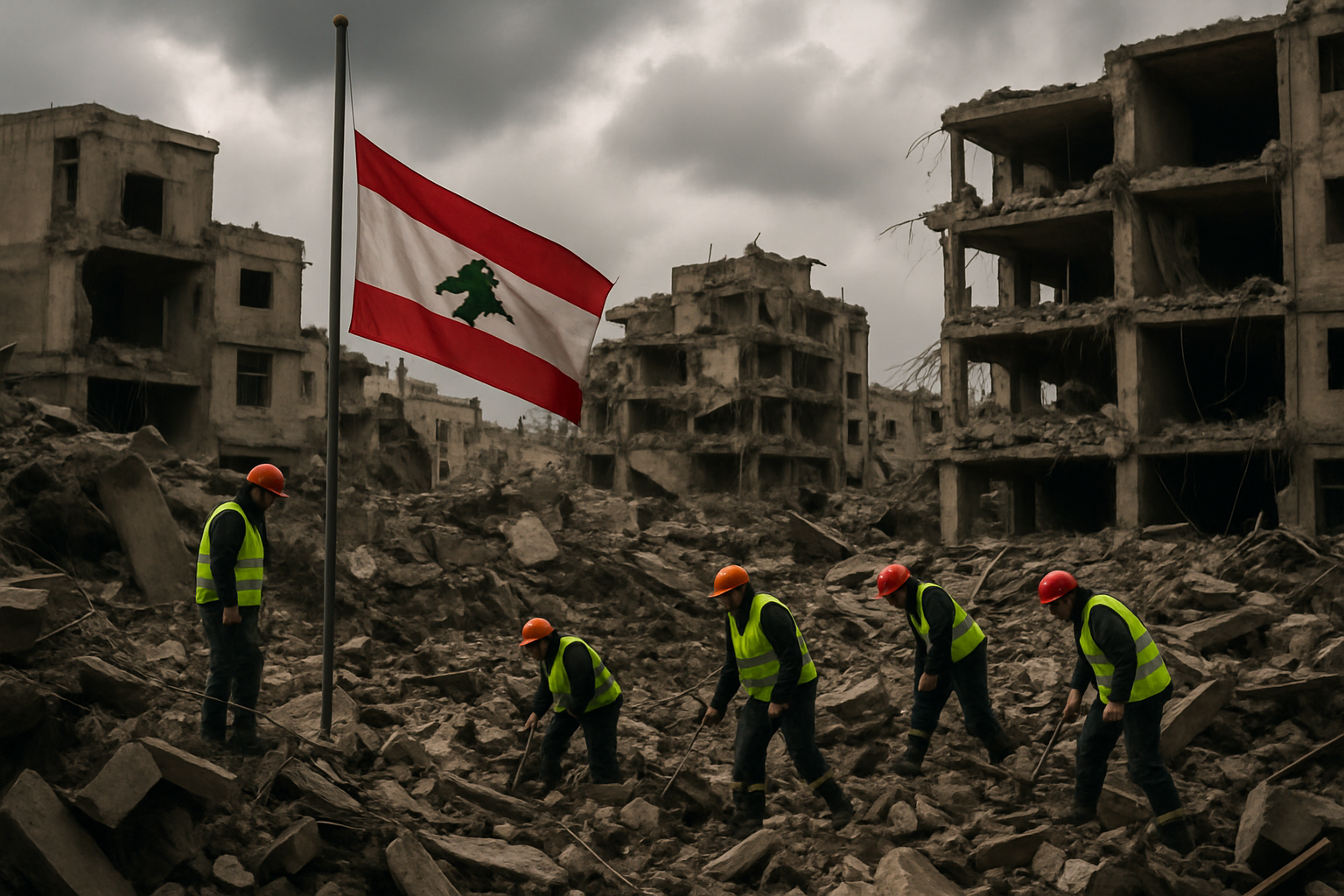
Lebanese journalist Amal Khalil was found dead under the rubble of her home in the village of Al Tayri in southern Lebanon following an Israeli airstrike on Wednesday, according to multiple international news agencies and Lebanese military sources.
The death of Khalil, confirmed by a high-ranking Lebanese military source cited by Reuters, represents the latest casualty in a systematic pattern of attacks targeting media personnel in the region. The Committee to Protect Journalists (CPJ) has condemned the killing, adding it to the growing list of journalists killed during the current escalation.
International Condemnation and Rescue Efforts
According to Danish and Spanish media reports, Israeli soldiers allegedly blocked rescue attempts by emergency workers trying to reach the wounded journalist. The Israeli military has denied these allegations, but the incident has sparked widespread international condemnation from media organizations and human rights groups.
The tragedy in Al Tayri village comes amid a broader humanitarian catastrophe that has engulfed Lebanon since March 2026. Over 1.2 million Lebanese civilians - representing 25% of the country's population - have been displaced from their homes, with emergency shelters overwhelmed and thousands forced to sleep on the streets of Beirut.
Systematic Targeting of Media Workers
Khalil's death is part of an alarming pattern of attacks on journalists covering the conflict. Since March 2026, systematic targeting of media personnel has claimed 26 paramedics' lives and wounded 51 others. The deadliest single incident occurred at the Burj Qalaouiyah healthcare center in the Bint Jbeil district, where 12 medical workers - including doctors, nurses, and paramedics - were killed in what human rights organizations have described as potential Geneva Conventions violations.
"The deliberate targeting of journalists and emergency responders represents a grave violation of international humanitarian law. These attacks on clearly marked press vehicles and medical facilities must be investigated as potential war crimes."
— Committee to Protect Journalists spokesperson
The systematic nature of these attacks has raised serious concerns among international legal experts, who note that under the Geneva Conventions, journalists are civilians requiring protection from attack. The deliberate targeting of clearly marked press vehicles and medical facilities potentially constitutes war crimes under international humanitarian law.
Ceasefire Collapse and Escalating Violence
The current crisis stems from the complete collapse of the November 2024 US-French brokered Israel-Hezbollah ceasefire agreement, which had held for over a year. The ceasefire breakdown occurred in March 2026 when Hezbollah faced what sources described as an "impossible choice" between maintaining the ceasefire and responding to Iranian pressure following the death of Supreme Leader Ali Khamenei on March 1.
Ultimately, Hezbollah chose what it called "Iranian solidarity over Lebanese sovereignty," declaring that "resistance was the only option" and pulling Lebanon into the broader Iran-Israel confrontation that has engulfed the region.
Since then, Hezbollah's estimated 20,000 fighters have conducted over 40 operations targeting northern Israeli sites, including attacks reaching as far as Haifa. The organization has declared "direct confrontations" with Israeli forces in southern Lebanon, marking a significant operational escalation from its previous strategy of restraint.
Humanitarian Crisis Unprecedented in Scale
The humanitarian catastrophe unfolding in Lebanon has reached unprecedented proportions. Beyond the 1.2 million displaced civilians, the conflict has resulted in over 2,020 civilian deaths since the March 2026 escalation began. Emergency shelters have been overwhelmed, forcing thousands to seek refuge on the streets of Beirut and other major cities.
The World Health Organization (WHO) has issued a $30.3 million emergency appeal to support healthcare systems across five Middle Eastern countries, describing the medical infrastructure as being "under severe strain." The systematic targeting of medical personnel and facilities has compromised Lebanon's emergency response capabilities at a time when they are most desperately needed.
Israeli operations have expanded well beyond the November 2024 ceasefire positions, with forces now controlling an estimated 10% of Lebanese territory between the border and the Litani River. The military has destroyed critical infrastructure including the Qasmiyeh Bridge and issued civilian home demolition orders, representing a shift from military to civilian infrastructure warfare.
Global Impact and International Response
The conflict's impact extends far beyond Lebanon's borders, contributing to a global crisis that has seen over 18,000 flights cancelled worldwide - disruption on a scale comparable to the COVID-19 pandemic. Oil prices have surged above $100 per barrel for the first time since 2014, while the closure of the Strait of Hormuz has affected 40% of global oil transit.
The International Energy Agency (IEA) has been forced to authorize the largest strategic petroleum reserve release in its 50-year history - 400 million barrels - to stabilize global energy markets. Natural gas prices have surged by 24% in Europe and 78% in the United States, threatening household energy costs globally.
International response has been unified in condemning the targeting of civilians and media workers. The United Kingdom has expressed being "deeply troubled" by the situation, France has called the attacks "unacceptable," and Italy has condemned the systematic civilian targeting. Eight Arab nations, including those with normalized relations with Israel such as the UAE and Saudi Arabia, have issued joint condemnations of the violations of international law.
Press Freedom Under Siege
Khalil's death adds to what the Committee to Protect Journalists documented as the deadliest year on record for press freedom, with 129 journalists killed globally in 2025. The targeting of media personnel in conflict zones has become an increasingly alarming trend, threatening the democratic function that journalists serve in informing the public about critical events.
The March 28, 2026 killing of three Lebanese journalists - Ali Shoaib of Al Manar TV, Fatima Ftouni of Al Mayadeen TV, and Mohammed Ftouni (Fatima's brother and a cameraman) - in a targeted strike on their clearly marked press vehicle had already highlighted the dangerous environment facing Middle Eastern journalists. Al Mayadeen reported that the Israeli airstrike "directly struck a vehicle clearly marked as a press car" with four precision missiles.
These incidents have prompted international calls for stronger protection mechanisms for journalists working in conflict zones and investigations into potential war crimes related to the deliberate targeting of media personnel.
Diplomatic Efforts and Failed Peace Initiatives
Despite multiple diplomatic initiatives, the path to peace remains elusive. French President Emmanuel Macron has offered to host direct Israel-Lebanon talks in Paris - the first such negotiations since the ceasefire collapse. UN Secretary-General António Guterres has called the situation the "greatest test of multilateral cooperation in the modern era."
However, significant obstacles remain. A critical complication has emerged from what is being called the "Lebanon loophole" - Israeli Prime Minister Benjamin Netanyahu explicitly excluded Lebanon from the Pakistan-mediated "Islamabad Accord" US-Iran ceasefire, creating what US Vice President J.D. Vance acknowledged as a "legitimate misunderstanding" on Iran's part. Iran has threatened to withdraw from regional talks unless comprehensive enforcement is applied to all fronts.
UN peacekeeping forces (UNIFIL) have themselves come under attack, with bases near Mais al-Jabal struck and peacekeepers wounded. This represents the first major breach of peacekeeping arrangements since the November 2024 ceasefire implementation, further complicating international intervention efforts.
Template-Setting Crisis for 21st Century
International observers view the current crisis as a template-setting moment for 21st-century conflict resolution approaches. The rapid transition from diplomatic agreement to military escalation demonstrates the challenges of maintaining negotiated peace without addressing fundamental underlying political tensions and security concerns.
The stakes extend far beyond the immediate bilateral relations between Israel and Lebanon, affecting broader questions of regional war prevention, global energy security, nuclear governance credibility, and international law enforcement. The success or failure of diplomatic intervention in this crisis will likely establish precedents for conflict resolution mechanisms in an increasingly multipolar world.
The systematic targeting of journalists, medical personnel, and civilian infrastructure raises fundamental questions about the enforcement of international humanitarian law and the protection of vulnerable populations during armed conflict. These questions will have implications extending decades beyond the current events, potentially reshaping how the international community responds to similar crises in the future.
Remembering Amal Khalil
As Lebanon and the international community mourn the loss of Amal Khalil, her death serves as a stark reminder of the human cost of the broader political and military failures that have engulfed the region. Her commitment to journalism in one of the world's most dangerous regions exemplifies the dedication of media workers who risk their lives to inform the public about critical events shaping our world.
The circumstances of her death - found under the rubble of her home in Al Tayri village after an airstrike - underscore the vulnerability of civilians, including journalists, in modern warfare. The allegations that rescue efforts were blocked only add to the tragedy and highlight the urgent need for stronger protections for both media workers and emergency responders.
As the international community continues to seek diplomatic solutions to the crisis, Khalil's death stands as a sobering reminder that time is of the essence. Every day that passes without meaningful progress toward peace brings additional risk to the civilians, journalists, and aid workers who find themselves caught in the crossfire of this devastating conflict.
The path forward requires not only immediate ceasefire arrangements but comprehensive frameworks addressing the underlying political dynamics that have repeatedly led to the breakdown of previous agreements. Only through such sustained diplomatic engagement can the international community hope to prevent future tragedies like the one that claimed Amal Khalil's life.