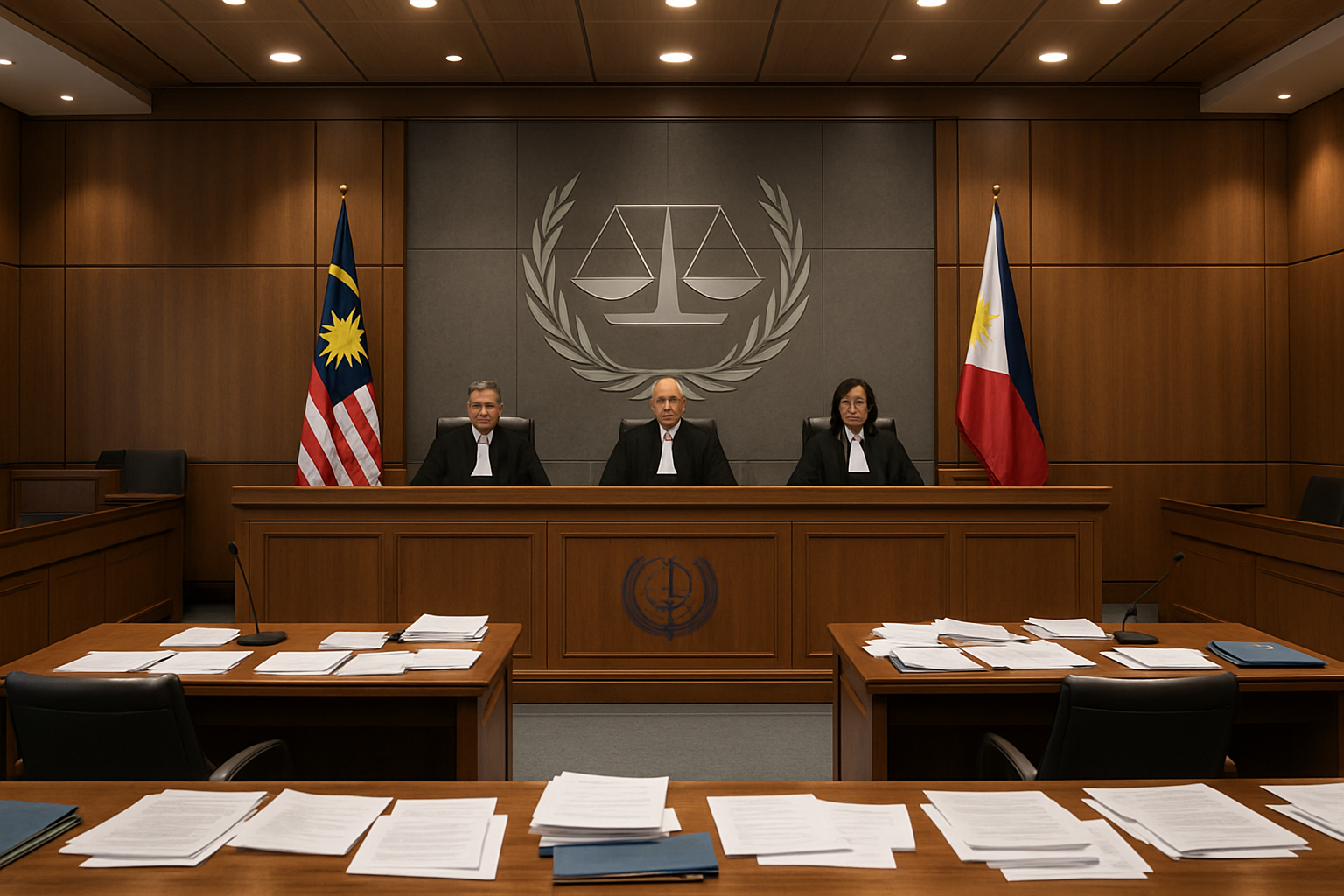
Legal systems across Malaysia, the Philippines, and Malta are processing high-stakes cases that illuminate the unprecedented strain on judicial institutions worldwide, as courts navigate everything from international criminal proceedings to local corruption scandals while maintaining democratic accountability.
ICC Duterte Hearings Conclude Historic Proceedings
The International Criminal Court's confirmation of charges hearings against former Philippine President Rodrigo Duterte reached their final day on February 27, marking a watershed moment in international criminal justice. The proceedings, which began February 23, represent the most significant attempt to hold a Southeast Asian leader accountable for alleged crimes against humanity.
Defense attorney Nicholas Kaufman mounted a vigorous challenge to the prosecution's case, arguing that being designated a "high-value target" in anti-drug operations does not automatically constitute a target for killing. The defense strategy centered on the absence of a "smoking gun" directly linking Duterte to systematic killings during his presidency (2016-2022) and earlier tenure as Davao City mayor.
"Legal experts say Duterte's 'no smoking gun' defense only underscores the need for insider witnesses, since masterminds rarely leave direct evidence linking them to their alleged crimes."
— Philippines Legal Analysis
The hearings saw unprecedented participation from over 500 victims – the largest in ICC history – demonstrating the evolution toward victim-centered proceedings. Judges will now determine whether substantial grounds exist to proceed with a full trial on charges of systematic murder during the "war on drugs" campaign.
In a controversial move, Kaufman challenged the ICC prosecution to investigate what he described as "sky-high" killings under current President Ferdinand Marcos Jr.'s administration, attempting to shift focus from his client's alleged crimes. Cardinal observers noted that "it is not just former president Rodrigo Duterte who is under trial at the International Criminal Court, but the entirety of the Philippines."
Malaysian Courts Address High-Profile Corruption
Malaysia's judicial system confronted multiple significant cases this week, from corruption allegations against high-ranking officials to deadly negligence cases that have haunted the country for years.
A key witness in the ongoing corruption trial insisted that a RM1 million cash handover to former Finance Minister Lim Guan Eng took place openly at Publika shopping center, maintaining his testimony despite intense cross-examination. The case represents ongoing efforts to address high-level corruption that has plagued Malaysian politics.
Meanwhile, families continue seeking answers in the UTM cadet death case, with legal representatives questioning why military officers were not charged with murder despite evidence suggesting the case was investigated as a homicide. The lawyer representing the victim's family, Naran, pressed authorities on the apparent discrepancy between the investigation findings and the charges ultimately filed.
The Malaysian Court of Appeal demonstrated judicial independence by reinstating a tow truck driver's conviction nearly seven years after a Johor highway crash. The three-judge panel, led by Justice Datuk Azmi Ariffin, overturned a High Court decision that had acquitted Liaw Zhi Foh, ordering him to pay a RM7,000 fine within seven days or face three months imprisonment.
Malta's Cocaine Importation Case Highlights International Crime
Malta's courts processed a significant drug trafficking case that underscores the international nature of modern criminal networks. A defendant was sentenced to four and a half years imprisonment and fined €7,000 after pleading guilty to importing high-purity cocaine and using forged identification documents.
The case was resolved through a plea bargain arrangement approved by the court, demonstrating the judicial system's capacity to handle complex international crimes while ensuring appropriate punishment for serious offenses that threaten public safety.
Global Context of Judicial System Strain
These developments occur against a backdrop of unprecedented global pressure on judicial institutions. Courts worldwide are experiencing severe case backlogs, resource constraints, and evolving social expectations while maintaining their fundamental role as guardians of constitutional principles.
The diversity of cases – from international criminal law to local corruption and drug trafficking – demonstrates the multifaceted challenges facing modern judicial systems. Enhanced international cooperation has become critical, particularly in addressing transnational criminal networks and ensuring consistent application of legal standards across borders.
Technology integration is increasingly important for evidence gathering and case management, while courts must balance efficiency improvements with preservation of due process rights. Professional accountability mechanisms are strengthening, with expanded transparency requirements and specialized training for legal professionals handling complex international cases.
Democratic Accountability and Institutional Resilience
Despite mounting pressures, these cases demonstrate the fundamental resilience of democratic judicial institutions. Courts continue fulfilling their essential functions of delivering justice fairly and maintaining public trust, regardless of the political or social status of those involved.
The ICC proceedings against Duterte represent a critical test of international criminal justice effectiveness, while national courts in Malaysia and Malta show capacity to address both high-level corruption and international crime. Success in these endeavors depends on sustained political commitment to judicial independence, adequate resource allocation, and continued international cooperation.
The outcomes of these proceedings will establish important precedents for 21st-century democratic institutions responding to complex challenges that transcend national boundaries. They demonstrate how effective judicial systems serve not merely as dispute resolution mechanisms, but as guardians of constitutional principles and civil rights in an interconnected world.
As legal experts observe, the intersection of international criminal law, corruption prosecutions, and transnational crime requires sophisticated responses that balance accountability demands with institutional integrity. The success or failure of these efforts will influence global legal development patterns and public confidence in democratic institutions for years to come.