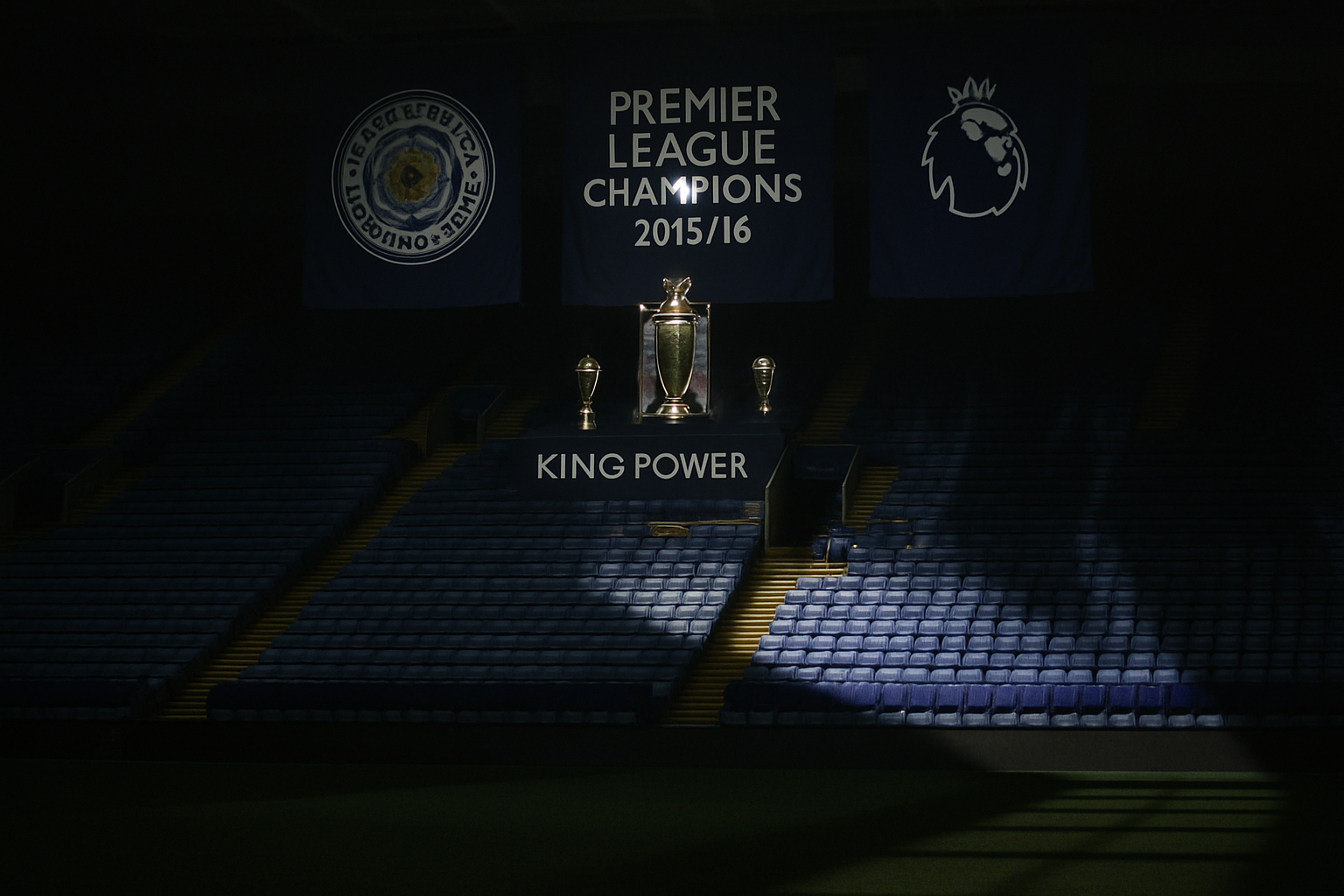
Leicester City, the fairytale Premier League champions who captivated the football world just ten years ago, have been relegated to the third tier of English football in a stunning fall from grace that represents one of the most dramatic collapses in modern sporting history.
The Foxes' relegation to League One was confirmed on Tuesday evening following their latest defeat, marking the end of a catastrophic decline that has seen the club plummet from the pinnacle of English football to its third tier within a decade. The club that once conquered Europe's elite with 5,000-1 odds now faces the reality of competing alongside teams they would never have dreamed of playing against during their golden era.
From Miracle to Nightmare
Leicester City's 2015-16 Premier League triumph stands as perhaps the greatest underdog story in sporting history. Led by manager Claudio Ranieri and featuring players like N'Golo Kanté, Riyad Mahrez, and the evergreen Jamie Vardy, the Foxes defied astronomical odds to claim their first top-flight title, stunning football powerhouses Manchester United, Arsenal, Chelsea, and Manchester City.
The achievement captured global imagination, transforming Leicester from a provincial English club into international icons. Their success represented hope for every underdog, proving that dreams could become reality in modern football's increasingly commercialized landscape.
"Ten years after they shocked the football world, Leicester have fallen to level three."
— Norwegian media reporting
However, the fairy tale has transformed into a nightmare of unprecedented proportions. The club's descent through the Championship and now into League One represents a collapse rarely witnessed in professional football, particularly for a team that tasted such extraordinary success so recently.
The Painful Descent
Leicester's decline has been gradual but relentless. Following their Premier League triumph, the club struggled to maintain the magic that had propelled them to glory. Key players departed, managerial changes disrupted continuity, and financial pressures mounted as the club attempted to sustain competitiveness at the highest level.
Their relegation from the Premier League was painful enough for supporters who had witnessed the greatest achievement in the club's history. However, the subsequent fall into League One represents an even more devastating blow, suggesting deeper structural problems that extend far beyond simple bad luck or tactical failures.
The Championship campaign that ended in relegation exposed fundamental weaknesses in squad depth, leadership, and institutional stability. Where once Leicester had shown remarkable unity and determination, recent seasons have been characterized by uncertainty, poor decision-making, and a loss of the collective spirit that made their Premier League triumph possible.
Fan Desperation and Hope
Norwegian supporters' groups have expressed desperation about the situation while clinging to hopes of recovery. One prominent fan leader has made an emotional plea to bring back Jamie Vardy, the striker who symbolized Leicester's golden era with his remarkable goalscoring exploits during the championship season.
Vardy, now in the twilight of his career, represents a connection to Leicester's glory days that many supporters believe could provide the inspiration needed for recovery. His potential return would offer more than just playing ability - it would symbolize the club's determination to reclaim its identity and fighting spirit.
"Get Vardy home!"
— Norwegian supporter leader's plea
The emotional attachment to figures from the championship-winning team highlights how deeply Leicester's fall has affected their global fanbase. For supporters who witnessed the impossible become possible in 2016, the current reality represents not just sporting disappointment but the loss of dreams and hope.
Financial and Structural Implications
Leicester's relegation to League One carries massive financial consequences that will impact the club for years to come. The loss of television revenue, commercial partnerships, and gate receipts will severely limit their ability to rebuild competitively. Players contracted at Championship and Premier League salary levels become unsustainable in the third tier, forcing difficult decisions about squad composition.
The club must now navigate the complex process of financial restructuring while maintaining enough quality to compete for promotion. This balancing act has proven challenging for many clubs experiencing similar falls, with some never recovering their former status.
Moreover, Leicester's collapse serves as a cautionary tale about the sustainability of rapid success in modern football. Their championship triumph, while inspiring, may have created unrealistic expectations and financial commitments that proved impossible to maintain without consistent high-level performance.
Historical Context and Precedent
While dramatic falls from grace occur periodically in football, Leicester's descent from Premier League champions to League One represents an almost unprecedented collapse in modern English football. Few clubs have experienced such a dramatic reversal of fortune in such a relatively short timeframe.
The situation mirrors other sporting collapses that shocked the world, but Leicester's fall seems particularly poignant given the universal goodwill and admiration their championship triumph generated. Their success transcended football, becoming a symbol of possibility and hope that resonated far beyond sport.
Historical precedents suggest that recovery from such depths requires not only substantial investment but also cultural and institutional renewal. Leicester must rebuild not just their squad but their entire organizational approach to competition and development.
The Road to Recovery
League One presents Leicester with the opportunity to rebuild from a solid foundation, but the challenge will be enormous. The club must adapt to a completely different competitive environment while managing the expectations of supporters who remember Premier League glory.
Success in the third tier requires different qualities from those that enabled Premier League triumph. League One demands consistency, physical resilience, and tactical adaptability across a long season against opponents motivated to test themselves against fallen giants.
The potential return of Jamie Vardy or other figures from the championship-winning team could provide valuable leadership and experience, but Leicester's recovery will ultimately depend on building sustainable systems for player development, tactical consistency, and institutional stability.
Legacy and Lessons
Despite their current predicament, Leicester City's 2015-16 achievement remains one of football's greatest stories. Their Premier League triumph proved that extraordinary things remain possible in modern sport, inspiring underdogs worldwide and demonstrating that determination, unity, and belief can overcome seemingly impossible odds.
Their subsequent fall, while devastating for supporters, offers important lessons about sustainability, institutional management, and the challenges of maintaining success in competitive sport. Leicester's story serves as both inspiration and warning - showing what's possible while highlighting the difficulties of sustaining excellence.
The club's journey from Premier League champions to League One represents the ultimate sporting roller coaster, embodying both the beautiful unpredictability and harsh realities of professional football. For Leicester City, the challenge now is to recapture the spirit that once made them champions and use it to climb back toward respectability.
As the football world reflects on this remarkable fall from grace, Leicester City's supporters and players must look forward with hope that their greatest chapter may not yet be written. The road back to prominence will be long and difficult, but if any club has proven that miracles can happen, it is Leicester City.