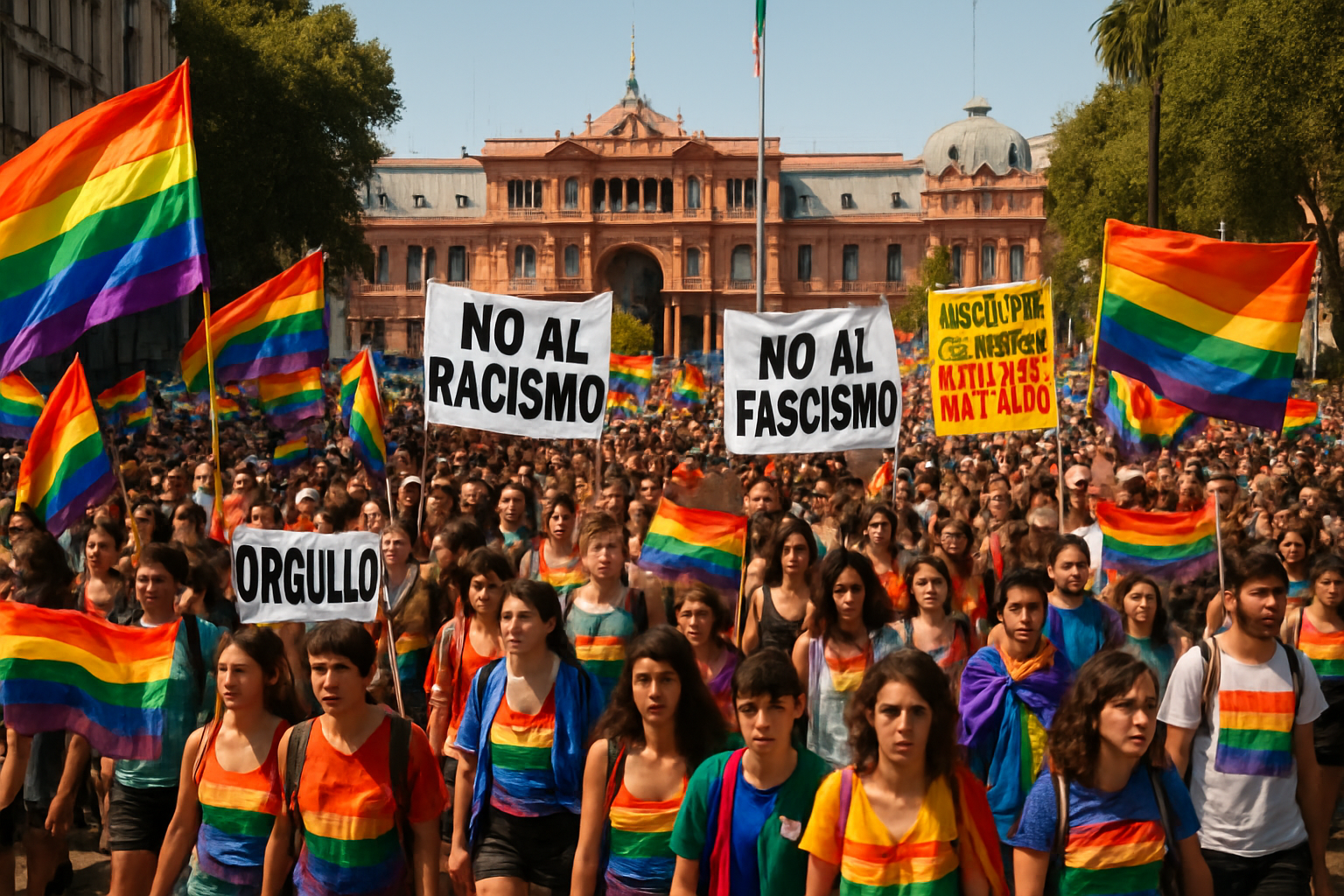
Thousands of LGBTI+ activists and supporters flooded the streets of Buenos Aires in a historic demonstration against racism and fascism, marching from the National Congress to Plaza de Mayo while delivering pointed messages against President Javier Milei's administration.
The massive mobilization on February 8, 2026, represented one of the largest LGBTI+ protests in Argentina's recent history, with demonstrators carrying colorful banners, rainbow flags, and provocative t-shirts bearing messages that directly challenged the current government's policies.
Powerful Messages Against Government Policies
Among the most striking aspects of the march were the bold slogans displayed by protesters, including the powerful message "Con VIH vivo, con Milei muero" ("With HIV I live, with Milei I die"). This slogan encapsulated the community's fears about potential cuts to healthcare services and social programs under the current administration's economic reform agenda.
The demonstration route, stretching from the iconic Congressional building to the historic Plaza de Mayo, carried deep symbolic significance. Plaza de Mayo has long served as Argentina's premier venue for political expression and social movements, from the Mothers of the Plaza de Mayo during the military dictatorship to contemporary protests against government policies.
Context of Rising Tensions
The march occurred amid a complex political environment in Argentina, where President Milei's libertarian government has been implementing sweeping economic reforms while facing opposition from various social sectors. The LGBTI+ community's demonstration reflects broader concerns about the protection of minority rights and social services under the new administration.
Argentina has historically been a regional leader in LGBTI+ rights, becoming the first Latin American country to legalize same-sex marriage in 2010 and implementing progressive gender identity laws. However, community leaders have expressed growing concerns about potential rollbacks of these achievements.
"This march represents our commitment to defending the rights we have fought so hard to achieve. We will not allow discrimination and hatred to take root in our society."
— LGBTI+ Community Leader
Broader Social Movement Context
The demonstration comes at a time when social movements across Latin America are mobilizing against what they perceive as rising authoritarianism and discrimination. Similar protests have been documented in other countries where LGBTI+ communities face increased pressure from conservative governments.
The march's focus on both racism and fascism reflects the intersectional nature of contemporary social movements, where LGBTI+ activists increasingly link their struggles with broader human rights and democratic causes. This approach demonstrates the community's understanding that their rights are interconnected with the overall health of democratic institutions.
Impact on Argentine Politics
The large-scale demonstration sends a clear message to the Milei administration about the mobilization capacity of civil society organizations. With thousands participating in the march, the LGBTI+ movement has demonstrated its ability to organize significant public opposition to policies it views as discriminatory or harmful.
Political analysts note that such demonstrations can influence public discourse and potentially affect government policy decisions, particularly regarding healthcare access, anti-discrimination measures, and social service funding that directly impacts LGBTI+ individuals.
International Solidarity
The Buenos Aires march resonated with LGBTI+ activists across Latin America and beyond, with social media messages of solidarity pouring in from organizations in neighboring countries. This international attention highlights Argentina's continued role as a bellwether for LGBTI+ rights in the region.
Human rights organizations have been closely monitoring developments in Argentina, particularly given the country's historically progressive stance on LGBTI+ issues and the potential implications of any policy reversals for the broader regional movement.
Looking Ahead
Community organizers have indicated that this demonstration may be the first of several planned actions designed to maintain pressure on the government regarding LGBTI+ rights and broader social issues. The success of the February 8 march, measured by both participation levels and media attention, suggests continued mobilization capacity within the movement.
As Argentina continues to navigate its political and economic transformation under the Milei administration, the LGBTI+ community's visible demonstration of solidarity and resistance marks a significant moment in the ongoing struggle for social justice and human rights in the country.