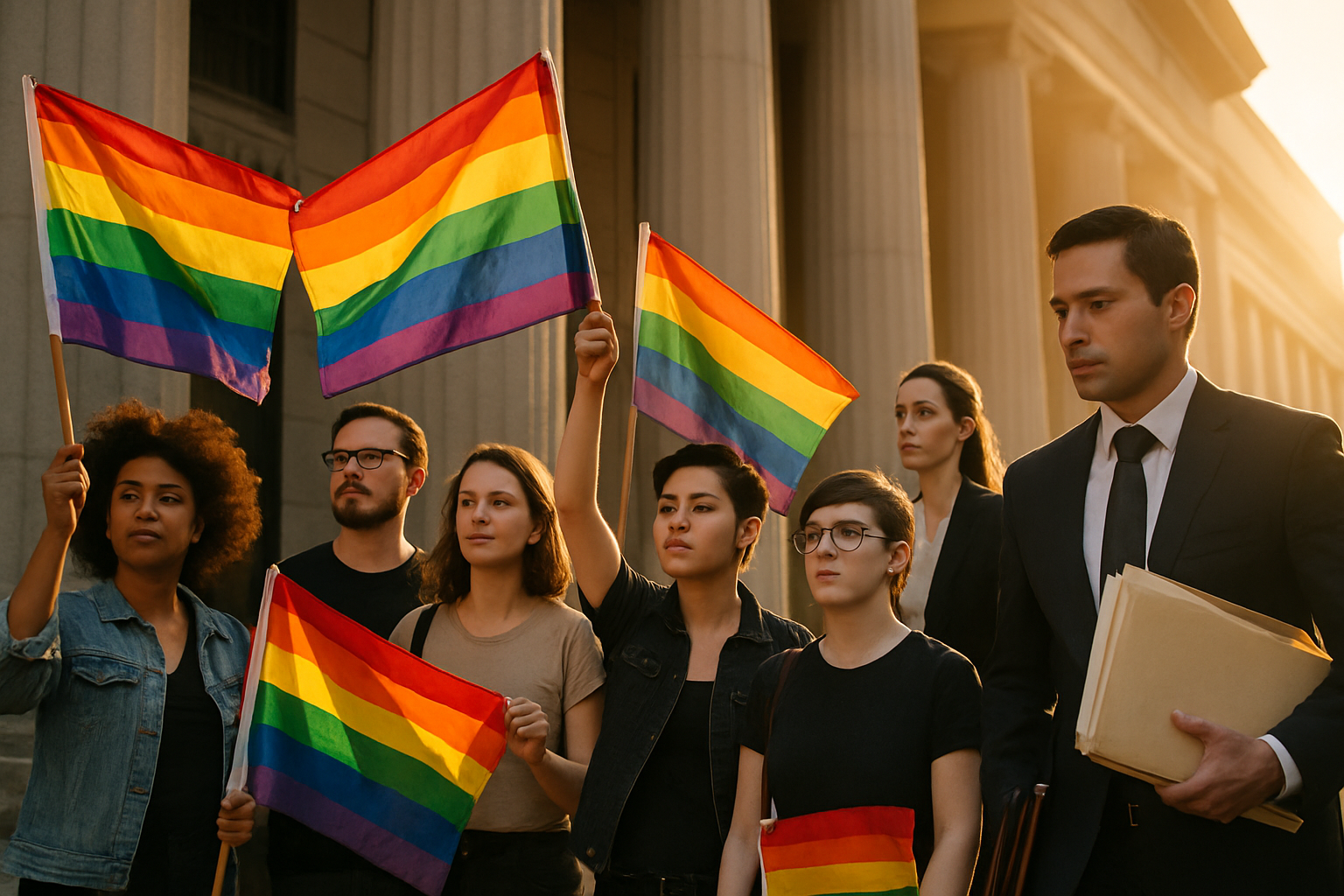
Two pivotal legal developments in February 2026 highlight the contrasting trajectories of LGBTQ+ rights across different continents, as Chile's Supreme Court ordered the national health fund to reconsider fertility assistance for same-sex couples while Ghana's political leadership signaled immediate passage of restrictive anti-LGBTQ legislation.
Chile Supreme Court Breaks New Ground in Reproductive Rights
In a landmark decision that could reshape LGBTQ+ family rights across Latin America, Chile's Supreme Court ruled that the National Health Fund (Fonasa) acted arbitrarily in denying access to assisted fertility programs for lesbian couples. The court's February 3, 2026 ruling specifically addressed the case of a lesbian maternal couple who had been excluded from fertility assistance programs available to heterosexual couples.
The Supreme Court's intervention represents a significant shift in Chile's approach to LGBTQ+ healthcare equality. According to court documents, the justices determined that Fonasa's denial violated principles of non-discrimination and equal access to healthcare services. This decision builds on Chile's progressive legal framework, which has gradually expanded LGBTQ+ rights over the past decade, including marriage equality legislation passed in 2022.
"This ruling challenges the fundamental assumptions about who deserves access to reproductive healthcare," said legal expert María González, who has followed Chilean LGBTQ+ rights cases. "It forces public health institutions to justify their policies beyond traditional family structures."
— María González, Chilean Legal Expert
The case originated when the lesbian couple applied for fertility assistance through Fonasa's established programs but were denied based on their sexual orientation and relationship status. The couple's legal challenge argued that such exclusion constituted discrimination prohibited under Chilean law and violated their constitutional rights to healthcare and family formation.
Ghana's Political Leadership Signals Restrictive Turn
In stark contrast to Chile's progressive ruling, Ghana's political landscape has taken a decidedly restrictive turn regarding LGBTQ+ rights. Majority Chief Whip Rockson-Nelson Dafeamekpor announced February 3, 2026, that a future John Mahama presidency would immediately assent to the controversial anti-LGBTQ bill once it reaches his desk.
Speaking on Joy News' PM Express, the South Dayi MP emphasized that the primary obstacle to the bill's implementation had not been parliamentary resistance but rather presidential assent. "The President refused to assent to it. That was what killed that bill," Dafeamekpor explained, referring to the previous administration's reluctance to sign the legislation.
The bill, which Dafeamekpor described as having been driven through Parliament with "passion" by himself and MP Sam George, successfully passed legislative hurdles but stalled at the executive level. The proposed legislation would criminalize LGBTQ+ activities and advocacy, potentially imposing severe penalties on individuals and organizations supporting LGBTQ+ rights.
Dafeamekpor argued that the bill's previous failure raised serious constitutional questions about the balance of power between legislative and executive branches. "The bill had effectively matured into an Act of Parliament and was only waiting for presidential assent," he stated, highlighting his belief that the legislation had completed its democratic journey through proper legislative channels.
Constitutional and Legal Implications
The divergent approaches in Chile and Ghana reflect broader global tensions over LGBTQ+ rights and legal recognition. Chile's Supreme Court ruling establishes important precedent for reproductive rights equality, potentially influencing similar cases across Latin America where same-sex couples face healthcare discrimination.
Legal scholars note that Chile's decision aligns with international human rights standards that emphasize non-discrimination in healthcare access. The ruling could force a comprehensive review of Fonasa's policies regarding LGBTQ+ individuals and couples, potentially extending beyond fertility assistance to other healthcare services.
Conversely, Ghana's political commitment to anti-LGBTQ legislation represents a significant setback for human rights advocates in West Africa. The bill's anticipated passage would place Ghana among the most restrictive countries globally regarding LGBTQ+ rights, potentially criminalizing not only individual conduct but also advocacy and support activities.
International Context and Regional Implications
These developments occur within a broader international context where LGBTQ+ rights face varying levels of acceptance and legal protection. Chile's progressive stance contrasts sharply with restrictive trends in several African nations, while also reflecting Latin America's generally evolving approach to LGBTQ+ equality.
Human rights organizations have closely monitored both situations, with international advocacy groups praising Chile's Supreme Court ruling while expressing concern about Ghana's legislative trajectory. The contrasting approaches highlight how national political cultures, religious influences, and constitutional frameworks shape LGBTQ+ rights recognition.
The Chilean ruling may influence similar cases in other Latin American countries where same-sex couples face healthcare discrimination. Argentina, Uruguay, and Colombia, which have established marriage equality, could see advocates citing the Chilean precedent in their own healthcare access cases.
Healthcare Equality and Family Formation
The Chilean Supreme Court's decision addresses fundamental questions about healthcare equality and family formation rights for LGBTQ+ individuals. Fertility assistance represents a crucial healthcare service that enables family planning and reproductive choices, areas traditionally restricted for same-sex couples in many jurisdictions.
The court's determination that Fonasa acted arbitrarily suggests that public health institutions cannot simply exclude LGBTQ+ individuals without clear, non-discriminatory justification. This principle could extend to other healthcare areas where LGBTQ+ individuals face barriers or differential treatment.
Medical professionals in Chile will now need to reconsider their policies regarding LGBTQ+ patients, particularly in areas related to reproductive healthcare, family planning, and assisted reproduction technologies. The ruling may require enhanced training for healthcare providers on LGBTQ+ inclusive care practices.
Political Dynamics and Future Prospects
Ghana's political commitment to anti-LGBTQ legislation reflects complex dynamics involving religious influence, traditional values, and international pressure. The bill's supporters argue it reflects Ghanaian cultural values and religious beliefs, while critics contend it violates fundamental human rights and could damage Ghana's international relationships.
The timing of Dafeamekpor's announcement suggests strategic political positioning ahead of anticipated electoral transitions. By clearly stating Mahama's position on the bill, the opposition party seeks to differentiate itself from the current administration's hesitancy while appealing to constituents who support restrictive LGBTQ+ policies.
International diplomatic implications remain significant, as Western nations and international organizations have increasingly linked foreign aid, trade relationships, and diplomatic cooperation to human rights standards, including LGBTQ+ protections.
Looking Forward: Divergent Paths
These February 2026 developments illustrate the increasingly divergent global trajectories of LGBTQ+ rights recognition. While some nations advance toward greater equality and inclusion, others move toward restriction and criminalization, creating a complex international landscape for LGBTQ+ advocacy and rights protection.
Chile's Supreme Court ruling establishes important precedent that could influence broader healthcare equality discussions throughout Latin America. The decision's impact will likely extend beyond fertility assistance to other healthcare areas where LGBTQ+ individuals face discrimination or exclusion.
Meanwhile, Ghana's anticipated legislative passage represents a concerning trend toward criminalization that could influence other African nations' approaches to LGBTQ+ rights. The international community's response to Ghana's legislation may shape broader diplomatic and economic relationships in the region.
As these contrasting legal developments unfold, they underscore the ongoing global struggle over LGBTQ+ rights recognition, highlighting how national contexts, political dynamics, and constitutional frameworks continue to shape the lived experiences of LGBTQ+ individuals worldwide.