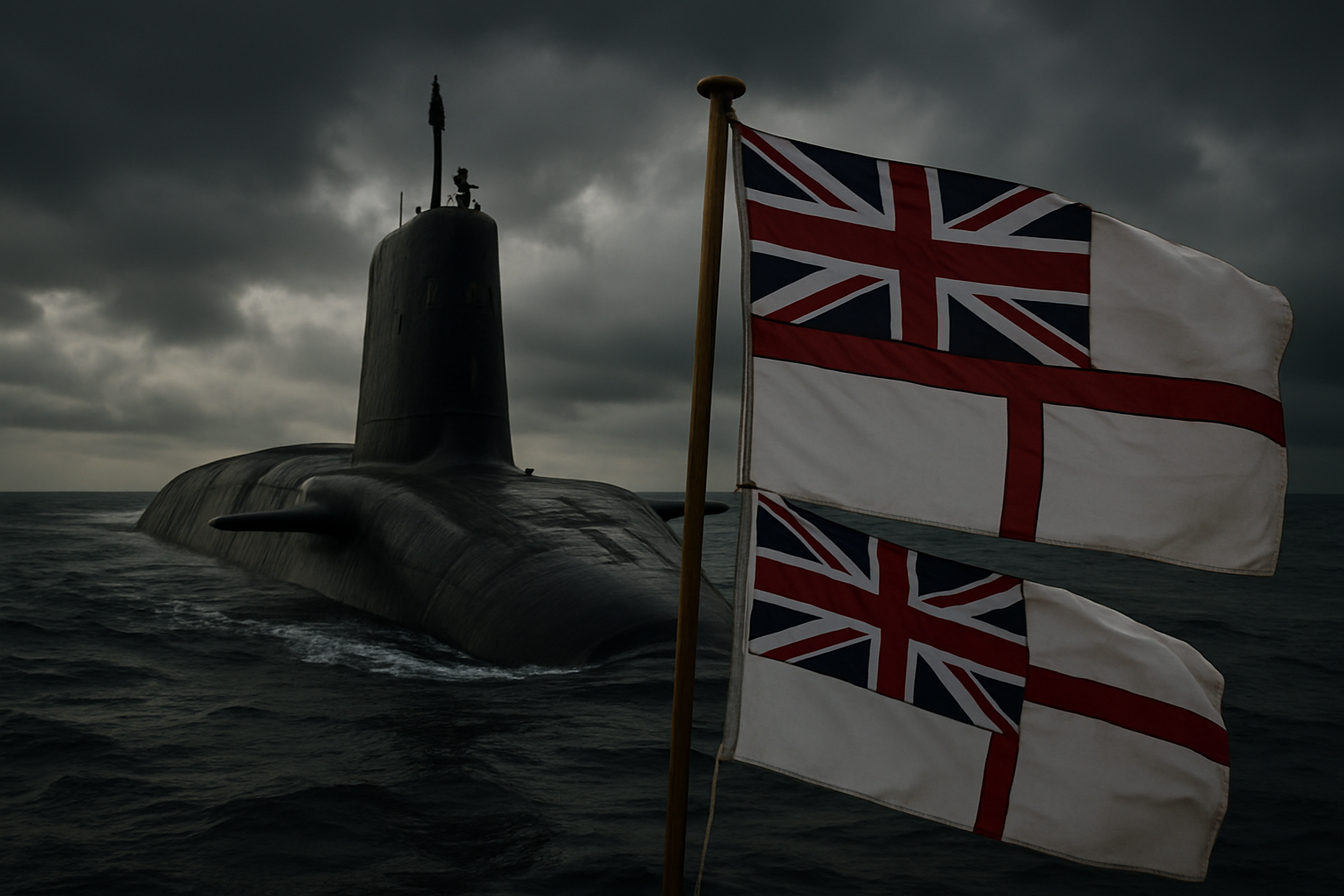
Liberal Democrat leader Sir Ed Davey is calling on the British government to develop a "fully independent British nuclear deterrent," marking a dramatic shift in party policy as concerns mount over the reliability of US security guarantees under the Trump administration.
Speaking at the Liberal Democrats spring conference on Sunday, Davey argued that Britain can no longer depend on American nuclear protection while Donald Trump serves as president, advocating for the UK to manufacture and maintain its nuclear weapons domestically. The proposal represents one of the most significant departures from traditional Liberal Democrat nuclear policy in decades.
Strategic Shift Amid Transatlantic Tensions
Davey's call comes against the backdrop of unprecedented strain in US-European relations, which reached a breaking point during the February 2026 Munich Security Conference. The gathering, themed "Era of Disruptive Politics: Challenges to International Order," saw European leaders openly question American commitment to alliance obligations for the first time since the Cold War.
The Liberal Democrat leader acknowledged that developing an independent nuclear capability would "cost billions" but argued the investment is necessary given the current geopolitical environment. His position reflects growing European anxiety about US reliability following controversial statements by Trump administration officials and a pattern of unilateral American decision-making on critical security issues.
Current UK nuclear deterrent relies heavily on US technology and support systems. Britain's Trident submarine-launched ballistic missiles are leased from the United States, and the warheads depend on American-designed components and maintenance expertise. This arrangement, established during the Cold War, has come under scrutiny as European leaders pursue greater strategic autonomy.
European Nuclear Renaissance
Davey's proposal aligns with broader European discussions about nuclear deterrence independence. In March 2026, French President Emmanuel Macron announced the first expansion of France's nuclear arsenal in decades, inviting eight European countries including Germany, Poland, and Sweden to participate in extended deterrence arrangements.
The French initiative represents the most significant shift in European nuclear policy since the Cold War's end. Germany's Chancellor Friedrich Merz confirmed direct nuclear cooperation talks with Macron, while Sweden dramatically reversed its nuclear-free stance by announcing willingness to host nuclear weapons during wartime.
"The current international security environment demands that European nations take greater responsibility for their own defense. We cannot continue to rely on arrangements that may no longer serve our national interests."
— Sir Ed Davey, Liberal Democrat Leader
Romania has also been invited to join French nuclear protection discussions, extending deterrence coverage to the Black Sea region. These developments mark the first serious European nuclear cooperation talks not primarily dependent on US guarantees since NATO's founding.
Brexit's Nuclear Implications
Post-Brexit Britain finds itself in a unique position within European defense discussions. While no longer an EU member, the UK remains central to Continental security through NATO and bilateral partnerships. However, Britain's absence from formal EU strategic autonomy initiatives has created new challenges for defense coordination.
The Liberal Democrats' nuclear independence proposal could position Britain as a bridge between American and European nuclear architectures. An independent British deterrent might enable deeper cooperation with French nuclear forces while maintaining transatlantic ties, though such arrangements would require complex diplomatic negotiations.
Technical challenges for British nuclear independence are substantial. Developing domestic warhead production capabilities, establishing independent missile systems, and creating maintenance infrastructure would require unprecedented peacetime defense investment. Current estimates suggest such a program could cost between £100-200 billion over two decades.
Alliance Credibility Crisis
The call for nuclear independence reflects deeper questions about NATO Article 5 commitment credibility. The February 2026 expiration of the New START Treaty between the US and Russia created the first nuclear arms control vacuum in over 50 years, raising concerns about arms race dynamics and alliance stability.
UN Secretary-General António Guterres warned of a "grave turning point" with nuclear risks at their "highest level in decades." This environment has prompted European leaders to consider alternative security arrangements, including expanded French nuclear coverage and potential British independence.
The ongoing Ukraine conflict has further highlighted alliance vulnerabilities. Despite unprecedented European financial support exceeding €90 billion, territorial disputes remain unresolved as diplomatic talks have been repeatedly postponed due to international crises.
Political and Financial Challenges
Davey's proposal faces significant domestic political obstacles. The Liberal Democrats have historically supported nuclear disarmament, making the policy reversal particularly striking. Traditional party supporters may resist the massive financial commitment required for nuclear independence.
Parliamentary approval would be necessary for such a program, requiring cross-party consensus unlikely in the current political environment. The Conservative Party's position on nuclear independence remains unclear, while Labour has traditionally supported multilateral disarmament approaches.
Economic implications extend beyond direct program costs. Nuclear independence would require substantial investments in scientific research, industrial capacity, and specialized workforce development. The timeline for achieving operational independence could extend well into the 2040s.
Strategic Autonomy or Alliance Fragmentation
The Liberal Democrat proposal embodies the broader European debate between strategic autonomy and alliance solidarity. Success in developing independent nuclear capabilities could strengthen Britain's global influence and provide insurance against alliance breakdown. However, failure might accelerate Western fragmentation during a critical period of international instability.
Continental European leaders are watching British nuclear discussions closely. German officials have emphasized that European strategic autonomy should develop "within alliance frameworks" rather than as alternatives to NATO. French nuclear expansion explicitly maintains this balance by preserving existing alliance structures while adding European capabilities.
The template established by UK nuclear independence efforts could influence other medium powers facing similar alliance reliability concerns. Australia, South Korea, and Japan all maintain alliance relationships while developing indigenous defense capabilities, though none currently pursue nuclear independence.
Implementation Timeline and Feasibility
Defense analysts suggest that British nuclear independence would require at least 15-20 years to achieve, assuming immediate program initiation. Initial phases would focus on warhead design and production capabilities, followed by delivery system development and infrastructure construction.
The UK maintains significant nuclear expertise through its civilian nuclear program and existing defense research facilities. However, weaponization capabilities would need to be developed from scratch, requiring extensive international technology acquisition or domestic innovation programs.
Interim arrangements might involve expanded cooperation with France while building independent capabilities. Such partnerships could reduce costs and development timelines while maintaining some level of nuclear autonomy from US systems.
Global Implications
British nuclear independence would fundamentally alter global nuclear governance structures. The international community has successfully limited nuclear weapons states to nine countries, with the UK potentially becoming the first to transition from alliance-dependent to fully independent nuclear status.
Non-proliferation implications could extend beyond Britain. If medium powers pursue nuclear independence due to alliance reliability concerns, the broader non-proliferation regime might face unprecedented challenges. International law frameworks would need to adapt to accommodate changing alliance structures and sovereignty demands.
The precedent could influence regional security architectures worldwide. Middle Eastern, Asian, and other regional powers might cite British nuclear independence as justification for their own programs, potentially undermining decades of non-proliferation efforts.
Opposition and Support
Critics argue that nuclear independence would be financially ruinous and strategically counterproductive. Peace organizations have condemned the Liberal Democrat proposal as abandoning the party's disarmament principles. Some defense experts suggest that improving alliance relationships would be more cost-effective than independent development.
Supporters contend that changing geopolitical realities require adapted defense strategies. They point to successful middle power nuclear programs in France and Israel as evidence that independent deterrence is achievable for countries with sufficient resources and political will.
Public opinion polling on nuclear independence remains limited, though surveys suggest growing British concern about alliance reliability. Support for increased defense spending has risen significantly since the Ukraine conflict began, potentially creating political space for ambitious nuclear programs.
Sir Ed Davey's call for British nuclear independence reflects profound changes in international security architecture. Whether the proposal advances beyond political rhetoric will depend on evolving transatlantic relations and European strategic autonomy developments. The stakes extend far beyond British defense policy, potentially reshaping global nuclear governance and alliance structures for decades to come.