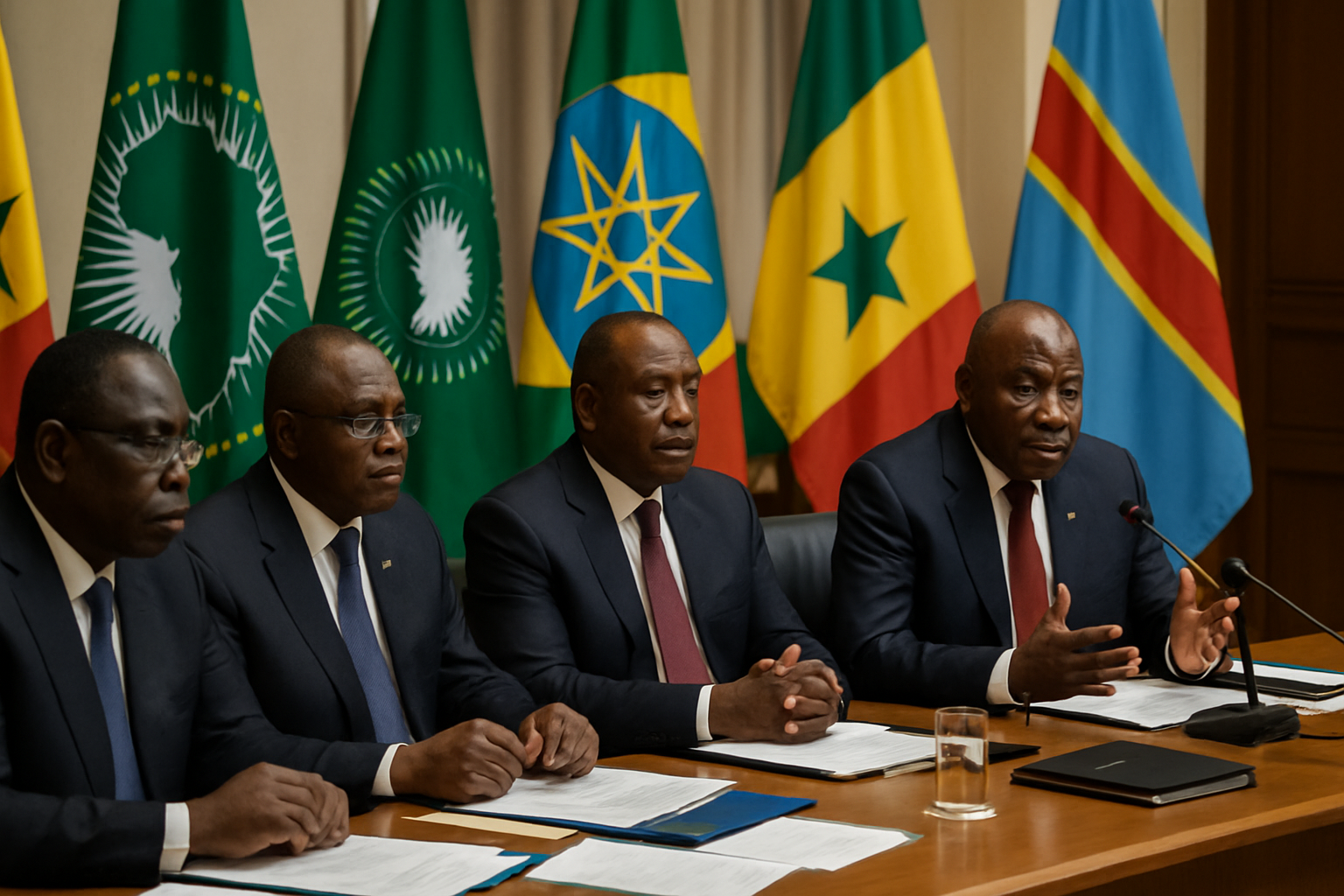
Libya's two rival legislative bodies have approved the country's first unified state budget in more than a decade, marking a historic breakthrough in political reconciliation, while Ghana implements significant austerity measures including the elimination of fuel allowances for government ministers amid rising global energy costs.
The groundbreaking agreement, announced by Libya's central bank on Saturday, April 12, 2026, represents the most significant step toward national unity since the 2011 revolution that divided the country between competing governments in the east and west. According to multiple sources, the US-mediated agreement unifies public spending across the war-torn nation for the first time since 2013.
Libya's Path to Fiscal Unity
The unified budget agreement comes after years of parallel financial systems that have hampered Libya's ability to rebuild its infrastructure and provide basic services to its 6.8 million citizens. The central bank's statement emphasized that both the eastern and western legislative bodies formally endorsed the framework, creating a single fiscal structure for the oil-rich nation.
This development builds on previous diplomatic efforts and represents a crucial evolution from the fractured governance that has characterized Libya since the fall of Muammar Gaddafi's regime. The agreement is particularly significant given Libya's role as a major oil producer, with unified budget management potentially stabilizing energy revenues that have been divided between competing authorities.
"This unified budget represents more than financial coordination—it's the foundation for rebuilding a united Libya that serves all its citizens equally."
— Senior Libyan Official
Ghana's Ministerial Austerity Response
Meanwhile, in West Africa, Ghanaian President John Dramani Mahama announced sweeping austerity measures on Thursday, April 9, 2026, designed to reduce government expenditure and cushion citizens from escalating fuel costs linked to ongoing Middle Eastern conflicts. The centerpiece of these measures is the immediate elimination of fuel allowances for all government ministers.
The announcement, covered extensively by TRT Afrika and other regional media outlets, comes as Ghana—like many African nations—grapples with the economic spillover effects from geopolitical tensions that have disrupted global energy markets. The decision reflects Mahama's commitment to fiscal responsibility while protecting ordinary Ghanaians from bearing the full burden of international economic shocks.
According to government sources, the fuel allowance cuts are part of a broader package aimed at demonstrating solidarity with citizens facing rising living costs. The measures signal Ghana's proactive approach to economic management during a period of unprecedented global energy volatility.
Regional Context and Economic Pressures
Both developments occur within the broader context of African economic resilience and political maturation documented throughout 2026. Libya's unification efforts align with continental integration initiatives under the African Continental Free Trade Agreement (AfCFTA), while Ghana's fiscal discipline reflects sophisticated economic management that has characterized President Mahama's approach to governance.
The timing is particularly significant given the global energy crisis triggered by conflicts in the Middle East, which have disrupted traditional energy supply chains and forced African governments to implement adaptive fiscal strategies. Libya's unified budget could potentially stabilize one of Africa's largest oil-producing economies, while Ghana's austerity measures demonstrate responsible governance during economic uncertainty.
These political developments also reflect broader patterns of African political maturation, where domestic reforms and international cooperation proceed simultaneously. From Ghana's championing of UN resolutions on historical justice to Libya's gradual movement toward political reconciliation, African leaders are demonstrating sophisticated diplomatic and economic management capabilities.
Implications for Continental Development
Libya's budget unification has significant implications for North African regional stability and Africa's energy sector. A unified fiscal framework could enable more effective infrastructure investment, improved service delivery, and enhanced capacity for the country to contribute to continental economic integration initiatives.
For Ghana, the ministerial austerity measures reflect the kind of responsible governance that has positioned the country as a West African leader in democratic accountability and fiscal management. The fuel allowance elimination, while politically challenging, demonstrates executive leadership willing to share economic sacrifices with citizens.
Both developments contribute to documented patterns of African political evolution, where traditional post-colonial governance challenges are being addressed through innovative domestic solutions combined with strategic international partnerships. Libya's US-mediated unification and Ghana's proactive economic management exemplify this sophisticated approach to 21st-century governance.
Looking Forward: Sustainability and Implementation
The success of Libya's unified budget will depend on sustained political commitment from both eastern and western authorities, transparent implementation mechanisms, and the ability to maintain unity amid ongoing security challenges. International observers view this development as potentially transformative for North African stability and Libya's capacity to contribute to continental economic growth.
Ghana's austerity measures, while necessary in the current economic climate, will require careful implementation to ensure they achieve their goals of fiscal responsibility without undermining essential government functions. The country's strong democratic institutions and transparent governance frameworks provide a solid foundation for effective policy implementation.
These developments represent more than isolated national political events—they demonstrate Africa's evolving capacity for sophisticated economic management and diplomatic problem-solving. As documented throughout 2026, African nations are increasingly demonstrating the institutional maturity and political leadership necessary to address complex contemporary challenges while maintaining beneficial international cooperation.
The convergence of Libya's political reconciliation and Ghana's economic discipline illustrates the diverse pathways through which African countries are navigating current global uncertainties while building foundations for long-term stability and prosperity.