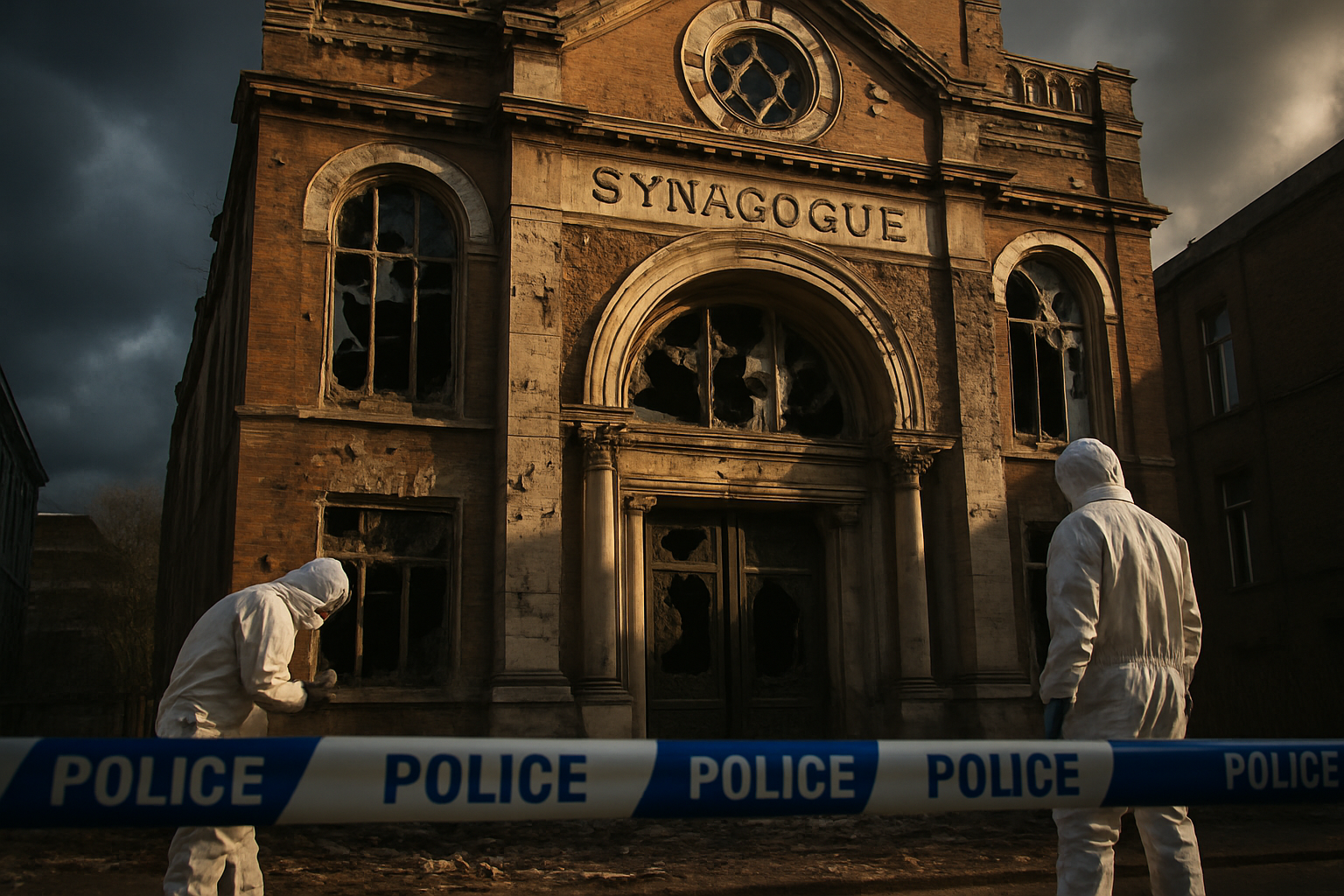
An explosion outside a synagogue in Liège, Belgium, in the early hours of Monday morning has prompted a counter-terrorism investigation as authorities examine whether the incident constitutes an antisemitic attack targeting the Jewish community.
The blast occurred around 4:00 AM local time at the synagogue on Rue Saint-Georges, causing significant material damage to the building's facade and breaking windows in nearby structures. No injuries were reported as the building was unoccupied at the time of the incident, according to local police reports.
Liège Mayor Willy Demeyer immediately condemned the explosion as a "violent act of antisemitism" that "contradicts the Liège tradition of respect for others." In a statement following the incident, Demeyer emphasized that "there can be no question of importing external conflicts" into the city, referencing broader Middle Eastern tensions that have contributed to rising antisemitic incidents across Europe.
Counter-Terrorism Investigation Launched
Belgian counter-terrorism police have taken charge of the investigation, treating the incident with the highest priority given its potential classification as a hate crime. Forensic teams were immediately dispatched to examine the blast site, collecting evidence and reviewing security camera footage from the surrounding area.
The synagogue, which also serves as a Jewish community museum, suffered extensive damage to its exterior structure. Police established a security perimeter around the building while investigators conducted witness interviews and analyzed the blast pattern to determine the type and origin of the explosive device used.
Local authorities have not yet released details about the specific cause of the explosion or whether it was the result of an improvised explosive device. The investigation remains ongoing as specialists work to establish whether this was a deliberate criminal act targeting the Jewish community or an accidental incident.
European Context of Rising Antisemitism
The Liège synagogue explosion occurs against a backdrop of escalating antisemitic incidents across Europe and globally. Recent months have witnessed a disturbing pattern of attacks on Jewish institutions and communities, raising serious concerns about the security of religious minorities.
In December 2025, a devastating antisemitic attack at the Bondi Beach Hanukkah festival in Australia resulted in 15 deaths, marking one of the most deadly attacks on Jewish civilians in recent years. This was followed by additional incidents including a February 2026 ramming attack at a Brisbane synagogue, where a 32-year-old man used a Toyota Hilux to crash through the building's gates.
Ireland's Jewish Council recently documented 143 antisemitic incidents over a six-month period from September 2025 to February 2026, calling for a "rapid development of dedicated national plan to counter growing antisemitism." The comprehensive report highlighted verbal harassment, online abuse, physical confrontations, and vandalism targeting Jewish properties across multiple counties.
"This represents one of the most concerning periods for Jewish communities across Europe in recent memory."
— Community Security Analysis
Belgium's Response to Antisemitic Concerns
The incident comes at a particularly sensitive time for Belgium, which faced diplomatic tensions with the United States in February 2026 over allegations of antisemitic persecution. Belgian Foreign Minister Maxime Prévot summoned US Ambassador Bill White over social media posts alleging antisemitic persecution of Jewish Belgians, calling such claims "dangerous disinformation that undermines the real fight against hatred."
Belgian authorities have consistently emphasized their commitment to protecting all religious communities within the country. Following the Liège explosion, enhanced security measures were immediately implemented at Jewish institutions throughout Belgium, demonstrating the government's proactive approach to community safety.
The country hosts both NATO headquarters and major EU facilities, making religious tolerance and social stability crucial not only for domestic harmony but also for international institutional operations. Belgium's response to this incident will be closely watched as a test of European capabilities to protect religious minorities.
Community Impact and Response
Local Jewish community leaders expressed serious concerns about the security implications of the attack while praising the swift response from law enforcement agencies. The synagogue serves not only as a place of worship but also as a cultural center and museum, making it an important hub for Jewish life in the Liège region.
Interfaith community leaders quickly rallied to offer support, with Christian and Muslim religious figures condemning the attack and calling for unity in the face of religiously motivated violence. Mental health services have been made available to community members affected by the incident.
The explosion has prompted renewed discussions about the vulnerability of religious institutions to targeted attacks, particularly those involving vehicle ramming or explosive devices. Security experts note that the early morning timing suggests careful planning designed to avoid casualties while maximizing psychological impact on the community.
International Pattern of Attacks
The Liège incident forms part of a broader international pattern of attacks targeting Jewish communities and institutions. Security analysts have noted similarities in methodology across recent incidents, including the use of vehicles as weapons and explosive devices placed at religious sites during non-operational hours.
In Australia, authorities have documented a significant escalation in antisemitic incidents, leading to the permanent establishment of Operation Shelter, an anti-hate crime unit, and the deployment of more than 250 specialist armed response officers to protect vulnerable communities.
The pattern extends beyond physical attacks to include online harassment, property vandalism, and verbal abuse targeting individuals displaying Jewish religious symbols. This comprehensive approach to intimidation has created a climate of fear within Jewish communities across multiple countries.
Investigation Continues
Belgian authorities have pledged transparency in their investigation while maintaining operational security around specific details that could compromise the inquiry. The counter-terrorism classification indicates the seriousness with which officials are treating the incident, regardless of whether it ultimately meets the legal threshold for terrorism charges.
International cooperation protocols have been activated, with Belgian investigators consulting with counterparts in other countries that have experienced similar attacks. This collaborative approach aims to identify potential connections between incidents and develop more effective prevention strategies.
The investigation is expected to examine not only the immediate circumstances of the explosion but also any broader network connections or ideological motivations that may have contributed to the attack. Results are anticipated within the coming weeks as forensic analysis continues.
As the investigation proceeds, the incident serves as a stark reminder of the ongoing challenges facing religious minorities in Europe and the critical importance of maintaining vigilance against all forms of religiously motivated violence. The response from Belgian authorities and the international community will likely influence how similar incidents are addressed in the future, making this case a significant test of Europe's commitment to protecting religious freedom and community safety.