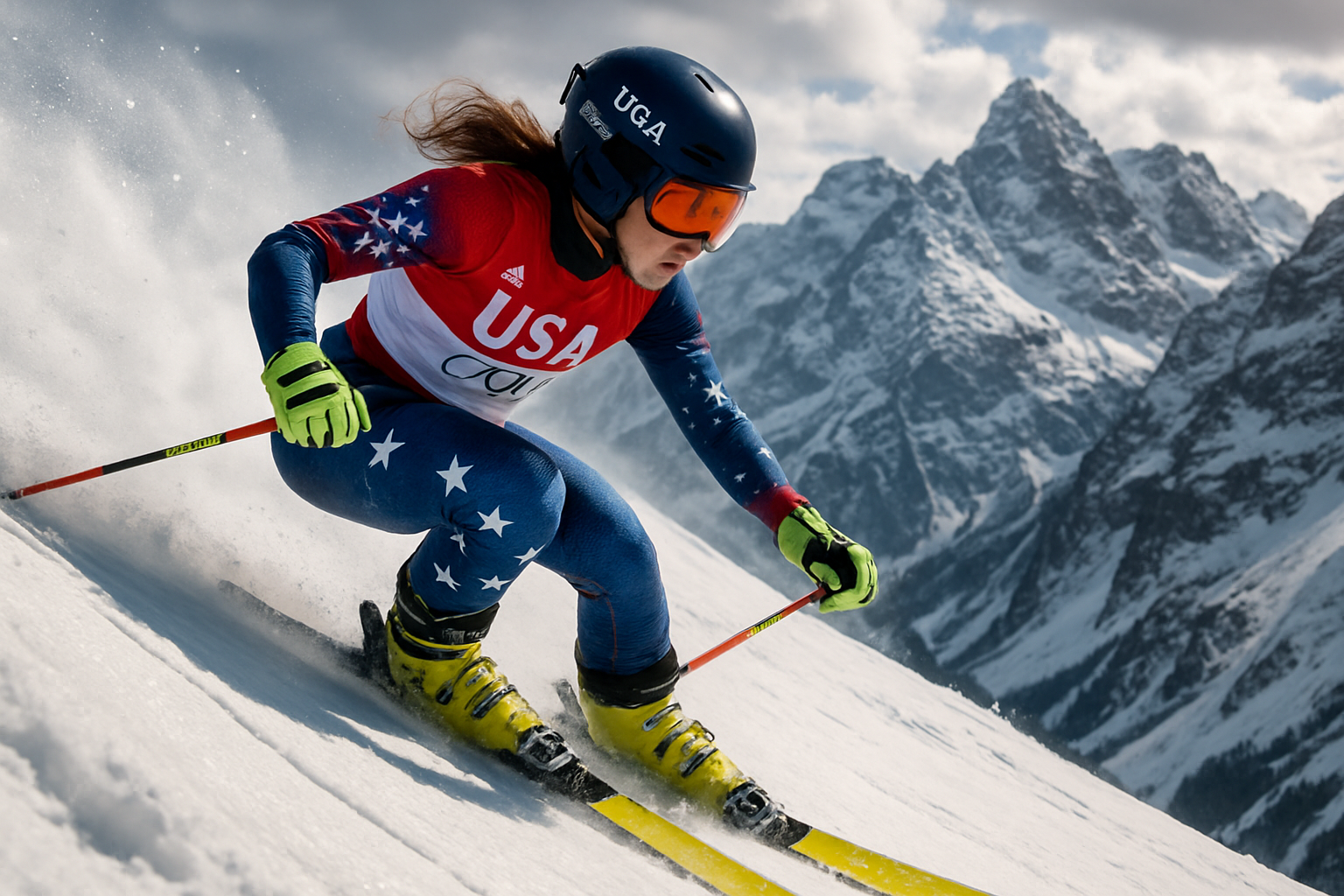
In an act of defiance that borders on the miraculous, 41-year-old American alpine skiing legend Lindsey Vonn will compete for Olympic gold on Sunday at 5:30 a.m. ET on the treacherous Olympia delle Tofane downhill course in Cortina d'Ampezzo, just seven days after completely rupturing the ACL in her left knee.
The woman who has already achieved everything possible in alpine skiing—82 World Cup victories, four overall World Cup titles, and three Olympic medals including downhill gold in Vancouver 2010—now stands poised to write the most extraordinary final chapter in sporting history. Racing with a ruptured ACL on one of the world's most dangerous downhill courses represents not just an unprecedented risk, but a testament to the indomitable human spirit that defines Olympic greatness.
The Crash That Almost Ended Everything
On January 30, 2026, at the World Cup event in Crans-Montana, Switzerland, disaster struck. Vonn crashed during what should have been a routine training run, suffering a complete rupture of the ACL in her left knee—an injury that would end most athletes' careers, let alone their Olympic dreams just days before competition.
Yet at a February 3 press conference in Cortina d'Ampezzo, with the determination that has defined her legendary career, Vonn declared her intention to compete in the downhill event on February 8. After three days of intensive physical therapy and medical consultations, she returned to skiing on Tuesday, February 3, proving that reports of her Olympic demise had been greatly exaggerated.
"I have already won, whatever happens on Sunday."
— Lindsey Vonn, Alpine Skiing Legend
A Career Already Written in Gold
Vonn's remarkable comeback began after seven years of retirement since 2019, during which she had achieved seven podium finishes in World Cup competition this season. Her career achievements read like a pantheon of alpine skiing excellence: 82 World Cup victories placing her among the greatest of all time, four overall World Cup titles demonstrating sustained dominance, and three Olympic medals spanning nearly a decade of elite competition.
Her Olympic medal collection includes gold in downhill at Vancouver 2010, bronze in super-G at the same Games, and bronze in downhill at PyeongChang 2018. Now, at age 41, she has the opportunity to become one of the oldest Olympic alpine ski medalists in history—if she can navigate the Tofana course with a completely ruptured ACL.
Return from Retirement
Vonn's comeback to competitive skiing after seven years of retirement was already being hailed as one of sport's great second acts. This season, she had demonstrated that age was merely a number, securing seven podium finishes on the World Cup circuit and proving she could still compete with athletes half her age.
The decision to return to Olympic competition represented more than personal ambition—it embodied the relentless pursuit of excellence that has characterized her entire career. But nothing could have prepared the skiing world for the drama that would unfold in the final weeks before Milano-Cortina 2026.
Racing on the Edge of Impossibility
The Olympia delle Tofane downhill course in Cortina d'Ampezzo is not merely challenging—it is legendary for its technical difficulty and unforgiving nature. Racing down this course with a ruptured ACL presents risks that extend far beyond competitive disappointment. The potential for catastrophic injury looms over every turn, every jump, every high-speed section where split-second timing can mean the difference between triumph and tragedy.
Medical experts worldwide have expressed amazement at Vonn's determination to compete under such circumstances. The ACL provides crucial knee stability, particularly during the dynamic movements required in downhill skiing. Racing without this critical ligament intact requires not just physical courage, but a mental fortitude that separates truly legendary athletes from merely talented ones.
A Story Larger Than Sport
Vonn's decision to race with a ruptured ACL transcends athletic competition and enters the realm of human inspiration. At Milano-Cortina 2026, already being hailed as the most geographically dispersed Winter Olympics in history, her story has captured global attention as the ultimate test of Olympic determination.
The Games themselves represent a return to the Alps after 20 years, spanning seven venues across 400 kilometers from Milan to Cortina d'Ampezzo. Against this backdrop of Olympic innovation and tradition, Vonn's individual journey epitomizes the Olympic spirit of pushing human boundaries beyond what seems possible.
International Media Attention
International media outlets have extensively covered Vonn's remarkable story, with coverage spanning from Canada to Singapore, highlighting the global fascination with her unprecedented attempt. The narrative has resonated across cultures because it speaks to universal themes of determination, courage, and the refusal to surrender in the face of overwhelming odds.
The Psychology of Athletic Greatness
What drives a 41-year-old athlete with nothing left to prove to risk everything on one final run? Vonn's decision illuminates the psychology that separates Olympic champions from recreational competitors. For true champions, the mountain calls not because it offers easy victory, but because it presents the ultimate test of everything they have learned, endured, and overcome.
Her comment that she has "already won, whatever happens on Sunday" reveals a profound understanding that victory extends beyond medals and podium finishes. By choosing to race under impossible circumstances, she has already achieved something more valuable than gold—she has demonstrated that the human spirit knows no limits when faced with seemingly insurmountable challenges.
Legacy Beyond Competition
Regardless of Sunday's outcome, Vonn's decision to compete with a ruptured ACL will be remembered as one of the most courageous acts in Olympic history. Her legacy extends far beyond her 82 World Cup victories and three Olympic medals. She has shown that true champions are defined not by their physical capabilities alone, but by their unwillingness to accept defeat when others would consider surrender the only rational option.
At Milano-Cortina 2026, where innovation meets tradition across the dispersed venues of northern Italy, Lindsey Vonn's story represents the purest expression of Olympic values. Her journey from the crash in Crans-Montana to the starting gate at Cortina d'Ampezzo embodies the Olympic motto "Citius, Altius, Fortius"—Faster, Higher, Stronger—in its most profound interpretation.
Sunday's Defining Moment
When Vonn launches herself down the Olympia delle Tofane course on Sunday morning, she will carry more than just the hopes of American skiing. She will embody every athlete who has ever faced impossible odds, every competitor who has been told their time has passed, and every human being who has refused to let physical limitations define their ultimate potential.
In that moment, whether she crosses the finish line first or last, Lindsey Vonn will have achieved something far more valuable than Olympic gold—she will have demonstrated that the human spirit, when truly tested, recognizes no limits. That lesson will echo long after the Milano-Cortina 2026 Winter Olympics become history, inspiring future generations of athletes to push beyond what medical textbooks and conventional wisdom declare possible.
The unstoppable Lindsey Vonn has already secured her place in sports immortality. Sunday's race will simply confirm what we already know—that champions are not made by their victories alone, but by their willingness to attempt the impossible when everything is on the line.