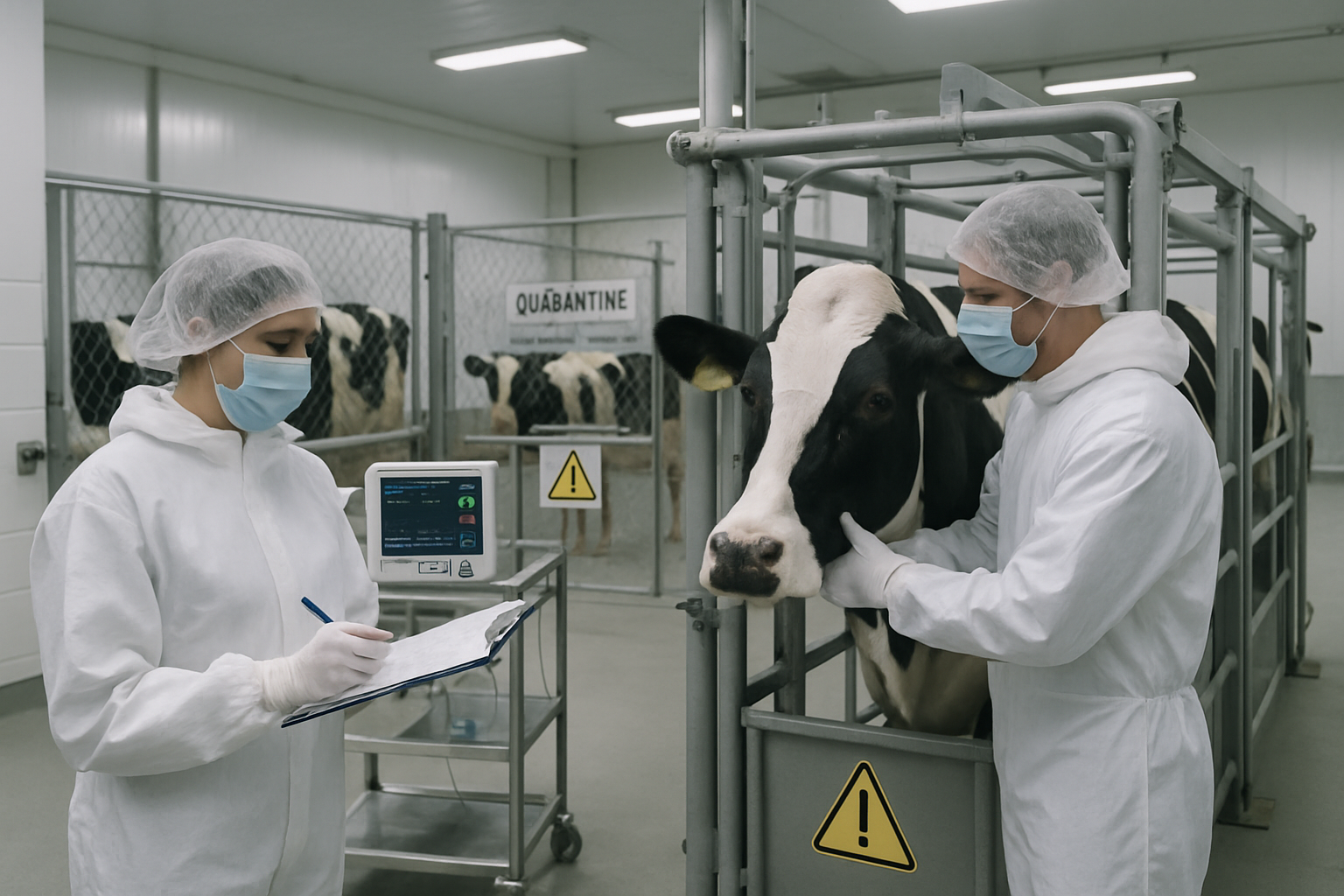
A mounting global crisis is unfolding across agricultural sectors worldwide as disease outbreaks devastate livestock populations, with Uganda's Ntungamo District grappling with a rapidly spreading foot-and-mouth disease outbreak while France braces for the potential arrival of African swine fever—both highlighting the urgent vulnerabilities threatening international food security.
The current agricultural emergency spans multiple continents and disease vectors, creating what experts describe as one of the most severe challenges to global food systems in recent memory. From East Africa to Western Europe, veterinary authorities are implementing unprecedented biosecurity measures as climate change and international trade patterns create new pathways for disease transmission.
Uganda's Foot-and-Mouth Crisis Paralyzes Markets
In Uganda's Ntungamo District, a severe foot-and-mouth disease (FMD) outbreak has effectively shut down livestock markets, creating economic devastation for farmers and highlighting tensions between veterinary authorities and communities resistant to vaccination programs. The disease has spread rapidly across the district, forcing authorities to implement strict quarantine measures that have brought local agricultural commerce to a standstill.
The outbreak has exposed deep-seated challenges in rural disease management, with farmers expressing skepticism about vaccination programs while veterinary officials struggle to contain the spread. Revenue collection in affected areas has plummeted as livestock trading—a cornerstone of the local economy—remains suspended indefinitely.
"The situation demonstrates the critical importance of community cooperation in disease control efforts. When farmers resist vaccination, the entire regional food system becomes vulnerable."
— Regional Veterinary Expert
The economic implications extend far beyond immediate livestock losses. Rural communities that depend on cattle trading for their livelihoods face mounting financial pressure, while the broader regional food supply chain confronts disruptions that could affect protein availability across East Africa.
France Prepares for African Swine Fever Threat
Simultaneously, French agricultural authorities are intensifying preparations for the potential arrival of African swine fever (ASF), a disease that poses catastrophic risks to both wild and domestic pig populations. While harmless to humans and other animals, ASF proves extremely lethal to all swine species, with mortality rates approaching 100% in affected populations.
The French government and pork industry stakeholders are treating the potential introduction with utmost seriousness, implementing comprehensive surveillance systems and developing rapid response protocols. The disease's reputation for devastating entire pig populations has prompted authorities to establish prevention measures that surpass those implemented for many human health threats.
France's agricultural sector recognizes that an ASF outbreak could cripple the nation's substantial pork industry, affecting everything from small family farms to major commercial operations. The disease's ability to spread through multiple transmission routes—including contaminated feed, wild boar populations, and farm equipment—makes containment extremely challenging once established.
Global Pattern of Agricultural Vulnerability
These concurrent crises reflect broader patterns of agricultural vulnerability that have intensified throughout 2026. Historical context reveals an escalating series of food safety and livestock health emergencies that have tested global agricultural resilience to unprecedented levels.
Cyprus recently concluded a major foot-and-mouth disease outbreak that required the culling of over 14,000 animals, while multiple European countries have faced recurring avian influenza outbreaks affecting poultry populations. The Netherlands confirmed bird flu cases affecting 23,000 birds, while Saudi Arabia imposed comprehensive poultry import bans affecting 40 countries due to avian influenza concerns.
Climate Change Amplifies Disease Risks
The current crisis unfolds against a backdrop of unprecedented climate conditions, with January 2026 marking the 18th consecutive month of global temperatures exceeding 1.5°C above pre-industrial levels. These sustained temperature increases create optimal conditions for pathogen development and transmission while disrupting traditional disease management strategies.
Warmer temperatures facilitate disease spread by extending the survival periods of many pathogens outside host animals, while changing precipitation patterns affect vector populations and create new transmission pathways. Traditional seasonal disease patterns have become increasingly unpredictable, forcing veterinary systems to adapt rapidly to evolving threats.
Economic and Social Implications
The mounting agricultural crises carry profound economic implications that extend far beyond farming communities. Livestock diseases affect protein availability, international trade relationships, and rural economic stability across affected regions.
Countries maintaining disease-free status face constant pressure to protect their agricultural reputation, as outbreaks can trigger immediate trade restrictions and export market losses. The economic calculations are stark: prevention investments, while substantial, pale compared to the costs of major disease outbreaks that can require mass culling operations and years of market recovery.
Rural communities bear the most immediate impact, with farmers facing potential livestock losses, quarantine restrictions, and market access limitations. The social dimension proves equally challenging, as disease control measures often conflict with traditional farming practices and community autonomy expectations.
International Cooperation Challenges
Addressing these multifaceted agricultural challenges requires unprecedented international cooperation, yet current global coordination mechanisms face significant strain. Disease outbreaks cross national boundaries rapidly, while trade patterns and climate conditions create shared vulnerabilities that individual countries cannot address independently.
Successful disease management increasingly depends on coordinated surveillance systems, shared early warning mechanisms, and harmonized response protocols. However, varying national capacities, competing economic interests, and different regulatory approaches complicate efforts to establish comprehensive international frameworks.
Technological Solutions and Traditional Wisdom
The current crisis has accelerated adoption of technological solutions ranging from enhanced diagnostic capabilities to improved vaccine delivery systems. Digital monitoring systems enable rapid disease detection, while satellite technology supports movement tracking and quarantine enforcement.
However, experts emphasize that technological advances must integrate with traditional agricultural knowledge and community-based management approaches. Successful disease control requires community cooperation, making cultural sensitivity and local engagement essential components of effective response strategies.
Prevention-Focused Transformation
The 2026 agricultural crisis pattern has prompted calls for fundamental transformation toward prevention-focused approaches rather than reactive crisis management. Prevention strategies demonstrate superior cost-effectiveness while reducing the humanitarian and economic costs associated with major disease outbreaks.
This transformation requires sustained political commitment, adequate funding for surveillance and prevention systems, and enhanced international cooperation. The human dimension remains central, with millions of farmers and food system workers depending on stable and fair global agricultural systems.
"The window for building resilient food systems is narrowing rapidly. Climate change and disease pressures are accelerating, making coordinated international action more critical than ever."
— International Agricultural Policy Expert
Looking Forward: Building Resilience
As multiple agricultural crises unfold simultaneously across different continents and livestock sectors, the global food security community faces a critical test of its response capacity. Success in managing current challenges while building long-term resilience will determine whether 2026 marks a turning point toward more robust agricultural systems or deeper food insecurity for the world's most vulnerable populations.
The convergence of climate pressures, disease outbreaks, and economic constraints demands innovative approaches that balance immediate crisis response with strategic resilience building. The stakes could not be higher, with global food security and rural livelihoods hanging in the balance as agricultural systems confront unprecedented challenges in an era of accelerating environmental change.