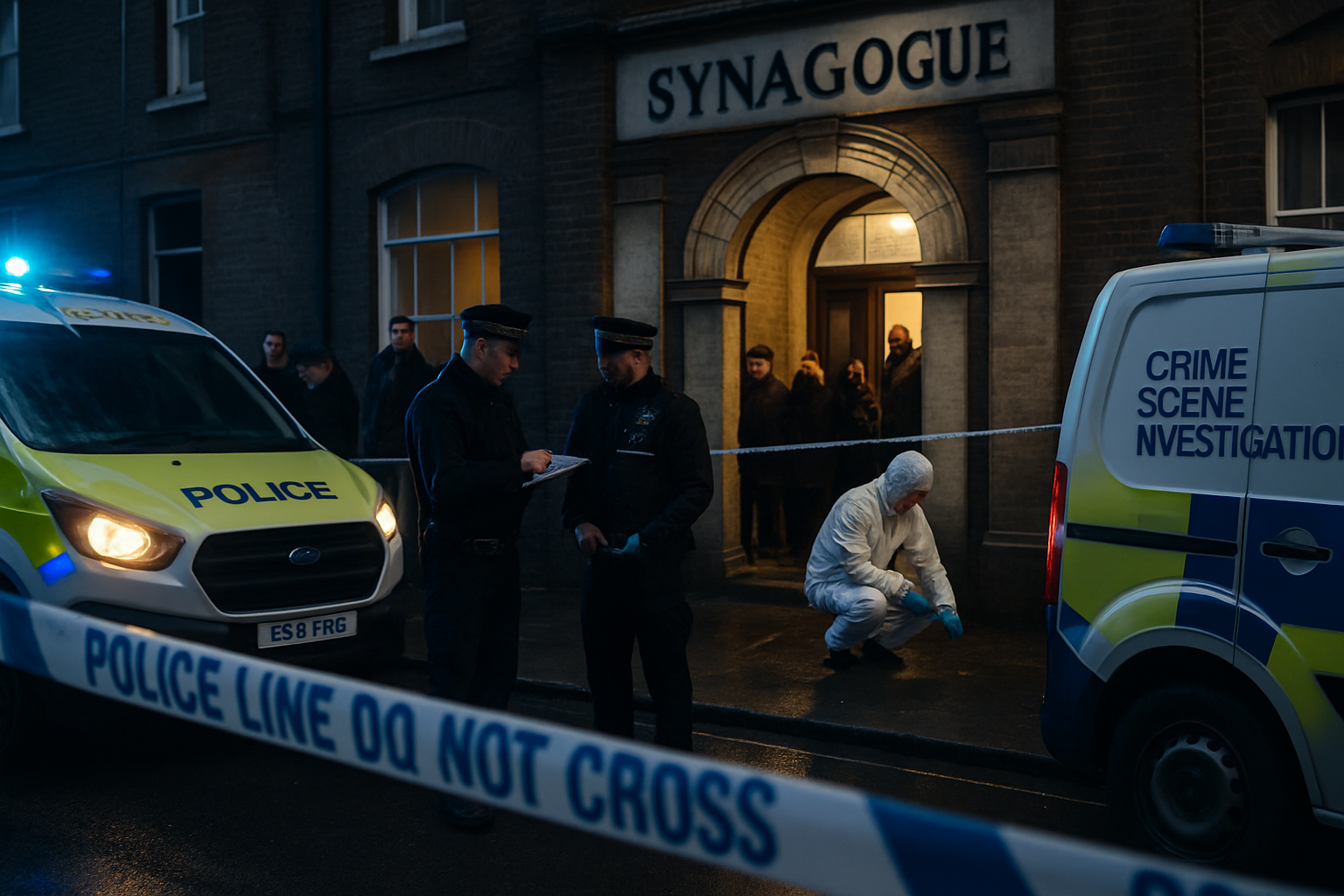
Four ambulances belonging to the Jewish volunteer medical service Hatzolah were deliberately set on fire in a suspected antisemitic arson attack in north London early Monday morning, prompting a Metropolitan Police investigation and condemnation from political leaders across the United Kingdom.
The incident occurred at approximately 1:45 AM on Highfield Road in Golders Green, an area with a large Jewish population. Security footage captured three individuals pouring gasoline on the emergency vehicles before igniting them, causing explosions from oxygen tanks that shattered windows in nearby buildings. No injuries were reported as the area was unoccupied at the time.
Attack Details and Investigation
Metropolitan Police confirmed they are treating the incident as an antisemitic hate crime, with multiple agencies now involved in the investigation. The ambulances belonged to Hatzolah, a volunteer emergency medical service that provides critical healthcare support to Jewish communities worldwide, including rapid response to medical emergencies and assistance during religious festivals.
According to witness accounts and security camera footage, the perpetrators appeared to be working in coordination, systematically targeting each vehicle with accelerants before setting them ablaze. The resulting explosions from medical oxygen supplies created significant property damage to surrounding structures, though fortunately no casualties occurred.
"This appears to be a deliberate and calculated attack on a service that saves lives regardless of background or faith,"
— Metropolitan Police spokesperson
The attack has sent shockwaves through London's Jewish community, which has already been experiencing heightened security concerns following a series of global antisemitic incidents documented throughout 2025 and early 2026.
Pattern of Escalating Antisemitic Violence
This London attack represents the latest in an alarming surge of antisemitic violence across Europe and internationally. Recent incidents include the December 14, 2025 Bondi Beach Hanukkah festival attack in Australia that killed 15 people, the February 21, 2026 Brisbane synagogue ramming attack, and documented Iranian intelligence surveillance networks targeting Jewish communities across multiple European nations.
Ireland's Jewish Council reported 143 antisemitic incidents between September 2025 and February 2026, while recent attacks have occurred in Rotterdam, Amsterdam, Liège, and other European cities. Intelligence sources have documented sophisticated coordination among extremist networks, with some operations showing hallmarks of state-sponsored activity.
The targeting of emergency medical services represents a particularly concerning escalation, as Hatzolah volunteers provide life-saving care to all community members regardless of religion or background. The organization operates emergency response services in over 200 communities worldwide, with London's branch serving both Jewish and non-Jewish residents in medical emergencies.
Political Response and Condemnation
Prime Minister Keir Starmer issued a strong condemnation of the attack, describing it as "shocking and unacceptable" and reaffirming the government's commitment to protecting all religious communities. The attack has prompted calls for enhanced security measures at Jewish institutions across London and nationwide.
Mayor of London Sadiq Khan expressed solidarity with the Jewish community, stating that such attacks have no place in the capital and promising full support for the police investigation. The incident has also drawn international attention, with Israeli officials and Jewish organizations worldwide expressing concern about the deteriorating security situation for diaspora communities.
Local community leaders emphasized that the attack not only targeted Jewish emergency responders but threatened the broader community's access to critical medical services. Hatzolah volunteers often serve as first responders in medical emergencies, providing rapid assistance before official emergency services arrive.
Community Impact and Security Concerns
The Golders Green area, home to one of London's largest Orthodox Jewish communities, has experienced increased tensions in recent months. Community members report feeling vulnerable to targeted attacks, with many altering their daily routines and avoiding displaying religious symbols in public.
Jewish schools, synagogues, and community centers have implemented enhanced security protocols following similar attacks across Europe. The systematic nature of recent incidents has raised concerns among security experts about coordinated campaigns designed to intimidate and terrorize Jewish communities.
Mental health services have been made available to community members affected by the attack, with interfaith organizations offering support and solidarity. Despite the intimidation attempts, community leaders emphasized their determination to continue religious and cultural activities under appropriate security protection.
International Context and Investigation
The London attack occurs within a broader European context of sophisticated antisemitic violence. British counter-terrorism authorities recently arrested four men, including one Iranian national, suspected of conducting surveillance on Jewish community locations for Iranian intelligence services.
European security agencies have documented advanced operational networks using encrypted communications and compartmentalized cells to coordinate attacks across multiple countries. The timing and methodology of recent incidents suggest possible coordination among extremist groups, with some intelligence assessments indicating potential foreign state involvement.
Investigators are examining potential connections to other recent European incidents, including explosive attacks on synagogues in Rotterdam and Amsterdam, and arson attempts in Belgium and France. The sophisticated planning and execution of these attacks has prompted enhanced intelligence-sharing among European law enforcement agencies.
Emergency Services Response
London Fire Brigade responded quickly to contain the blaze and prevent its spread to nearby buildings. The coordinated emergency response demonstrated the effectiveness of multi-agency protocols, though the deliberate targeting of emergency medical vehicles represents an unprecedented challenge for community safety planning.
Hatzolah London has announced temporary operational adjustments while replacement vehicles are secured, with backup emergency response protocols activated to ensure continued community coverage. The organization has received offers of support from medical services and community groups across London.
The attack highlights the vulnerability of volunteer emergency services that operate with limited security resources compared to official emergency agencies. Community organizations are now reassessing security protocols for emergency response operations.
Broader Implications for Religious Freedom
Security experts characterize the systematic targeting of Jewish community institutions and services as representing a serious challenge to religious freedom and democratic pluralism in Europe. The attacks appear designed to create a climate of fear that would discourage Jewish communities from maintaining visible religious and cultural activities.
The incident occurs as European governments grapple with balancing security concerns against preserving open democratic societies. Enhanced protection measures for religious minorities must be carefully implemented to maintain community trust while providing effective security against sophisticated threats.
International human rights organizations have called for strengthened legal frameworks to address coordinated antisemitic campaigns, improved inter-agency cooperation, and comprehensive community protection strategies that go beyond reactive security measures.
Looking Forward
The Metropolitan Police investigation continues with forensic teams examining evidence from the crime scene and reviewing extensive security footage from the area. Authorities are appealing for any witnesses or additional video evidence that might assist in identifying and apprehending the perpetrators.
Community leaders are calling for sustained political commitment to combating antisemitism, enhanced resources for community protection, and stronger international cooperation to address transnational extremist networks. The incident serves as a stark reminder of the ongoing threats facing Jewish communities across Europe and the need for comprehensive responses that address both immediate security and longer-term social cohesion challenges.
As the investigation proceeds, the London Jewish community continues to demonstrate resilience through interfaith solidarity and determination to maintain their religious and cultural life despite attempts at intimidation. The outcome of this case will likely influence broader discussions about hate crime prosecution and community protection strategies across the United Kingdom and Europe.