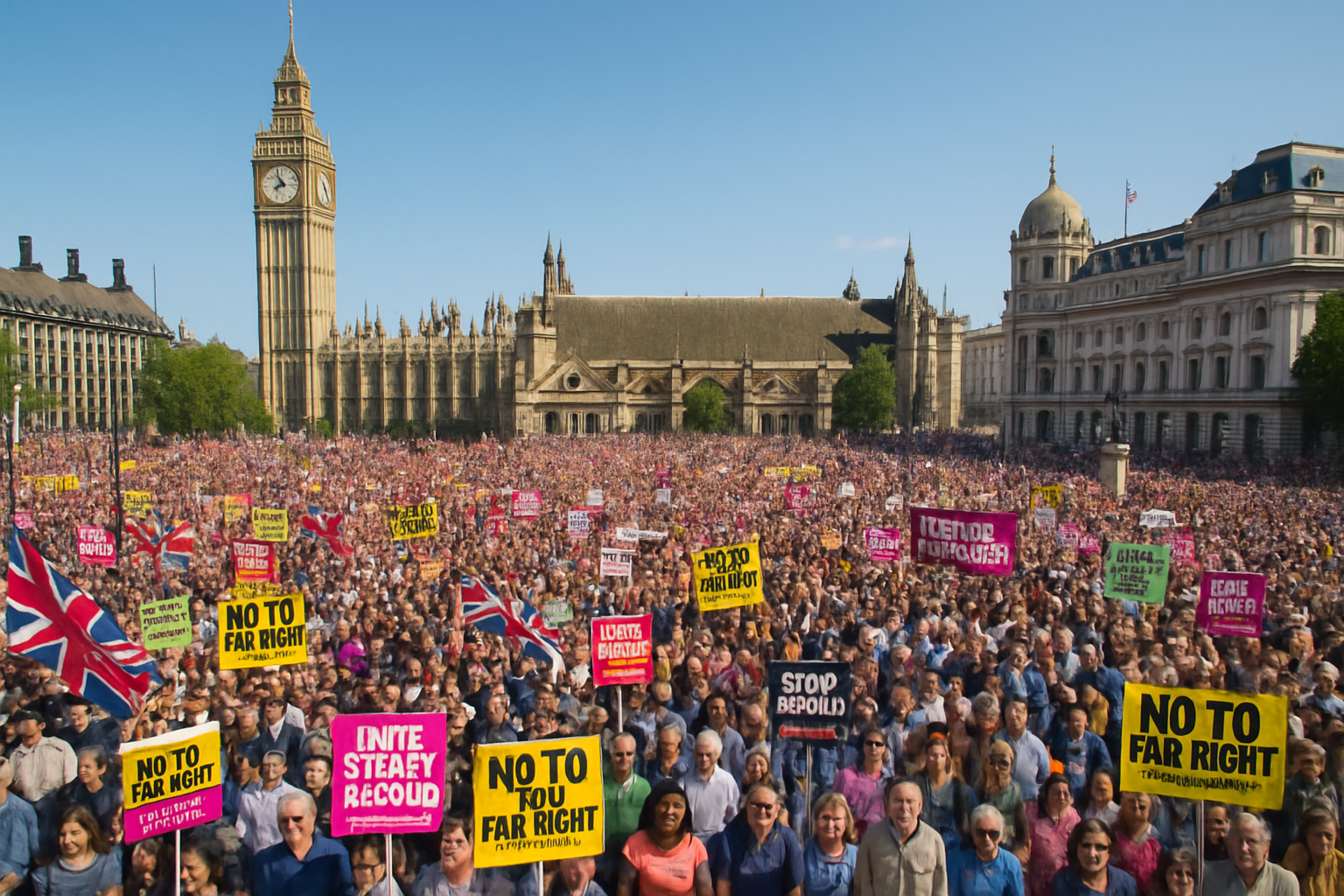
Half a million people took to the streets of London on Saturday in what organizers are calling the biggest ever protest against far-right politics, marking a historic moment in Britain's ongoing struggle against rising extremism and political polarization.
The Together Alliance march drew massive crowds carrying placards with slogans such as "Migrants make our NHS" and "No to racism, no to Trump" as demonstrators filled central London streets from Parliament to Trafalgar Square. More than 100 charities, campaign groups, and trade unions participated in the show of unity against far-right politics.
Record-Breaking Turnout Amid Political Tensions
Organizers claimed half a million people had traveled to the capital for the demonstration, though police estimated the turnout closer to 50,000, admitting it was difficult to judge due to how spread out the crowd was across central London. Regardless of the exact figure, participants and observers described scenes of unprecedented scale for an anti-racism demonstration in the UK.
The massive turnout comes amid growing concerns about the normalization of far-right politics in mainstream discourse. Earlier this month, Reform UK leader Nigel Farage faced widespread condemnation for calling for a ban on Muslim public prayer following events in London's Trafalgar Square, with Muslim leaders warning of a "growing tide of hate."
"This is about more than just one day of protest - it's about standing up for the values of tolerance and inclusion that define modern Britain."
— Together Alliance spokesperson
European Context of Rising Extremism
The London demonstration takes place against a backdrop of concerning developments across Europe. Recent months have witnessed a surge in far-right political gains across the continent, from Marine Le Pen's National Rally making unprecedented urban breakthroughs in French municipal elections to the Alternative for Deutschland achieving historic results in Germany's traditionally stable Baden-Württemberg state.
In Sweden, the Liberal Party has broken decades of precedent by entering formal cooperation with the Sweden Democrats, a party with white nationalist roots. This pattern of "authoritarian innovation" - far-right movements gaining influence through democratic means rather than revolutionary violence - has become a defining challenge for European democracy.
UK Political Realignment
The massive London turnout reflects broader shifts in British politics following recent electoral shocks. In February, the Green Party achieved a historic breakthrough when Hannah Spencer became the first Green MP elected in northern England, defeating Labour in the Gorton and Denton by-election - a seat Labour had held since 1935.
That result saw Reform UK finish second ahead of Labour, demonstrating the appeal of anti-establishment movements across the political spectrum. The combination of Green environmental justice messaging resonating with working-class voters and Reform's populist appeal suggests traditional party loyalties are fracturing.
Challenges to Democratic Norms
Saturday's march occurred during what observers describe as "the most challenging period for continental democracy since World War II." Recent polling shows 89% of Europeans demand greater EU unity, yet political reality demonstrates increasing fragmentation and polarization across member states.
The demonstration's peaceful nature and massive scale provide a template for democratic responses to extremist challenges. Unlike violent confrontations that have marked some recent European protests, the London march maintained a carnival-like atmosphere while delivering a serious political message about the threats posed by far-right ideology.
Diverse Coalition Building
The Together Alliance represents an unprecedented coalition spanning traditional civil rights organizations, faith groups, trade unions, and newer activist networks. This broad-based approach reflects lessons learned from successful anti-extremist movements across Europe, emphasizing that defeating far-right politics requires cooperation across ideological divides.
Demonstrators carried signs in multiple languages, reflecting Britain's multicultural character while explicitly challenging narratives that present immigration and diversity as threats to social cohesion. The presence of families, elderly participants, and young activists illustrated the cross-generational nature of resistance to extremist politics.
"Today shows that the forces of inclusion and tolerance far outnumber those promoting division and hate. But we can't be complacent - this has to translate into sustained political action."
— Campaign organizer
International Implications
The London demonstration carries significance beyond UK borders as international observers monitor how established democracies respond to extremist challenges. The peaceful nature of the protest and its massive scale provide evidence that democratic societies retain the capacity to mobilize against authoritarian threats through legal, constitutional means.
Recent violent incidents, including the March explosive device attack targeting NYC Mayor Zohran Mamdani during an anti-Muslim protest, underscore the escalating tactics being employed by extremist groups. The contrast between such violence and London's peaceful mass mobilization demonstrates alternative paths for political expression.
Looking Forward
As Britain approaches crucial local elections in May, Saturday's demonstration provides momentum for anti-extremist forces while highlighting the scale of public concern about far-right politics. The challenge now lies in translating street-level enthusiasm into sustainable political organization capable of addressing the underlying economic and social grievances that extremist movements exploit.
The march's success also raises questions about whether traditional political parties have adequately responded to public concerns about rising extremism. With both major parties facing internal challenges and declining public trust, grassroots movements like the Together Alliance may play increasingly important roles in shaping Britain's political future.
Saturday's historic demonstration proves that despite concerning trends toward polarization and extremism, British civil society retains the capacity for massive, peaceful mobilization around shared democratic values. The challenge ahead lies in sustaining this energy and translating it into lasting institutional change that strengthens democracy against authoritarian threats.